They fell in love and started a family. But they only have a tiny piece of land: Can that be enough?
The starting point:
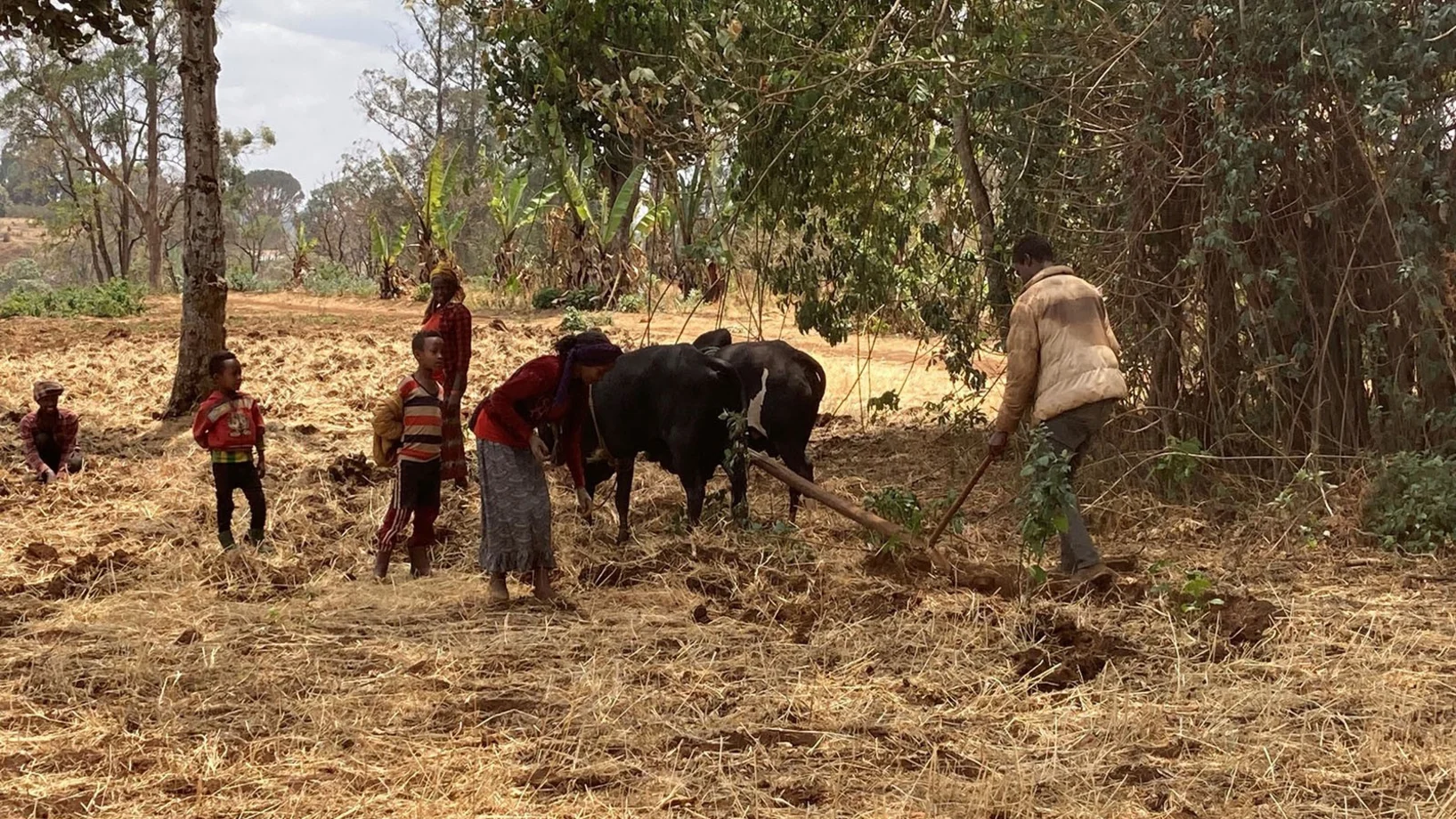
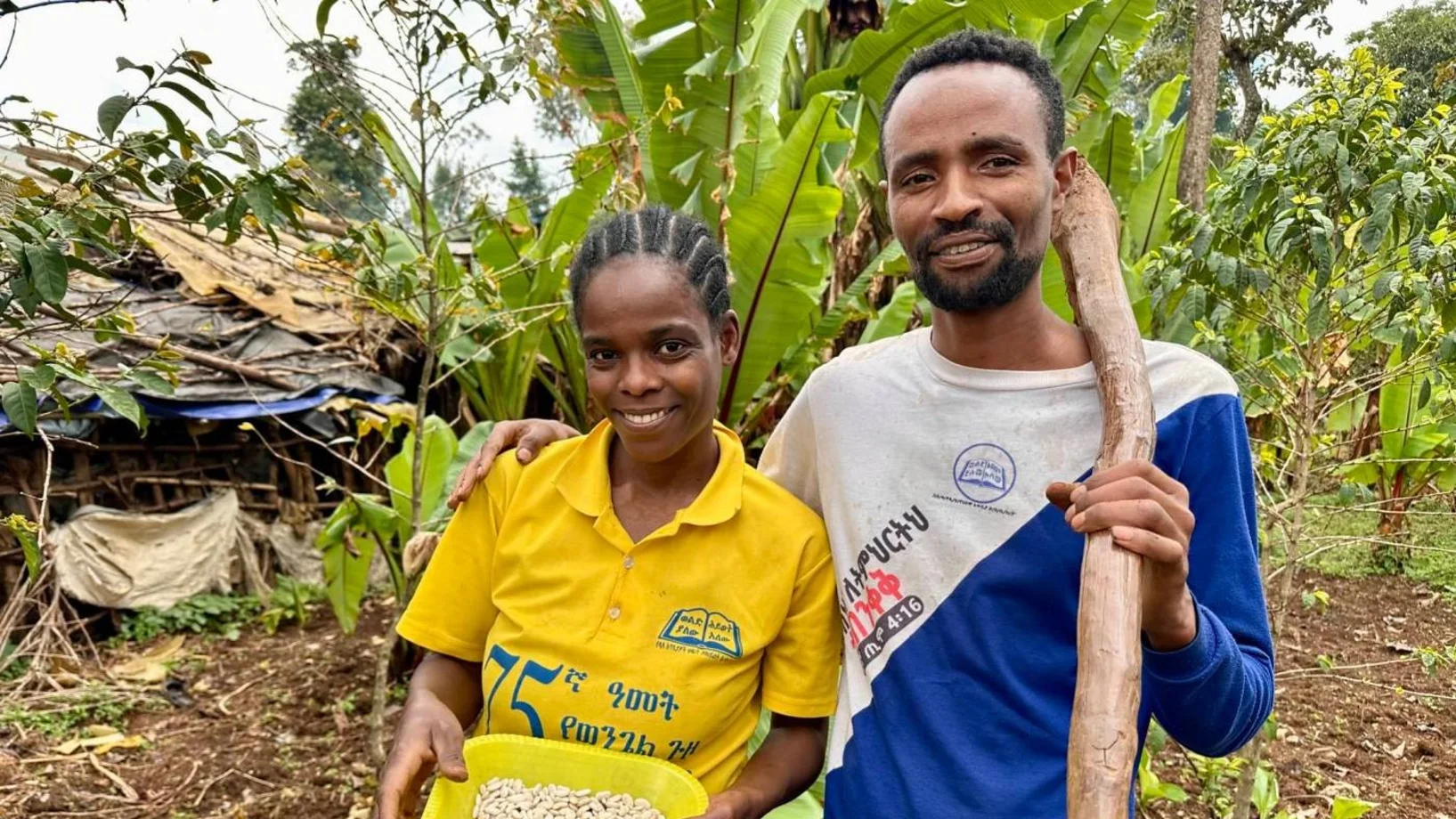
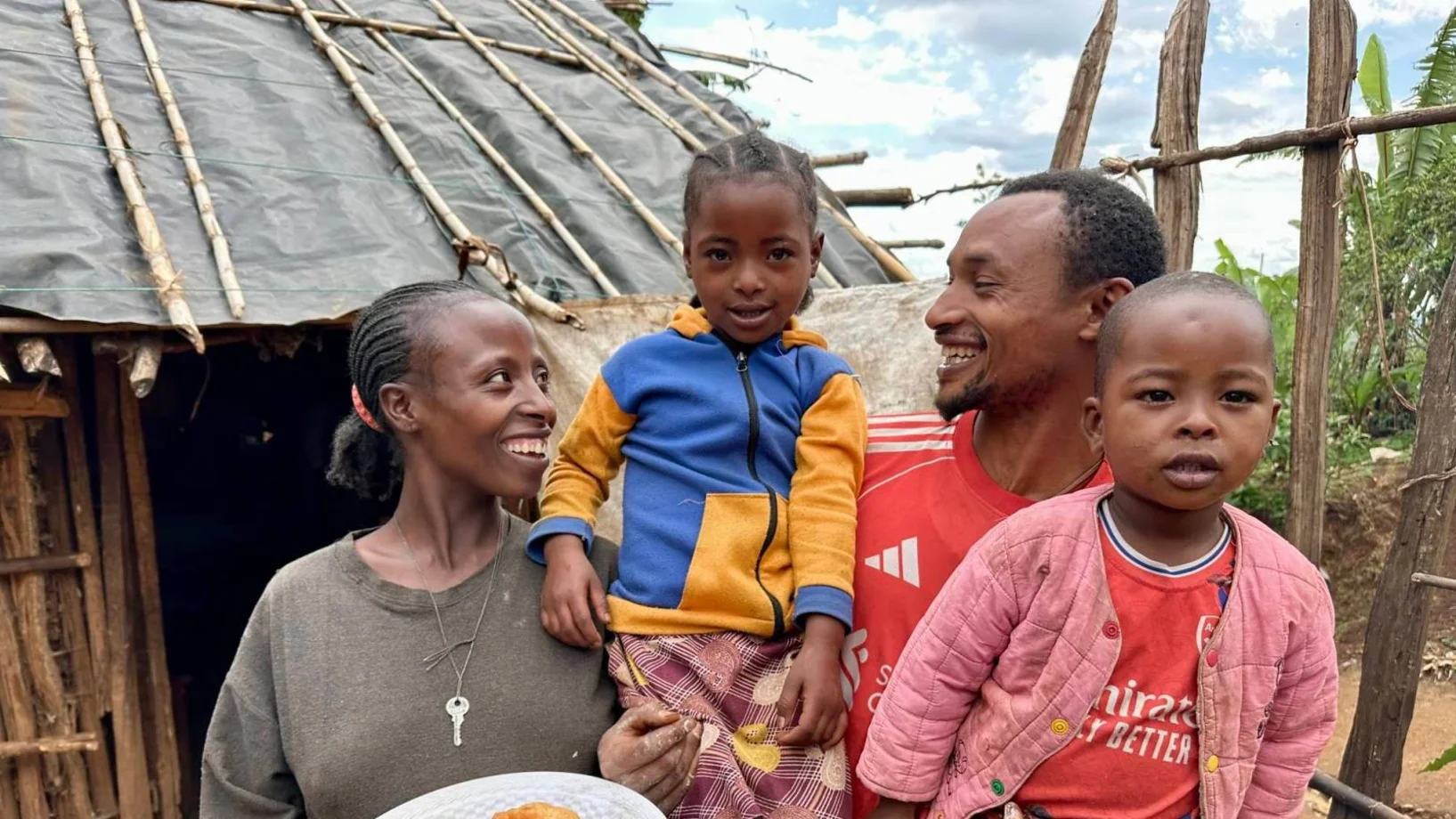
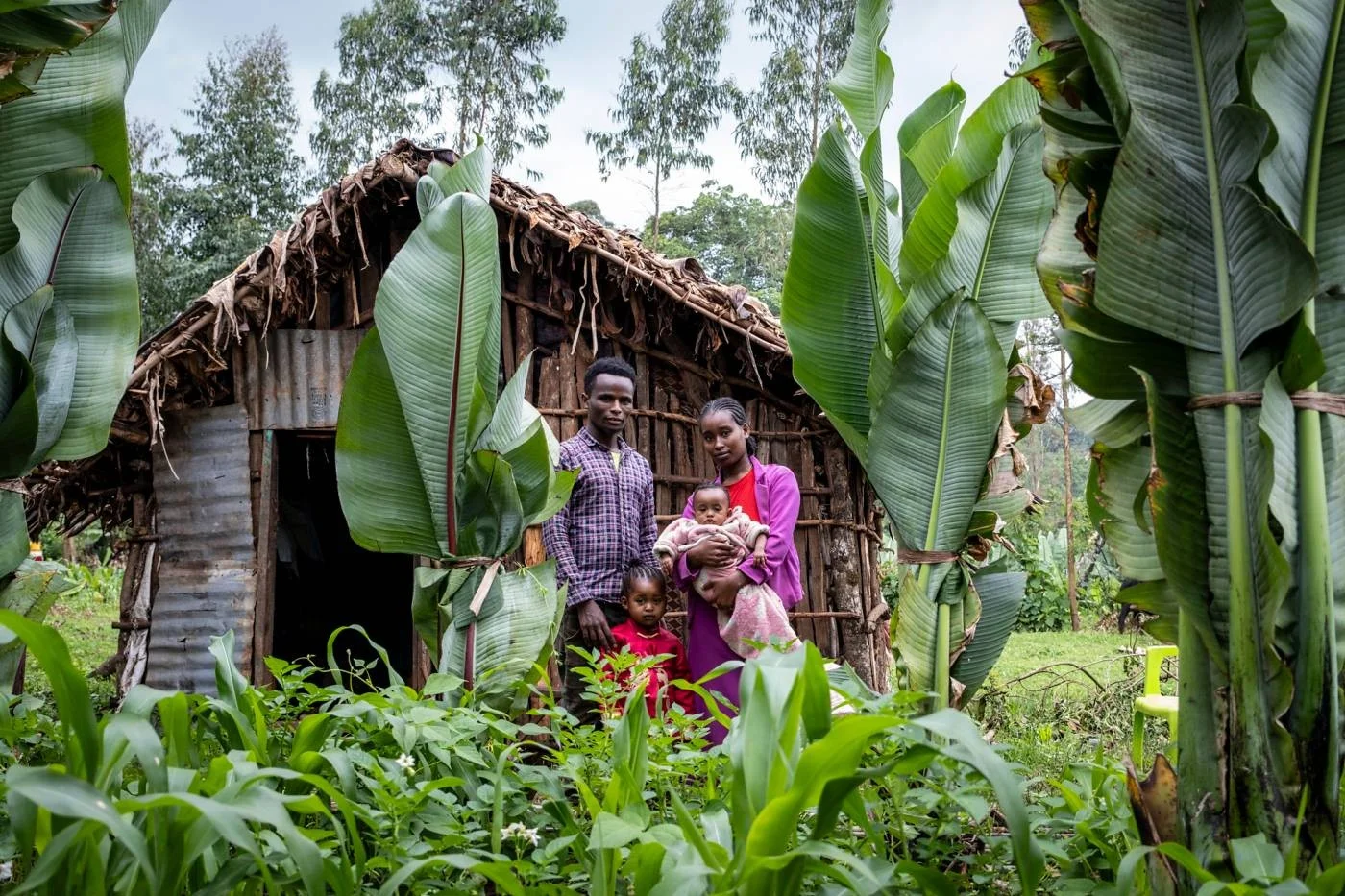
Zenebe Badacho (22) lives with his wife, Emebet Bekele (20), and their two daughters, Soret (3) and Hinsene (1), in the village of Sike Bokosa. The couple met at a church service. "She's beautiful. But I also like her personality," says Zenebe. "I felt: I can build a life with her." Emebet says she fell in love with Zenebe because of "his personality and how he thinks about life." For her, that means: "Zenebe is hardworking and forward-looking." Two children are enough, they both say. They have agreed on family planning. Their land is tiny, only one-eighth of a hectare. There is no furniture in their hut; the family sleeps on mats on the bare earth.


How we help:
Menschen für Menschen supported Zenebe with 300 Ensete seedlings on a loan basis and with training on cultivation and climate-adapted agriculture.
This is how the help works:
The ensete plant only becomes usable after three years – then it can generate a significant income. With the yield from just four fully grown plants, Zenebe can pay off his loan. He already grows vegetables between the plants: beans, corn, potatoes, and cabbage. Zenebe is a member of a women's savings group and wants to get into the kotcho trade. Zenebe says: "I used to be restless. Now I have a home." He looks at his wife: "With her, I've found my place."


Kotcho – an important staple food
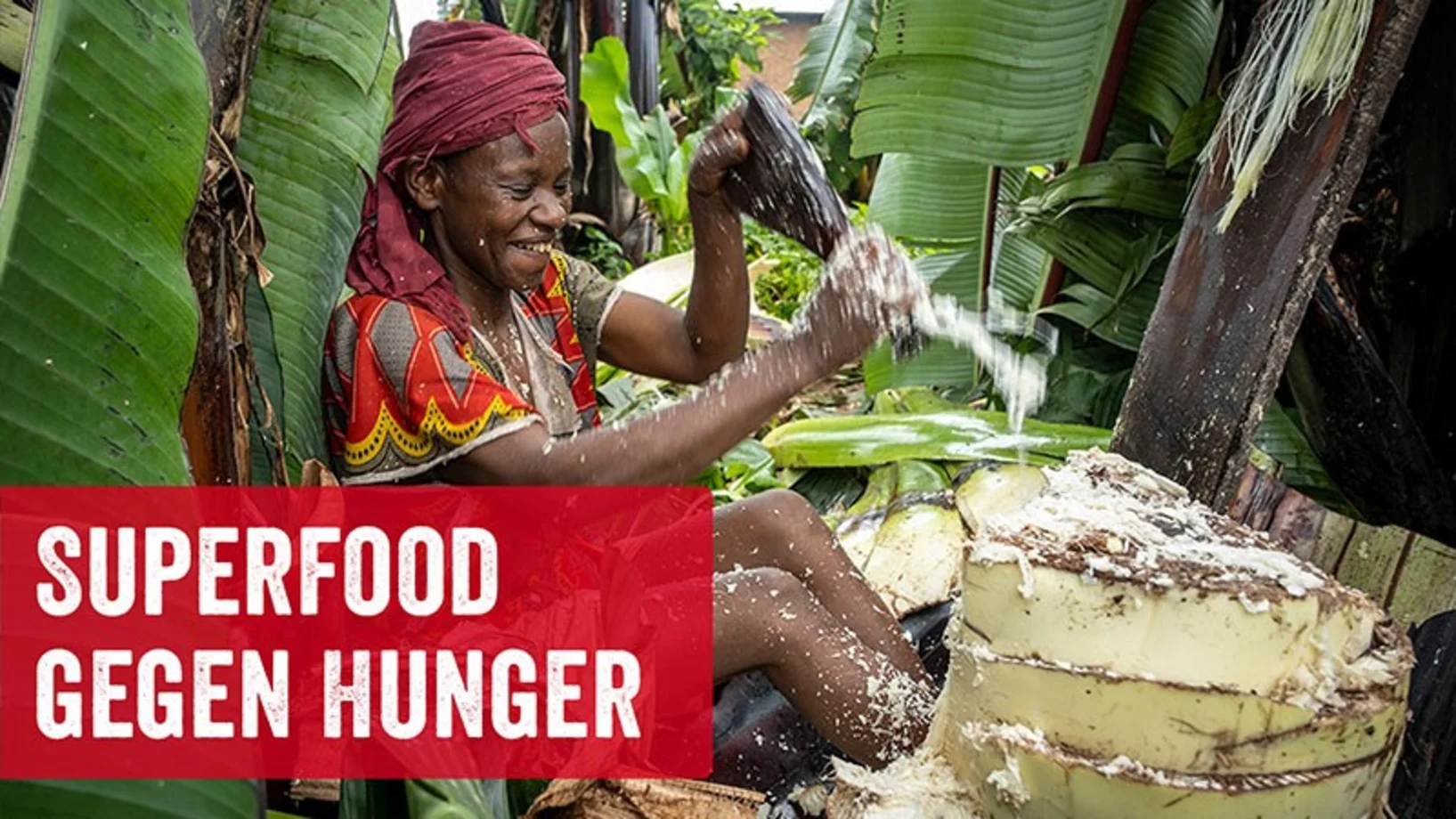
Ensete is a staple food in southern Ethiopia. Around 25 million people depend entirely or partially on this plant for their livelihood. They process it into kotcho: a starchy dough that is baked into a type of bread. In the Hambela Wamena project, we support 500 families with 300 seedlings each, as well as training in cultivation and care.