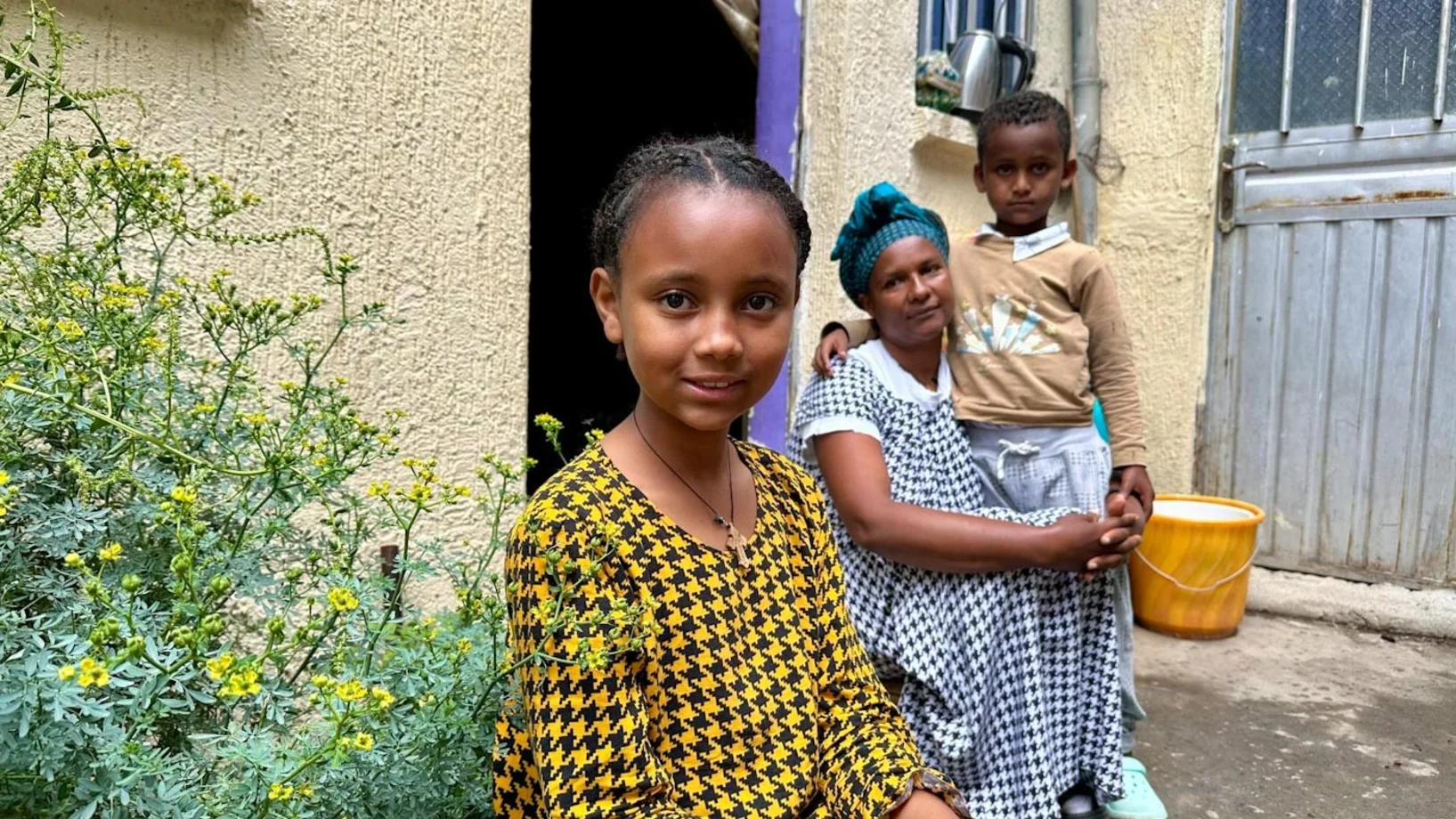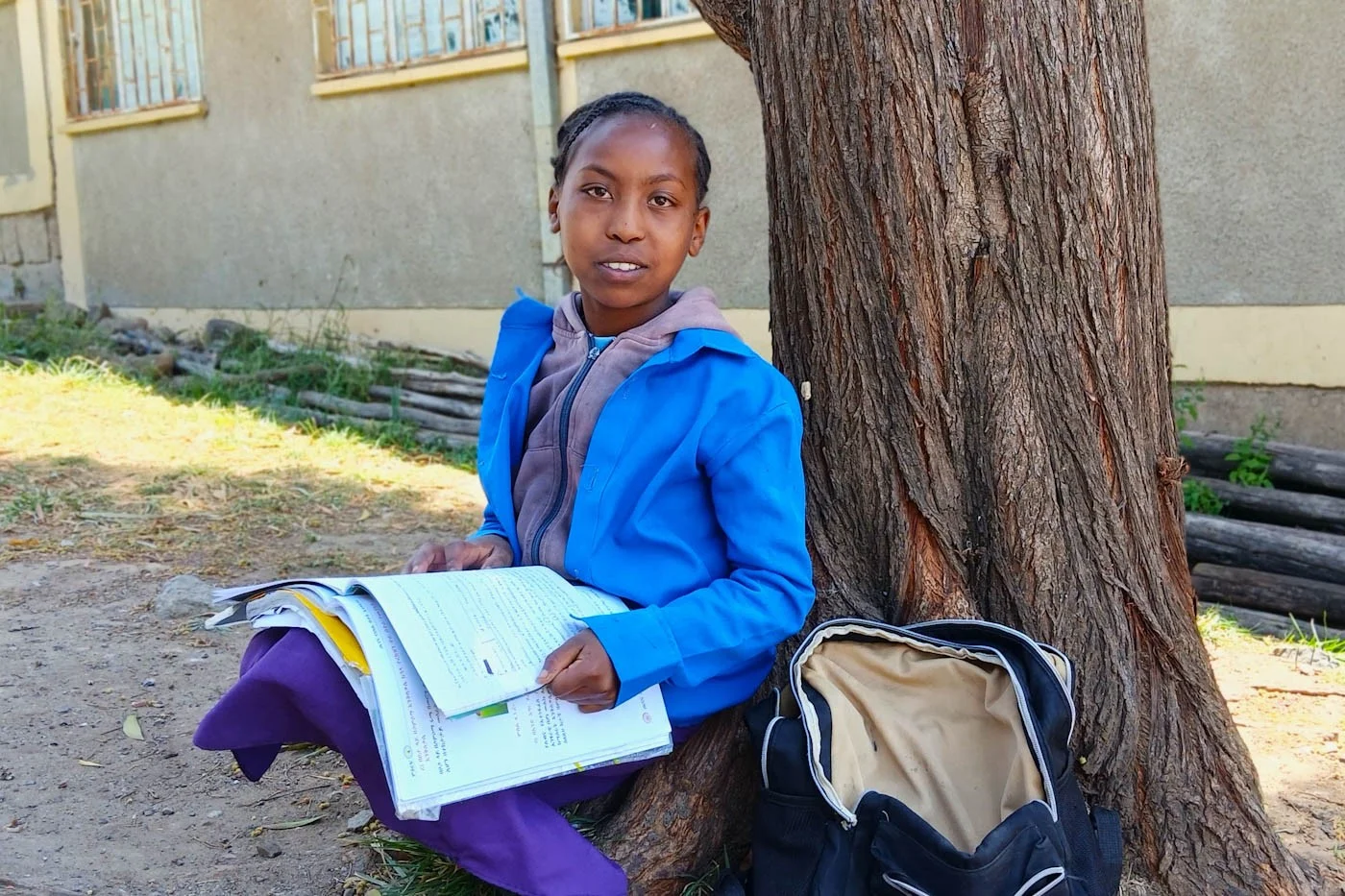
Eldana was already shouldering adult responsibilities. Now, at age 11, she has more time again for school, dancing, and her cat.
When night fell, Eldana was often alone with her little brothers. She made dinner, washed the dishes, and put them to bed. She was the oldest, so she was in charge. Eldana was ten years old.
Her mother, Amele Nigatu, is raising her three children on her own. Their father left the family. To make ends meet, Amele took any job she could find. She baked bread, helped out at weddings and other celebrations, often far away, so she couldn’t return home at night.
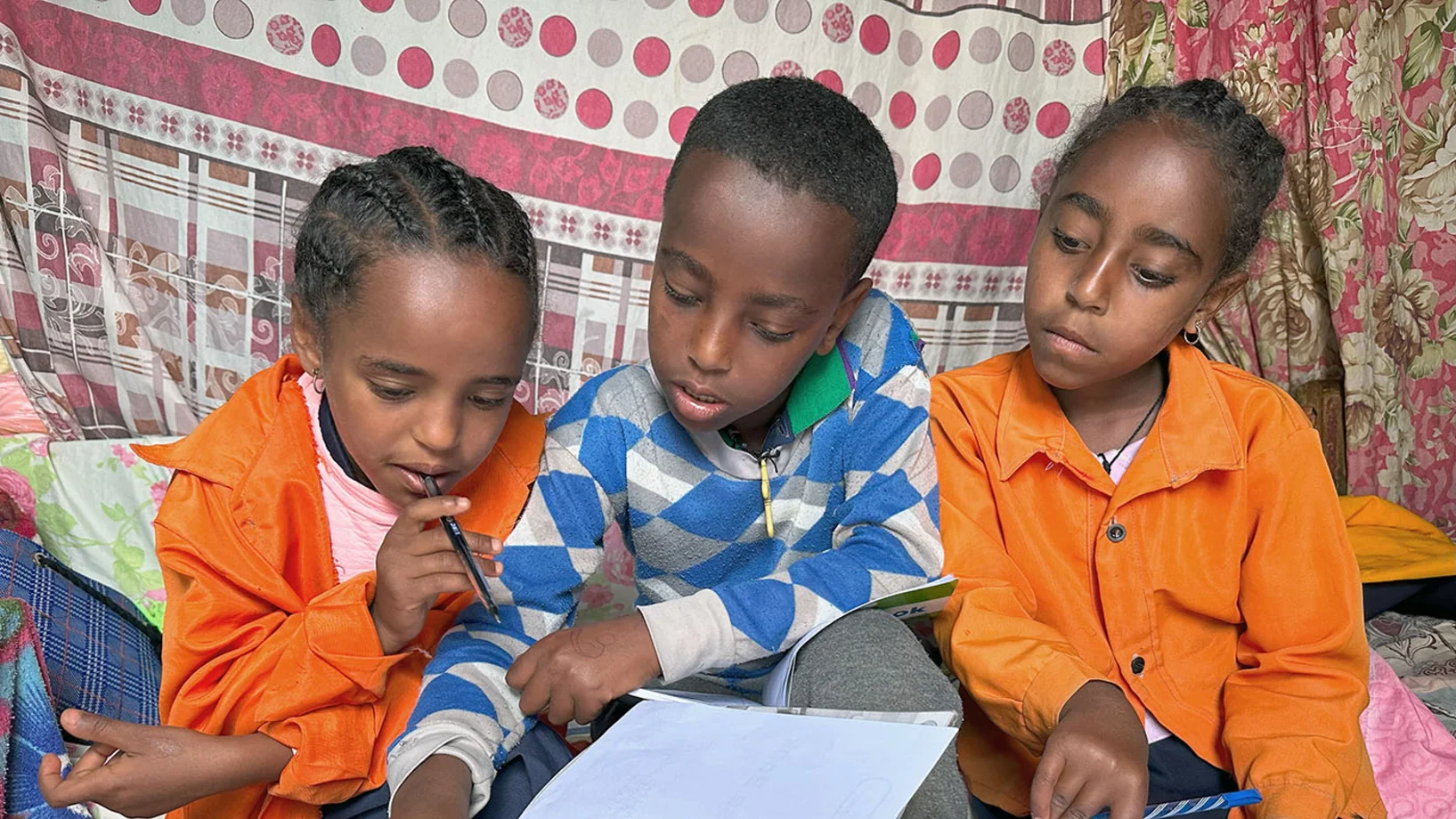
So in the mornings, Eldana took seven-year-old Kidus to school and five-year-old Fikir to preschool; she cooked, did the laundry, cleaned the house, and helped the boys with their homework in the afternoons. On top of that, she tried to keep up with her own schoolwork. Sometimes she did her homework during recess while her friends played.


Isn’t it unfair that a ten-year-old girl has to work so much? Eldana looks taken aback. It seems this question has never crossed her mind before. Then she says, “My mother wouldn’t have managed without me!”
“Eldana already thought like an adult,” recalls Martha Eshetu, a social worker with Menschen für Menschen. “She always just thought: Now I have to do this. And then that.”
Martha spoke with her mother. “I told her: Eldana needs time for herself. She’s a child.” Of course, she could help out at home, just like the vast majority of children in Ethiopia. But Eldana couldn’t take on the responsibilities of an adult.
Today, Amele works just about 60 meters from her apartment. With a microloan from Menschen für Menschen , she opened a small snack stand: a few wooden poles, a plastic tarp stretched over them, and a deep fryer underneath. A serving of French fries costs 30 birr, which is equivalent to 15 Rappen.


Sometimes Eldana helps her mother. She cuts potatoes and folds sheets of paper into triangular bags. The hot oil sizzles. Amele fills the paper bags with the crispy sticks. Business is booming. On good days, Amele makes the equivalent of up to five francs. That’s three times more than she used to earn. She paid back her first microloan of 30 francs to her self-help group’s fund after just six months. She has since taken out a new loan of 50 francs. She wants to expand her menu: “People like to eat French fry sandwiches.”
For Eldana, where her mother earns the money is just as important: practically right outside their front door, a stone’s throw from the tiny apartment where the two boys are playing.
Dusk falls quickly; it gets dark almost instantly. While her mother continues working at the deep fryer, Eldana skips home to check on her brothers. “She still helps her mother a lot. But she no longer bears the responsibility she used to,” says Martha. “Her mother no longer has to stay away overnight.”


The social worker makes sure that Eldana gets more time to herself and is allowed to be a child again. “I told her mother, ‘You can prepare the potatoes on your own at home. Eldana should go dancing.’” Two to three times a week, Eldana now meets for an hour with other children and teens from the neighborhood. Martha made sure Eldana got a spot in a dance group.
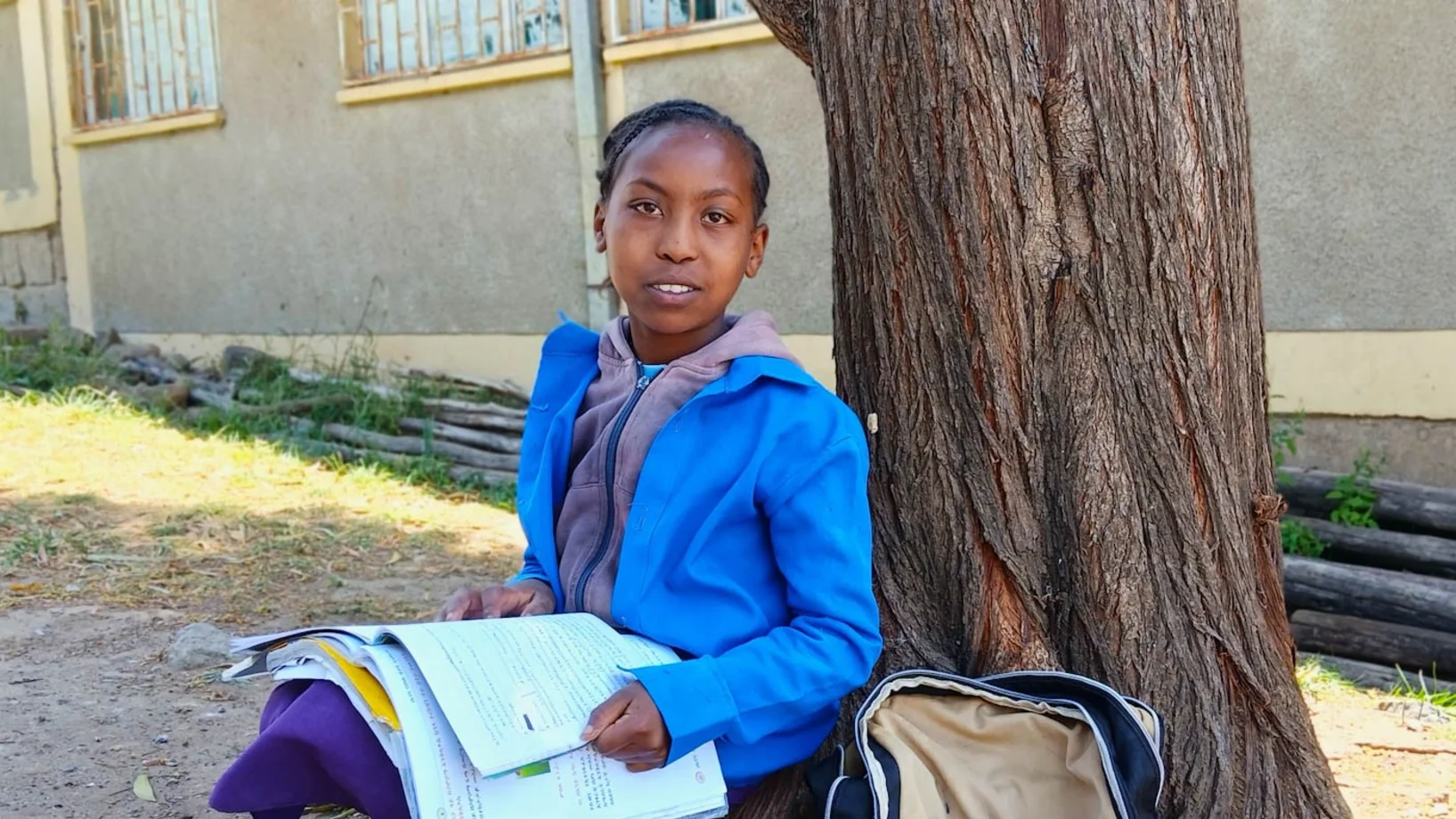
The music starts. Eldana tosses her head from side to side. Her legs bounce, and her shoulders jerk to the fast rhythm of the traditional Ethiopian dance. Beads of sweat glisten on her forehead; her face is serious and focused. “I love dancing,” Eldana says during a break. “It helps my mind relax.” She also has more time today for school and her friends there. Eldana likes math best. “It’s easy for me. I’m one of the best in the class.”
Now there are also times when Eldana can just be at home. That’s when Marua, the family cat, comes to her. Her name means “my honey.” Eldana strokes her fur, and Marua purrs. At night, she sleeps with the family on the big mattress. They don’t buy her cat food. “We don’t just have her as a pet,” Eldana explains. “She catches the mice for us in the apartment.”
In quiet moments, Eldana thinks about her future. She wants to become a doctor. And if that doesn’t work out? Then maybe an engineer. Why? “I want to build my mother a beautiful house.”