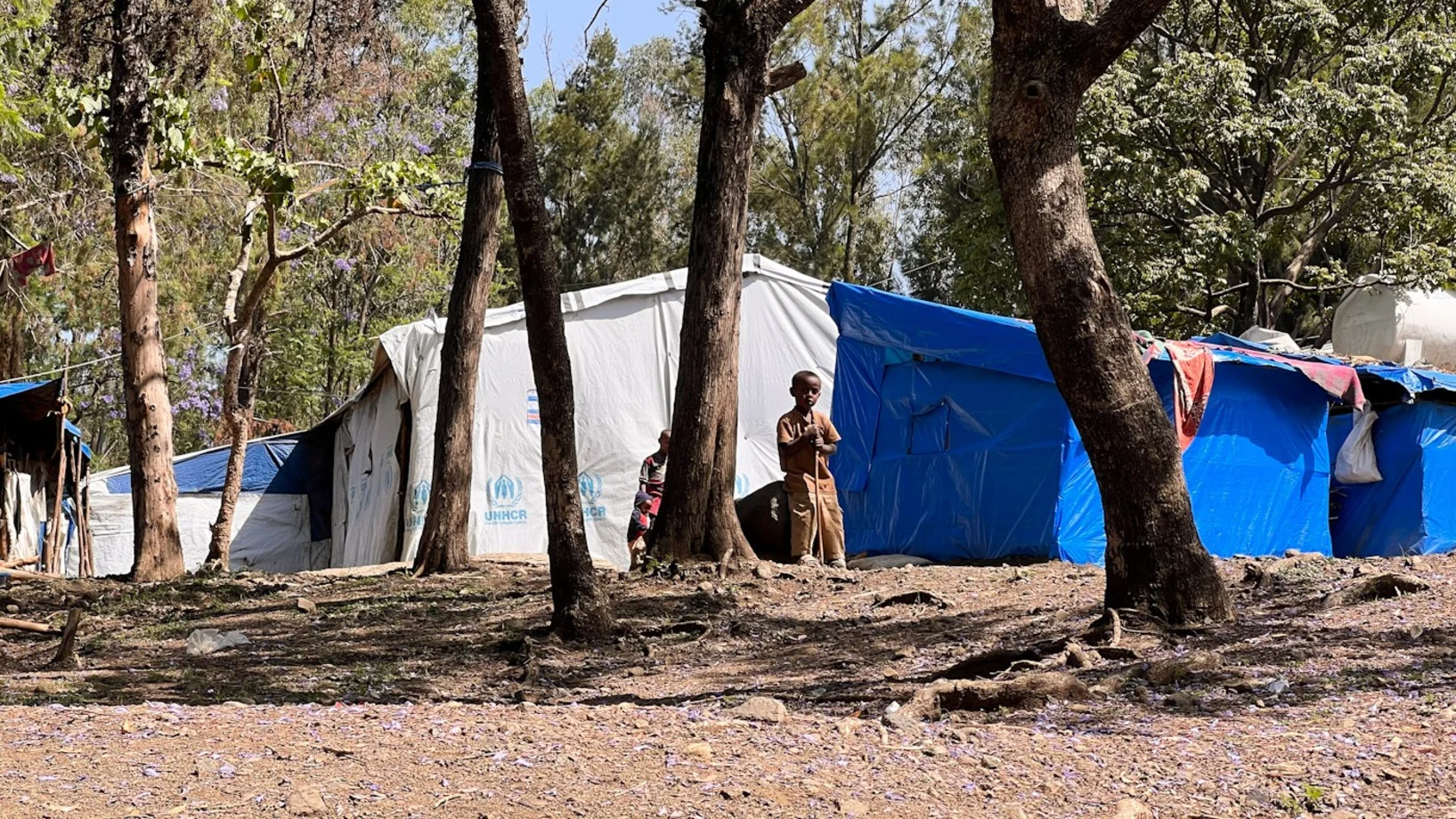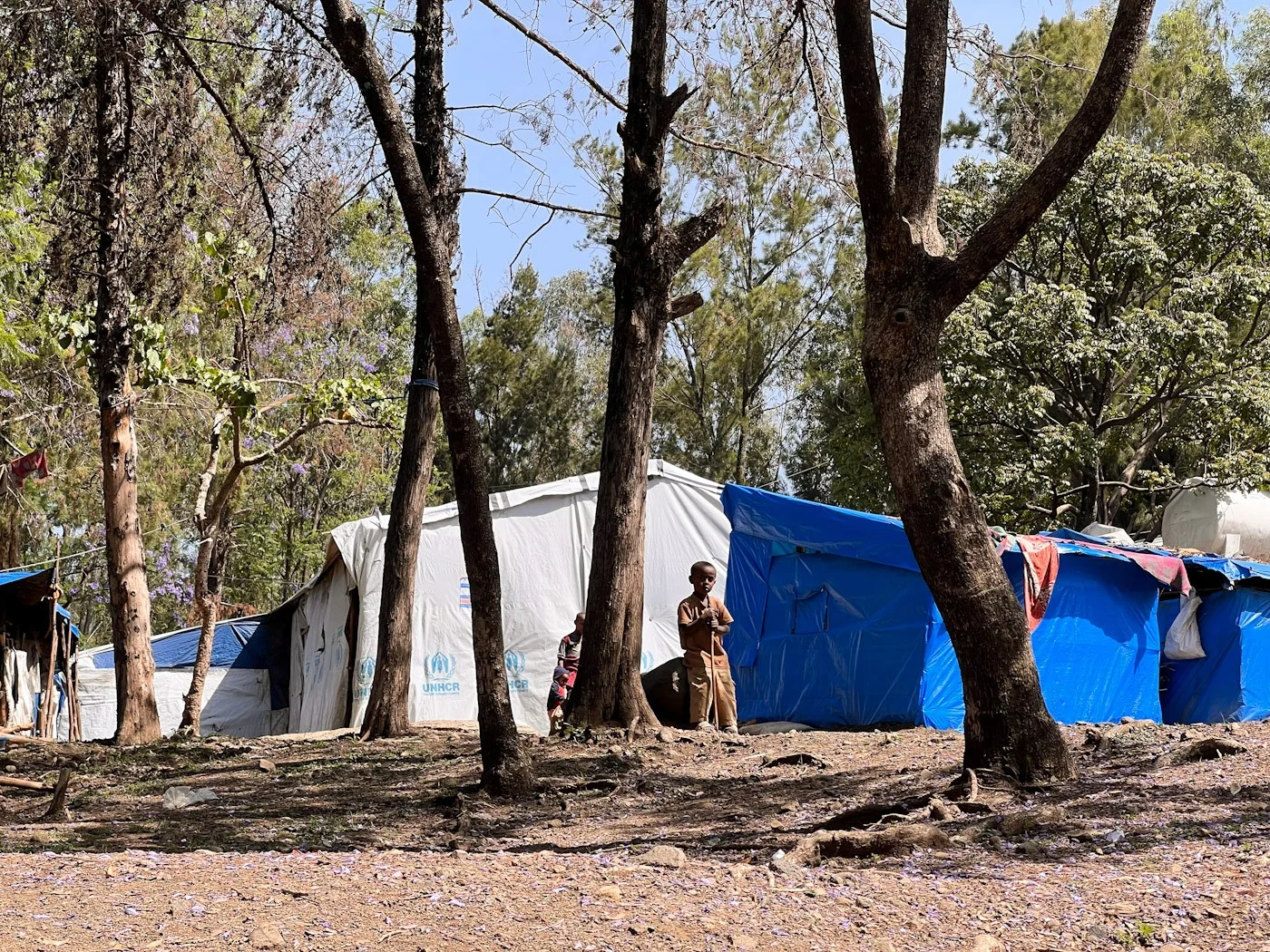
For years, thousands of displaced people have been living in two camps near the city of Haik. Many have neither work nor a reliable income. Menschen für Menschen is now providing cash assistance to 757 families. An additional 100 families are set to receive start-up aid to help them build a new life.
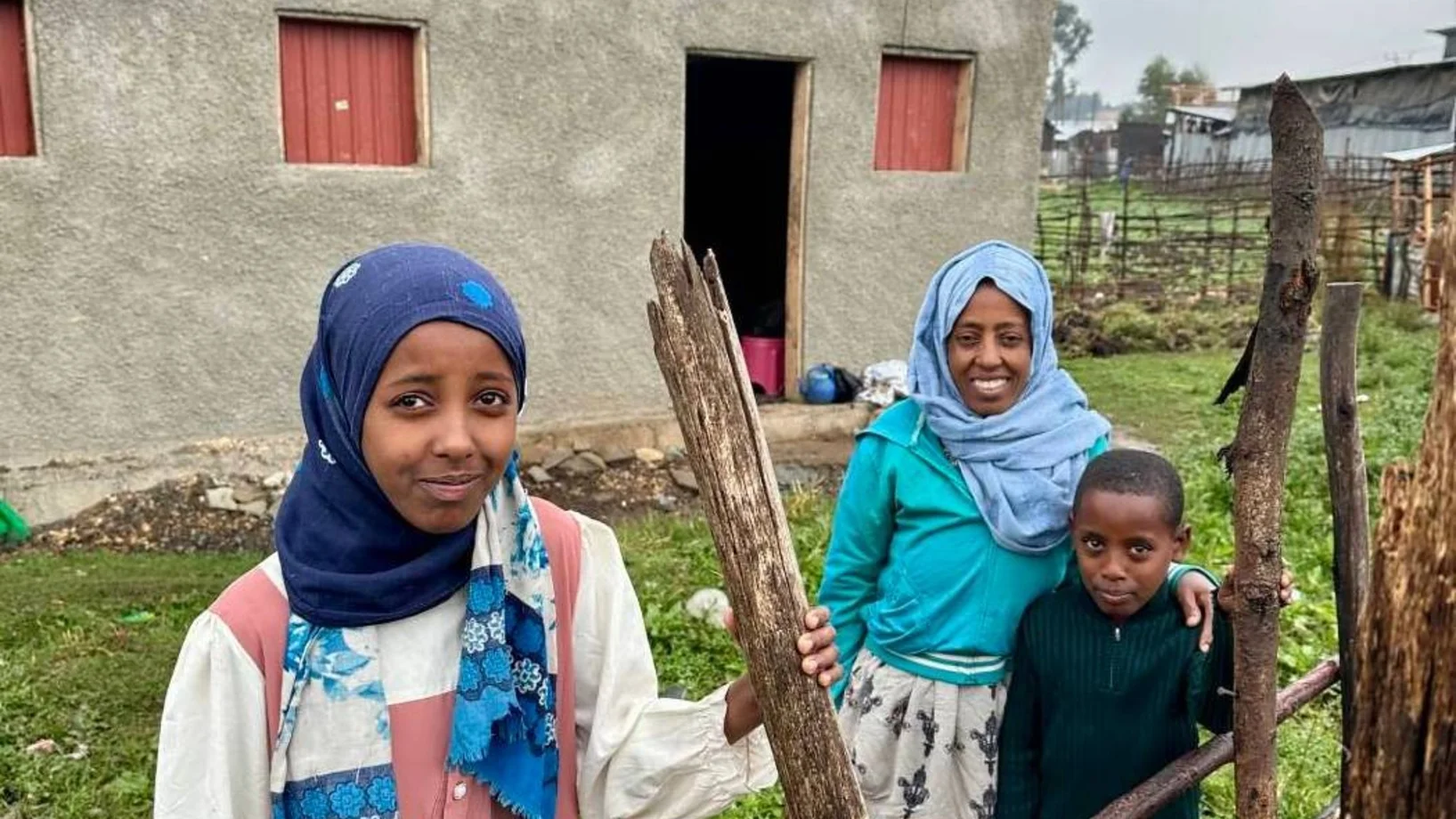
Teyiba Ahmed is 34 years old, a widow, and the mother of four children. She has been living in a camp for internally displaced persons near the city of Haik in the Amhara Region for about six years. Sometimes she bakes injera, the Ethiopian flatbread. She says she earns about 1,000 birr a month doing this—the equivalent of about five Swiss francs. She looks frail, her cheekbones prominent.
Teyiba’s former life lies far away, in Wollega in western Ethiopia. There, her husband was killed in a massacre. Teyiba saw him lying among the dead. There was no doubt: “I knew what clothes he was wearing that day,” she says. She fled Wollega with her children and went to Haik.
She had grown up in Wollega because her parents had been resettled there: During the great famine of the mid-1980s, the government at the time had hundreds of thousands of people from the particularly hard-hit areas in northern Ethiopia relocated to the more fertile western and southwestern parts of the country. Teyiba spent a peaceful childhood and adolescence there.


However, after 2018, ethnic tensions and armed conflicts intensified in western Ethiopia. Members of the Amhara ethnic group were driven from their villages, and numerous people died in the attacks. In Wollega, it was primarily armed groups affiliated with the “Oromo Liberation Army” that attacked and drove out the Amhara.
Ethnic conflicts in Ethiopia have turned many people into internally displaced persons. About 2,500 of them live in two camps near Haik. Among them are 403 children under the age of five.
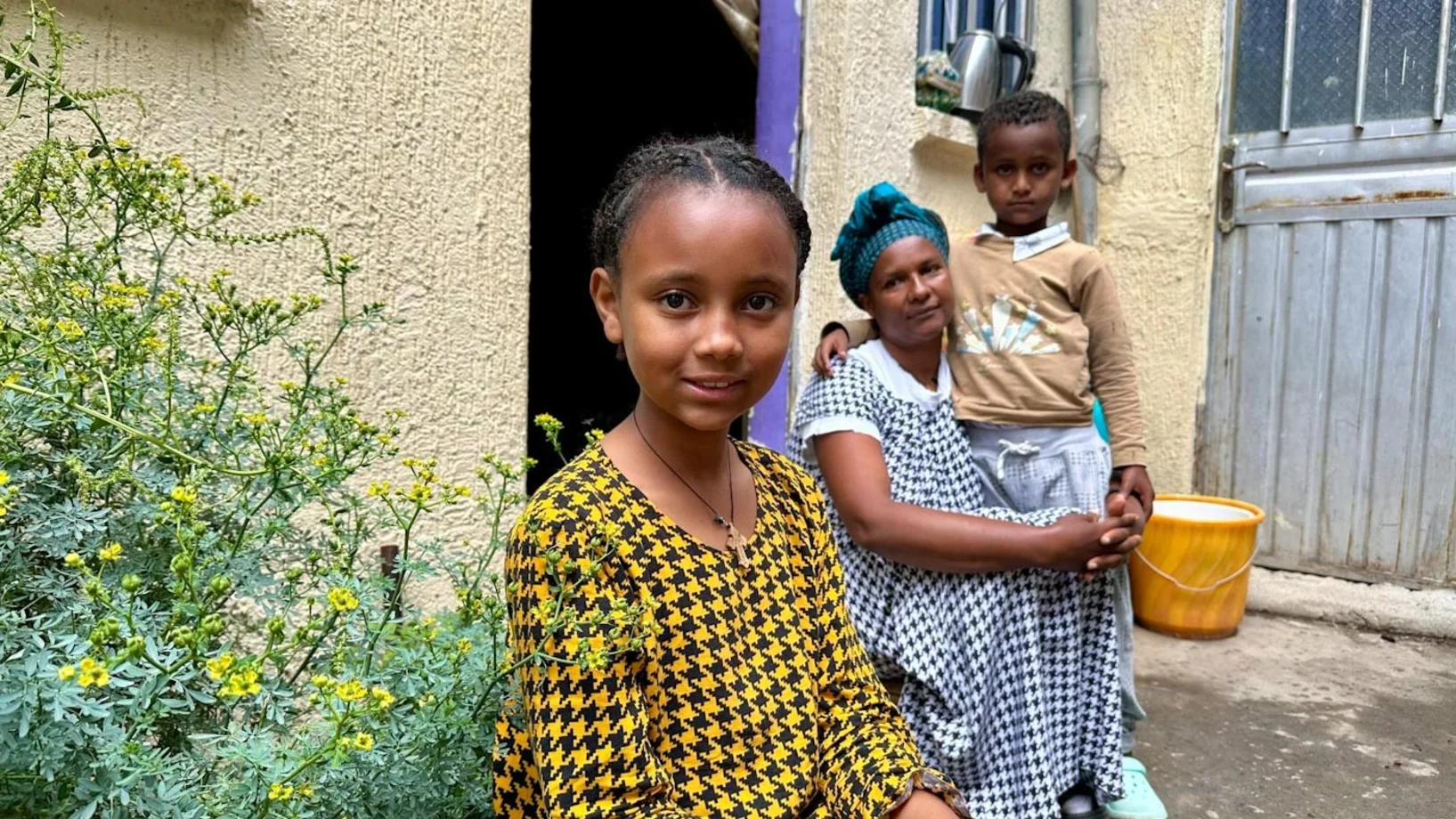
Gete Agegnehu Haile also came from Wollega with her parents and her husband. The 26-year-old now lives in the camp with her five-year-old son, Chernet. Her husband tries to earn money as a barber in Dessie, about 30 kilometers away. But his wages are barely enough for himself; he can send very little to his family. “I have to get by here with my son, mostly on my own,” says Gete. When she finds work, she takes on jobs as a day laborer. Like Gete, the vast majority of families have no reliable source of income. At the same time, high inflation in Ethiopia has made food much more expensive. As a result, some families are eating less, buying food on credit, or going into debt.


Mare Dinkiye, 18, tried to help her family in a different way. Through an agency, she found a job as a domestic worker in Saudi Arabia. The agency covered the cost of her trip up front. But the job ended after only 18 days. Mare says she was hired to work for one household but was also expected to work for a second one. She refused and referred to the original agreement. During the ensuing argument, she says her employer pushed her off the second floor. That is her account. It is impossible to verify exactly what happened. What is certain is that Mare returned to Ethiopia with leg injuries. She had already received medical treatment in Saudi Arabia, and at home she underwent further traditional treatments and massages. Does she want to go abroad again as a migrant worker? “If it’s possible, I’ll go again. I have to help my family!” says Mare. “I just don’t want to go back to Saudi Arabia.”
Menschen für Menschen, together with its local partner organization, the Emmanuel Development Association (EDA), is now providing emergency aid in the two camps. 757 families in particular need are receiving cash payments twice. Depending on family size, each payment amounts to the equivalent of between 43 and 58 Swiss francs.


“In the past, aid organizations often bought food and went to great lengths to transport it by truck to the affected areas,” says Getachew Zewdu. “But here in Haik, the markets are functioning. So families can shop for themselves. They know better than we do what they need most urgently right now.” That could be flour or grain, but also medicine, soap, or school supplies.
Additional start-up assistance is planned for 100 families who demonstrate the potential to establish their own businesses. They are to organize themselves into five self-help groups. There, they will receive training, counseling, and start-up capital. They will learn how to plan a small business, calculate income and expenses, and set money aside. Possible options include small-scale retail, raising sheep or goats, a fruit and vegetable stand, or a small snack bar.
“People have been surviving day to day for years,” says Getachew Zewdu. “They need the opportunity to earn a reliable income of their own so they can finally get back on their feet.”