"Until now, I've never had a choice."
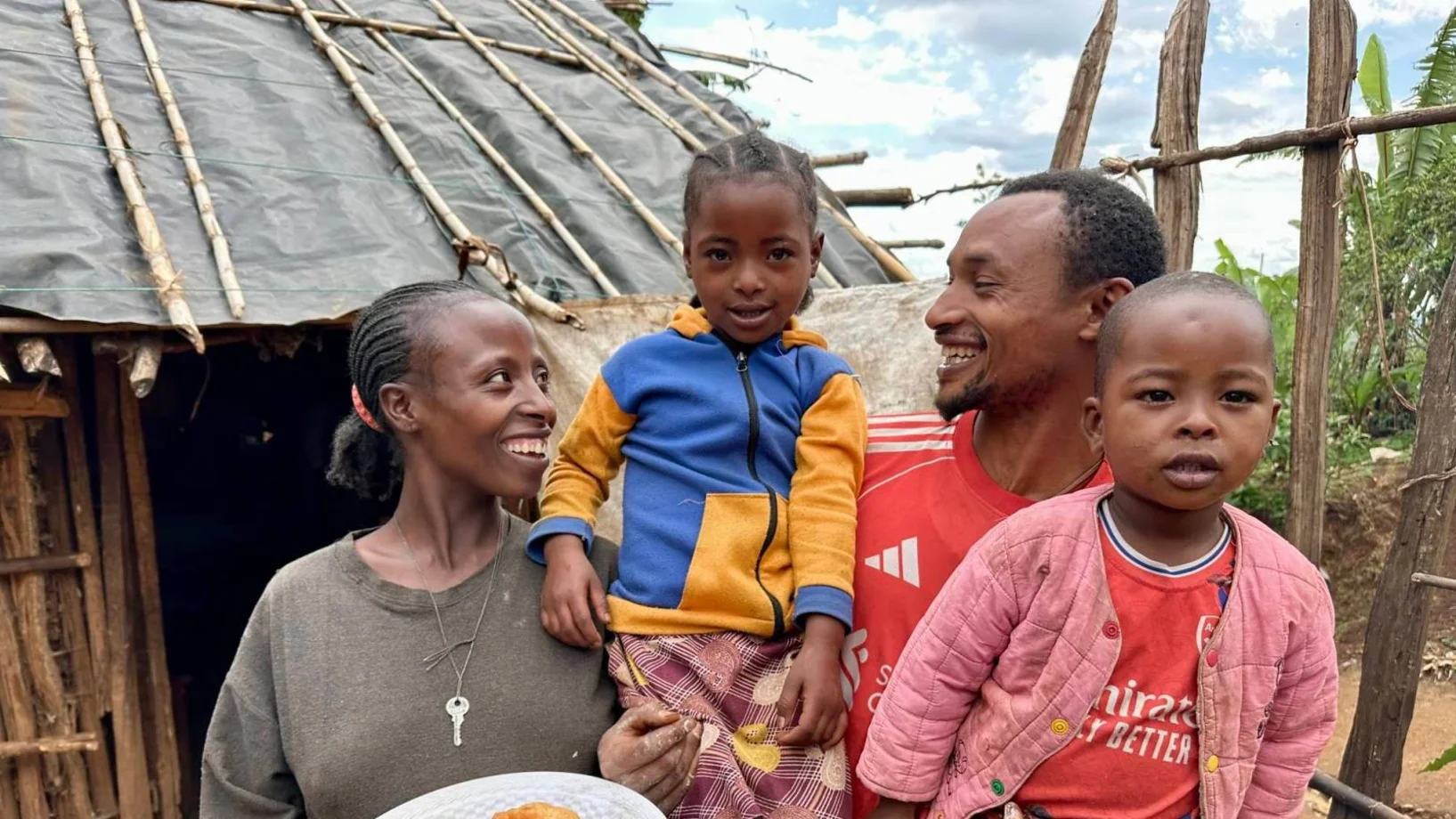
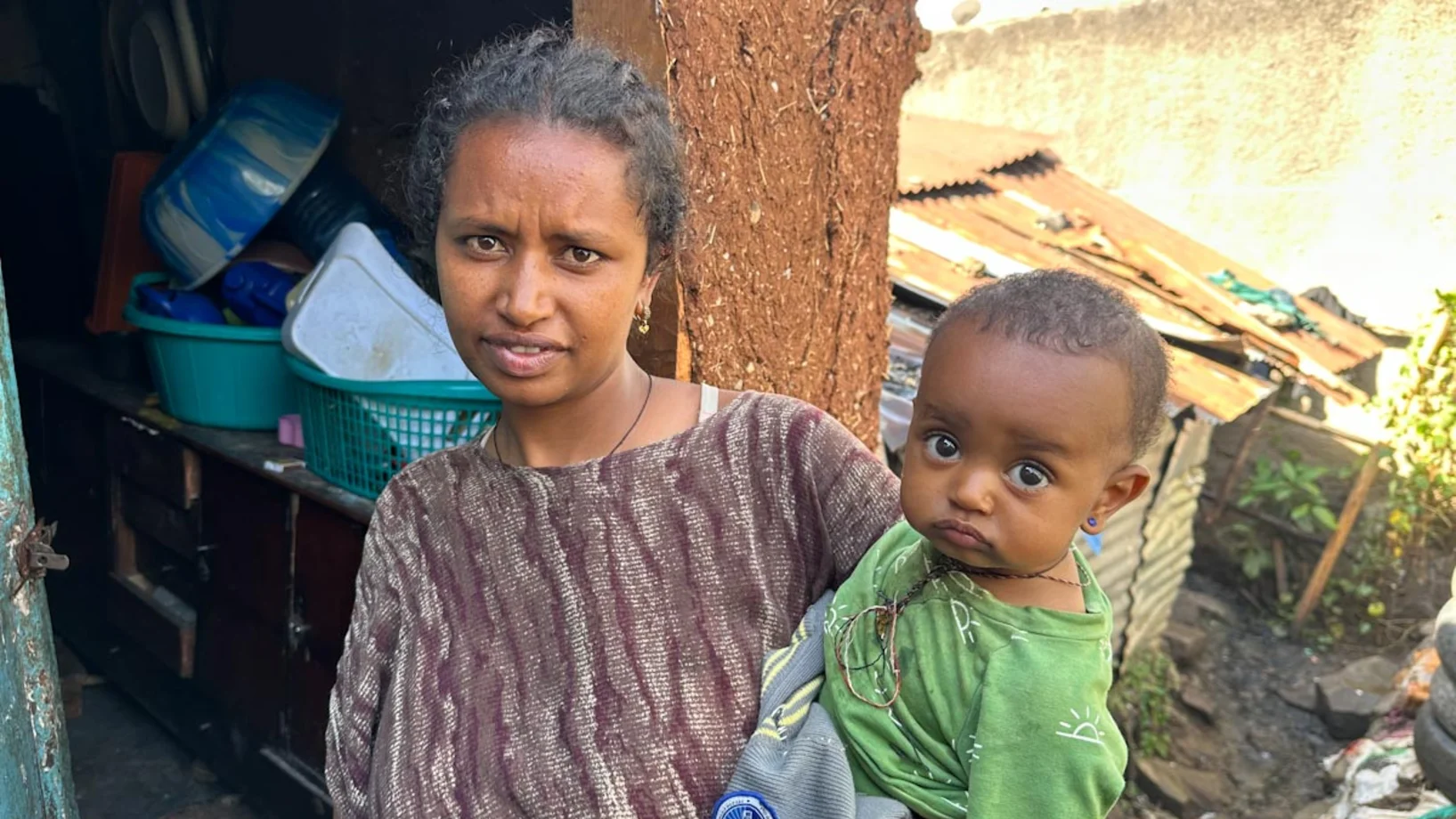
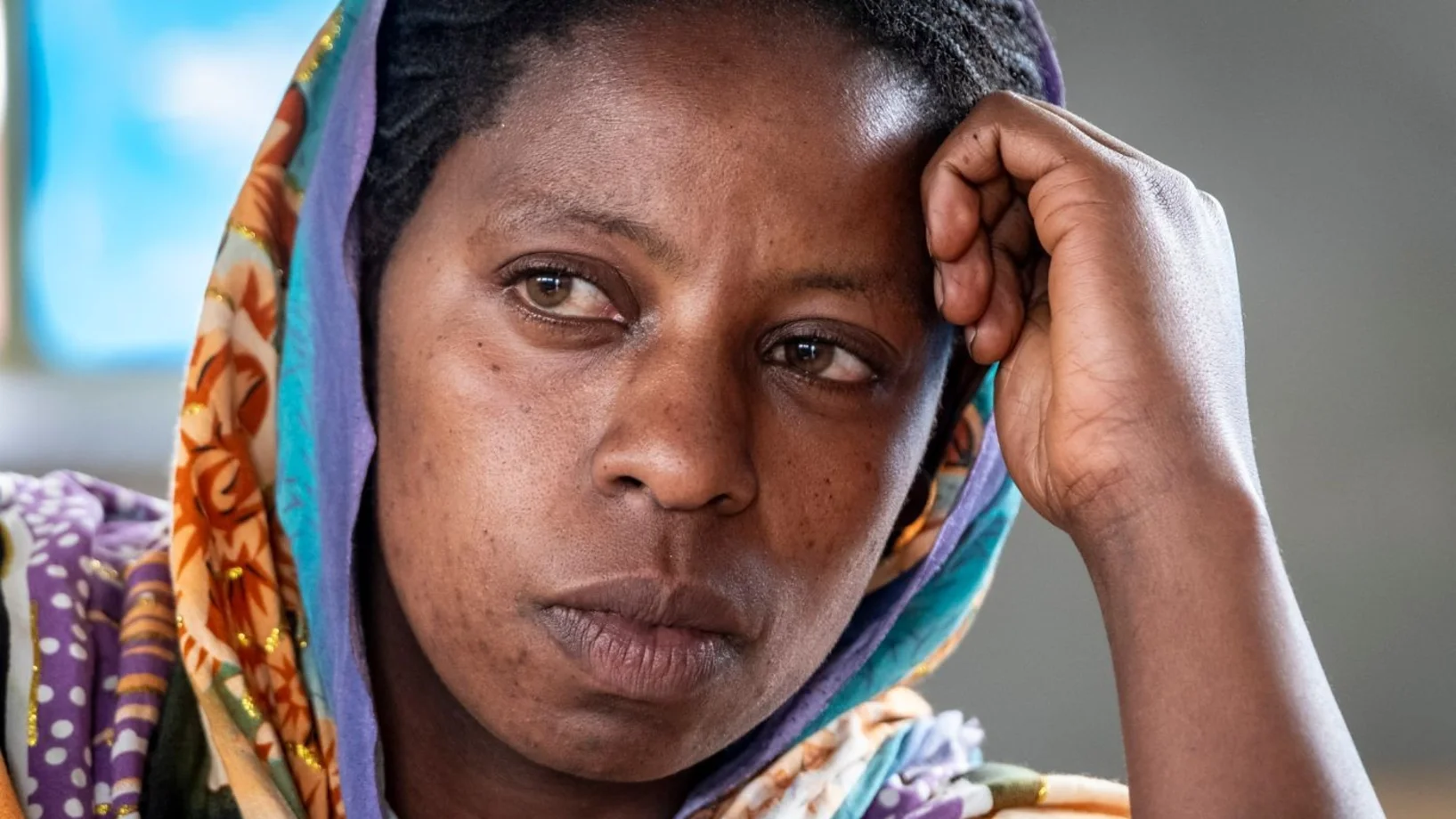
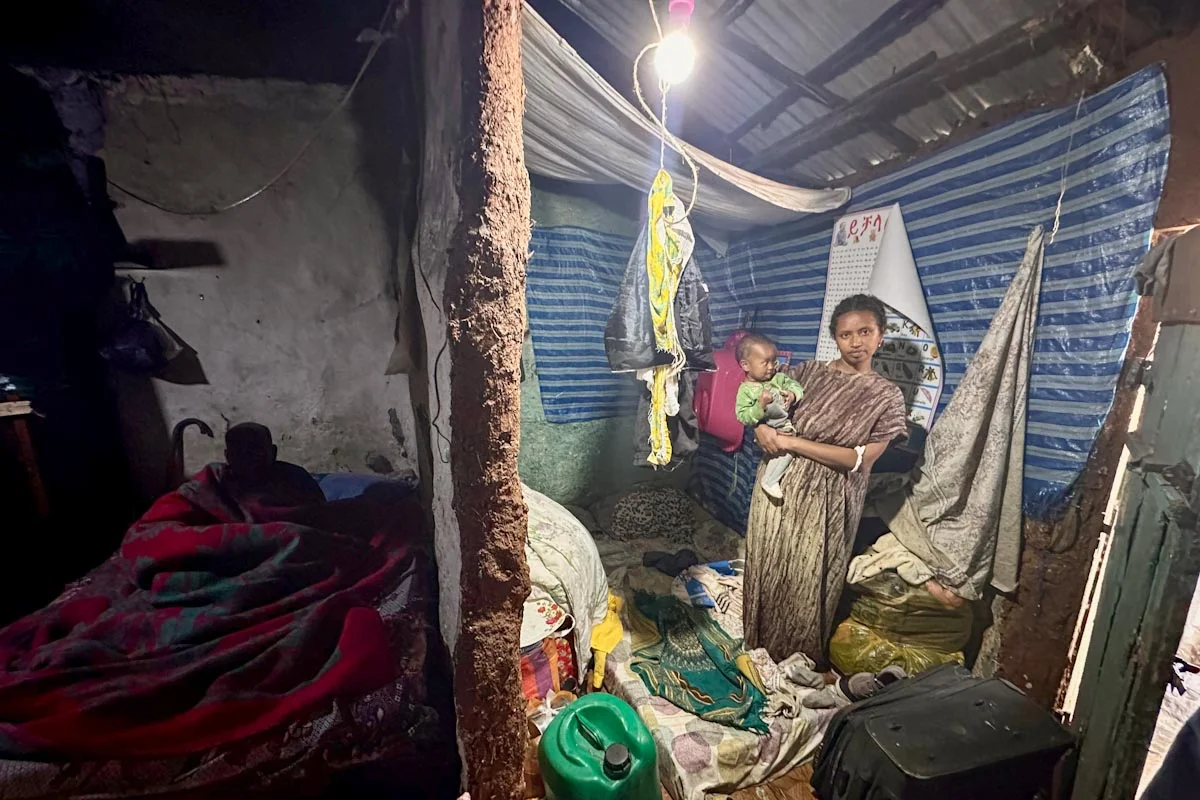
Hanna Addisu, 28, lives with her family in a rented room. Only a curtain separates them from the landlord, a bedridden old man. Her daughter Makrina had jaundice and was malnourished. But now Hanna hopes for a change in her life.
I am 28 years old, married, and have two children. My husband works as a bus driver on an intercity bus. My son Henok is five years old and goes to kindergarten. My daughter Makrina is nine months old.
We're subletting. The landlord lives with us under the same roof. He's bedridden. There's only a curtain between his bed and our small room. There's no privacy. When we eat, I invite him to join us. That's just how things are done around here. But of course, the landlord hears everything else too. He basically hears our whole life.
We pay 4000 Birr a month in rent for this room (about 20 Swiss francs). When we moved in, it was 3000 Birr. After a month, the landlord said: "4000 Birr, accept it or move out!" We had no choice. It's hard to find accommodation.

Our life has never been easy, but we used to get by much better. I sell small items on the street. In my tray, I have tissues and chewing gum. On a good day, I earn 400 birr. Sometimes I braid the hair of girls and women in the neighborhood for money.
Then I became pregnant with my daughter Makrina. People sometimes ask me why we had another child under our difficult circumstances. Then I say: Not everything in life is in our control. The pregnancy wasn't planned. I believe that God willed it so.
And I thought we would manage it well.
Unfortunately, prices have skyrocketed since then. Within a year and a half, everything has become much more expensive, in some cases double. A diaper cost 12 Birr, now it costs 25 Birr. Five liters of cooking oil cost 900 Birr, now it costs 2000 Birr. A liter of milk cost 50 Birr, now it costs 85 Birr. My husband and I both work, and yet we can barely survive.
In addition, I became ill after Makrina's birth. I have diabetes, and there were complications after the delivery. I had to go to the hospital. My daughter was also sick. She had severe jaundice and was in a warming room.

I couldn't breastfeed her for three months. Neighbors collected money for formula so we could feed her. Despite this, she continued to lose weight.
That's why the "Menschen für Menschen" nutrition program is so important to us. We now regularly receive cooking oil and nutritious flour. Without this support, our lives would be simply terrible.
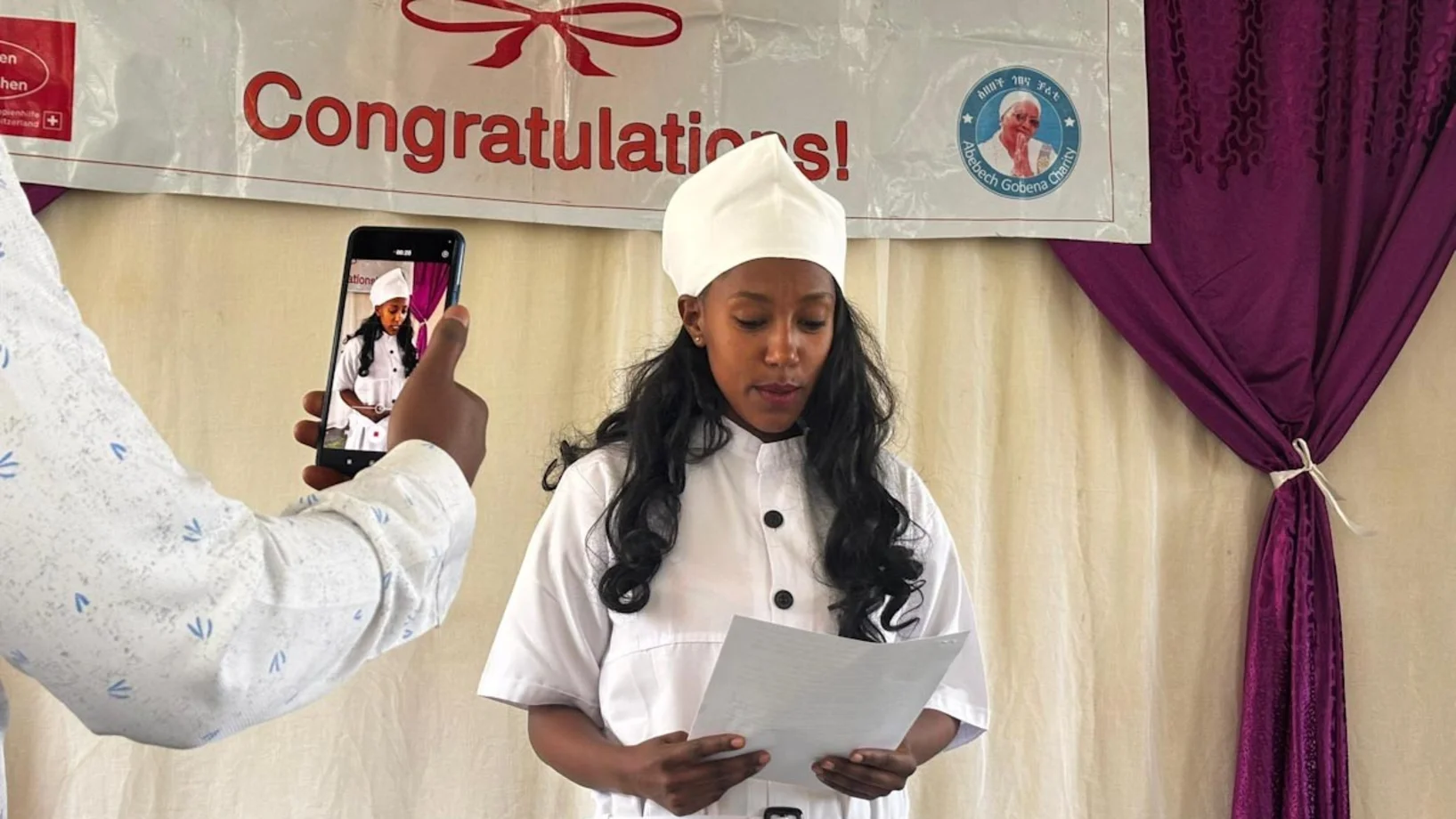
Despite everything, I have hope. I attended school up to the 10th grade, so I have good qualifications for vocational training. Menschen für Menschen offers vocational training, for example as a cook, in hotel service, or in childcare. I really want to participate in such a training program and am waiting for the next application round. I hope I get a place. The training is aimed at women like me who live in extreme poverty and want to change their lives. Both of those things apply to me.