"He let me down."
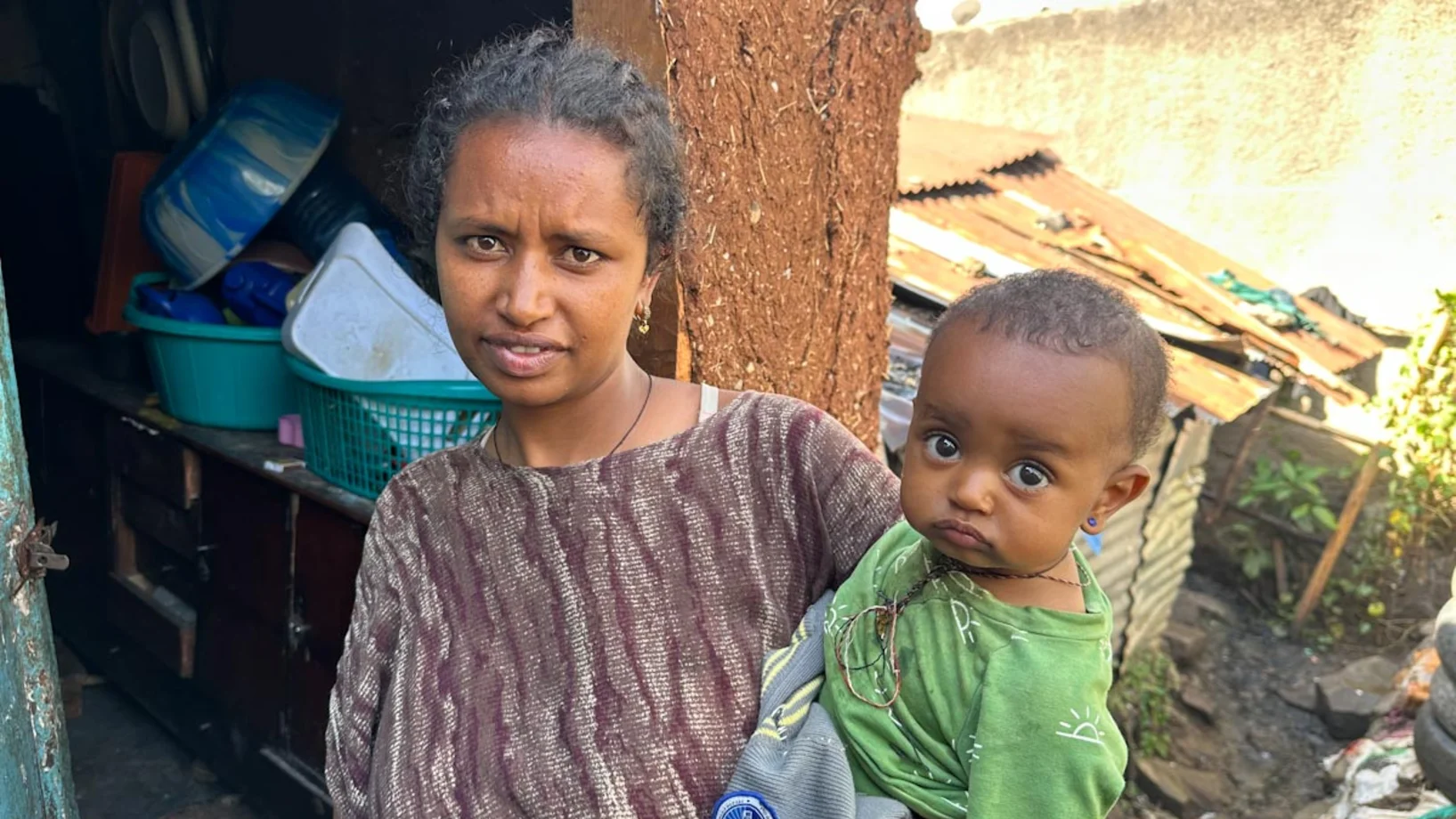
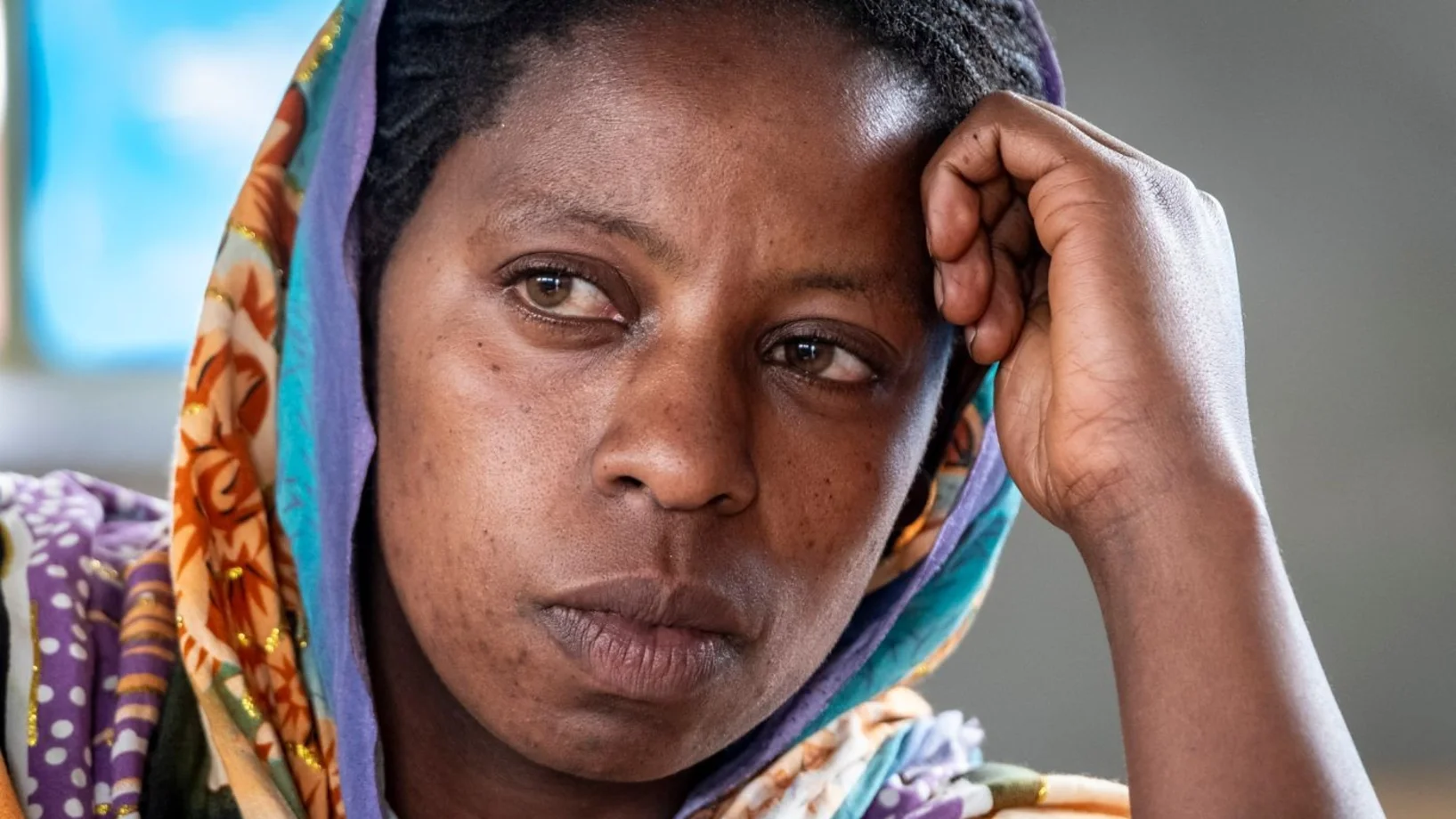
When Haddse Nigusse became pregnant with twins, the children's father disappeared without a trace. Today, the 22-year-old lives on handouts. But she hopes for vocational training.
I come from a farming family in Tigray. At 16, I moved to Addis Ababa. I lived with other young women and worked in a factory where coffee beans were cleaned and sorted.
I met Abuye through acquaintances from my hometown. He came from the same area as me. We fell in love and moved in together.
He wanted a child. He was the one who insisted. I trusted him.
I was eight months pregnant with twins. When I got home, my clothes were scattered on the floor. At first, I thought a thief had broken in. Then I saw that all my boyfriend's things were gone. His clothes. His shoes. Everything.
Only my things were still there.
I asked the neighbors and searched the neighborhood. Nobody knew anything. He didn't answer his phone.

After three days, I began to realize he wasn't coming back. With each passing day, I grew angrier. I wondered how I would survive alone with two children.
I called my sister Selam. She was only 17 years old. Immediately she said: "I'll come and help you."
Today we live together in a tiny rented room. My sister works in the same factory where I used to work. She earns about 8,000 birr a month (around 40 Swiss francs). But the rent alone eats up 6,000 birr.
Diapers cost around 600 Birr per pack. That's why I often only use two a day. When I go begging, I put fresh diapers on the children. After that, I make do with cotton cloth.
I beg in front of churches. On an ordinary day I receive between 250 and 300 Birr.

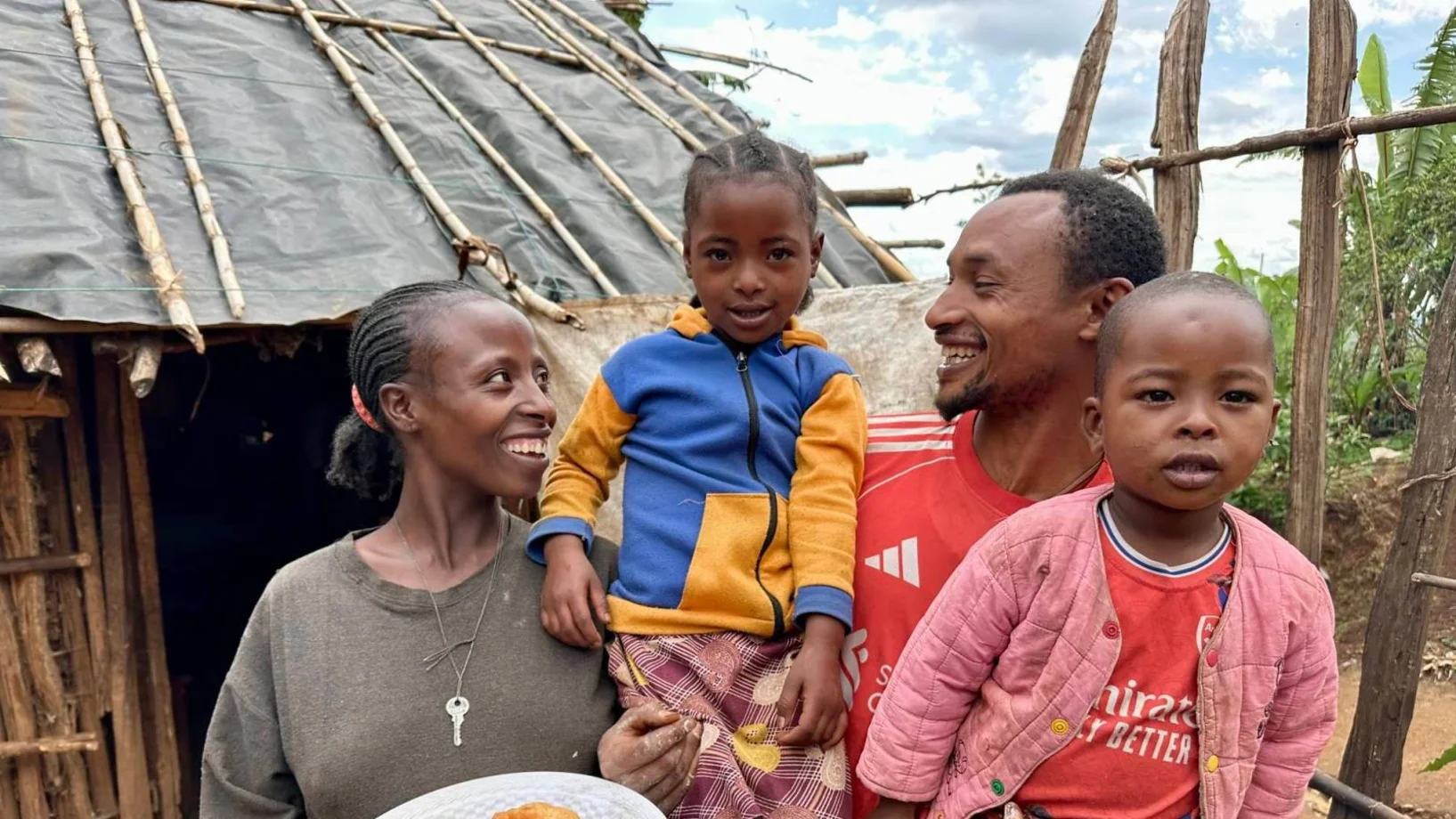
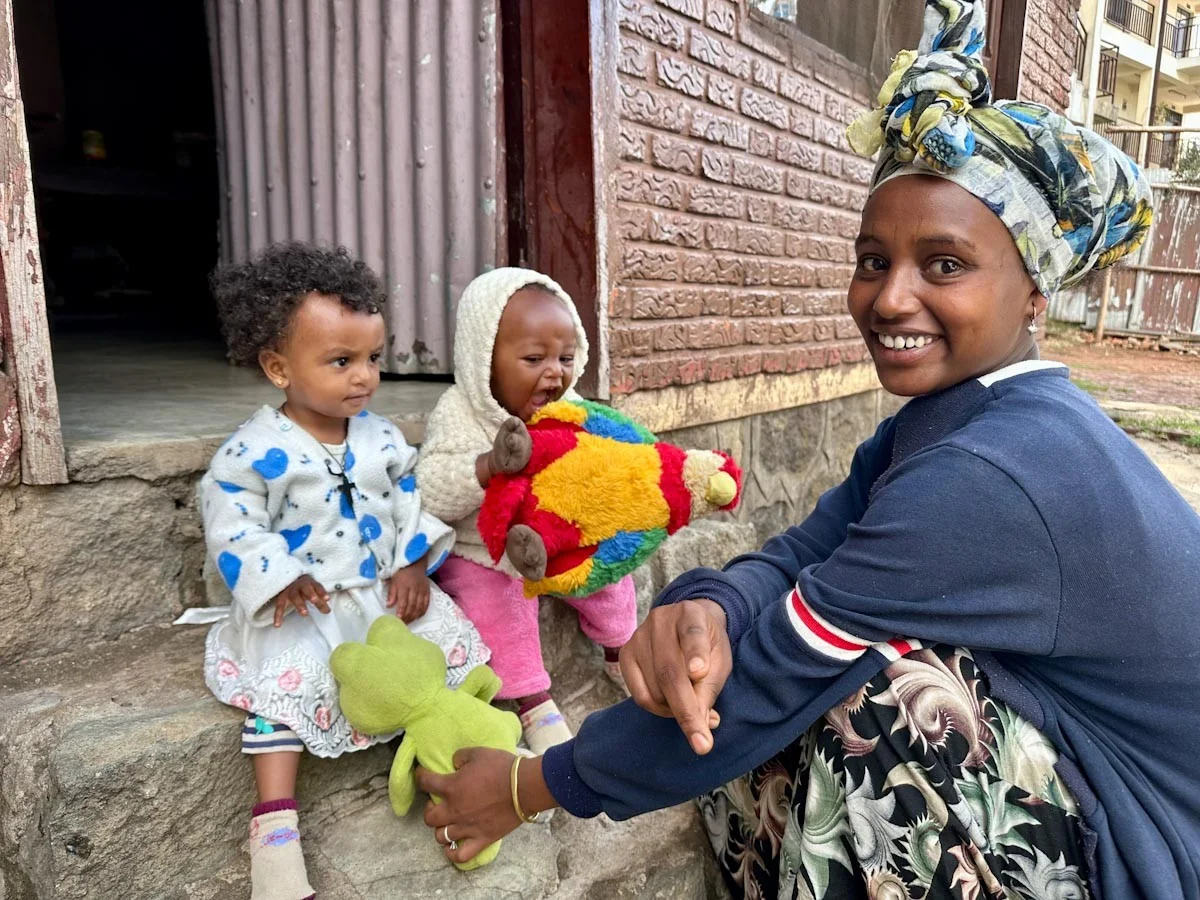
Although my children are twins, they couldn't be more different. My daughter Yamariam is very clingy. She almost always wants to be with me, on my lap or on my back. My son Yabsira, on the other hand, is braver. He smiles at strangers and isn't afraid of anyone.
They are also different when it comes to food. Yabsira always has a big appetite. Yamariam is much more reserved. That's why I make sure her brother doesn't drink all the milk.
Only her father knows why he left us. Perhaps he became afraid of the costs. He was always very stingy. But he seemed to have plenty of money for his friends and for drinking.
I hardly ever think about him anymore. Sometimes acquaintances mention seeing him somewhere in the city. I listen silently, but I don't ask any questions.
My thoughts are with the future. I can't beg forever. Today, people give me some money because they see the twins. But the children will grow up. What will happen then?
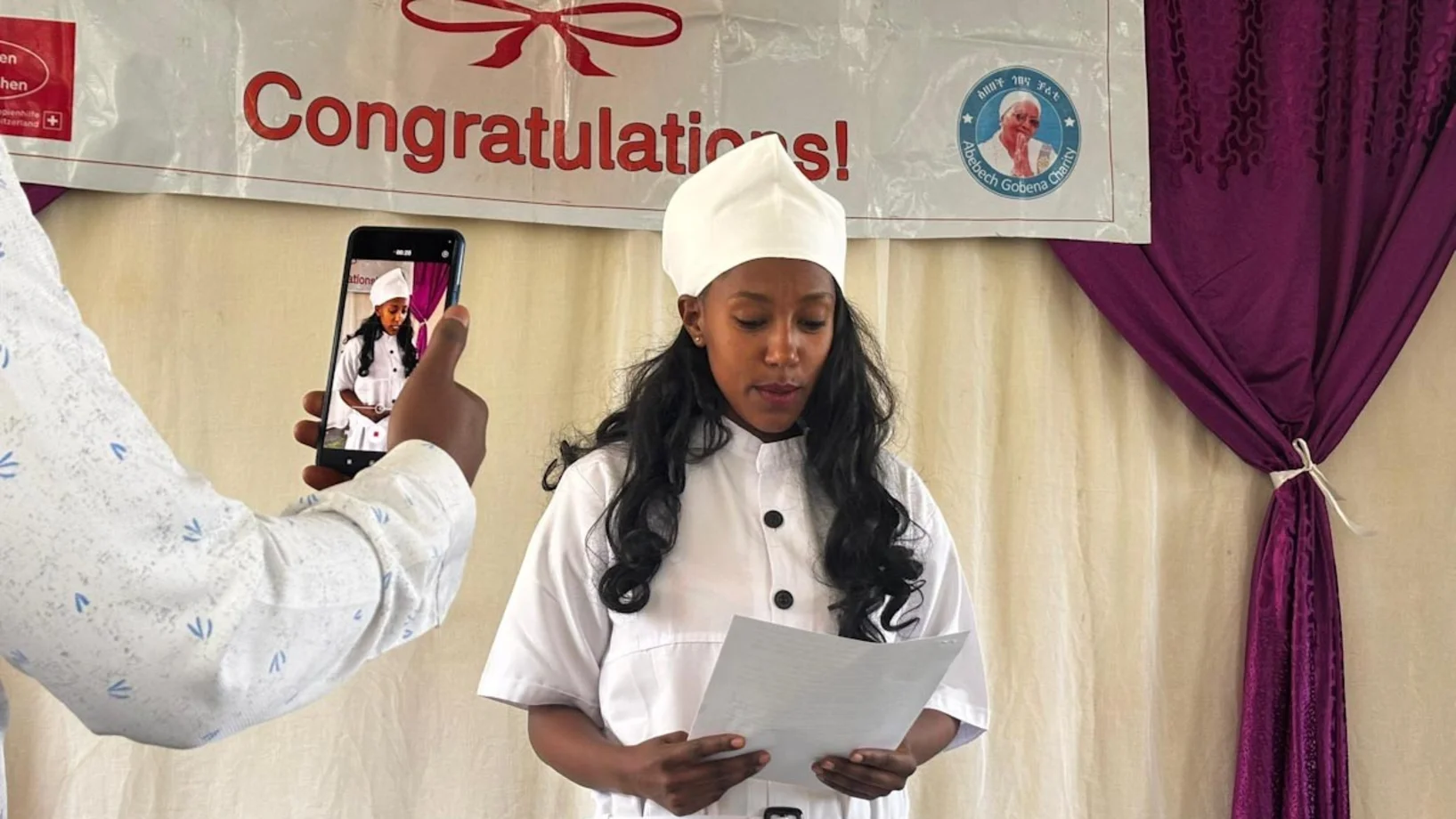
That's why the support from Menschen für Menschen means so much to me. The food program helps us survive. And now I have the prospect of training as a chef specializing in Ethiopian and international cuisine. That's what I'm pinning my hopes on.