Mintamir Degwale endured much to support her mother and siblings. Human traffickers exploited her. Now she is learning how to feed her children herself – and for the first time, she is looking to the future with hope.
I spent many years working in Arab countries. It was a difficult life. I went to help my family, but I suffered a lot there.
I was sixteen when I went to Yemen. My passport said I was twenty – otherwise I wouldn't have gotten a work permit. Many of us do it that way. We often don't have birth certificates, so we give a different age just to be able to travel.
I worked in a household there for a little over a year. Then I heard that you could earn much more in Saudi Arabia – not one hundred, but five hundred dollars a month. So I joined a group of about twenty fellow countrymen, mostly young women. Smugglers were supposed to take us across the border. We thought it would take two or three days. It took fifteen. It was awful.
We walked through the desert, mostly at night so no one would see us. During the day we hid. There was hardly any water. Sometimes there was a spring along the way. We had nothing to eat. We were so thirsty. Some of us couldn't go on. I don't know how many. Three or four, maybe. They stayed behind. There was nothing we could do for them.
More smugglers were waiting on the other side of the border. They took us to a house and locked us in. They said we wouldn't be free until someone paid for us – two months' wages. I had nothing. One of my companions said she knew a woman in Saudi Arabia who could help, an Ethiopian woman. She called the woman. She paid for her – and for me, too.
After two days, I was taken away in a van. I had to wear an Abaya. The man driving me didn't say a word. Then we arrived in a large city. Later I learned it was Riyadh, the capital. They took me to the woman who had paid the traffickers. She had a house with several rooms where Ethiopian women slept. The woman helped us find jobs – but she demanded money from everyone. She profited from us. She exploited us.
I got a job in a house. I cooked, cleaned, and washed – from six in the morning until late at night. I only had one day off a month. Then I went back to the Ethiopian woman's house. Many Ethiopian girls met there on their day off. There were also Ethiopian men there. One of them was kind to me. I fell in love. I was seventeen, he was over thirty. I trusted him. When I received my wages, I gave him the money to send to my family.
Later I found out he was seeing other people too. He took our money and kept a lot of it for himself. After that, I knew I had to get out of there. I went to the police and said I had no papers. They jailed me for three months. Then the Ethiopian embassy helped me get back home.
But I couldn't find work in Ethiopia. So I left again – first to Beirut, then to Dubai. Everywhere I went, I worked in people's homes. I sent the money to my mother and siblings. I had back pain, a cough, and was often sick. The woman I worked for in Dubai bought me medicine, but eventually she said, "You're weak, you have to go home." She paid for my ticket, and I flew back. I had nothing left but the clothes on my back.
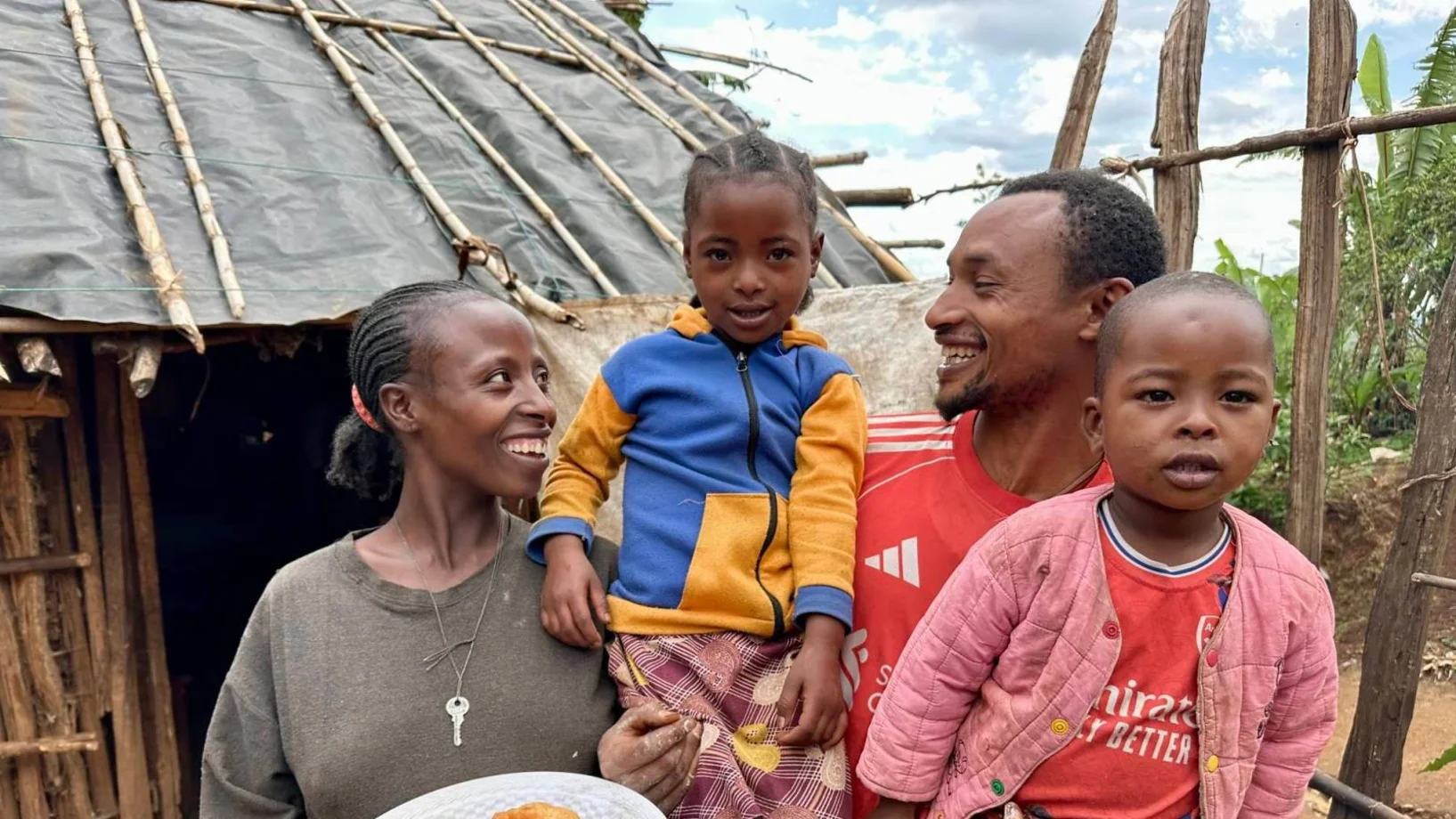
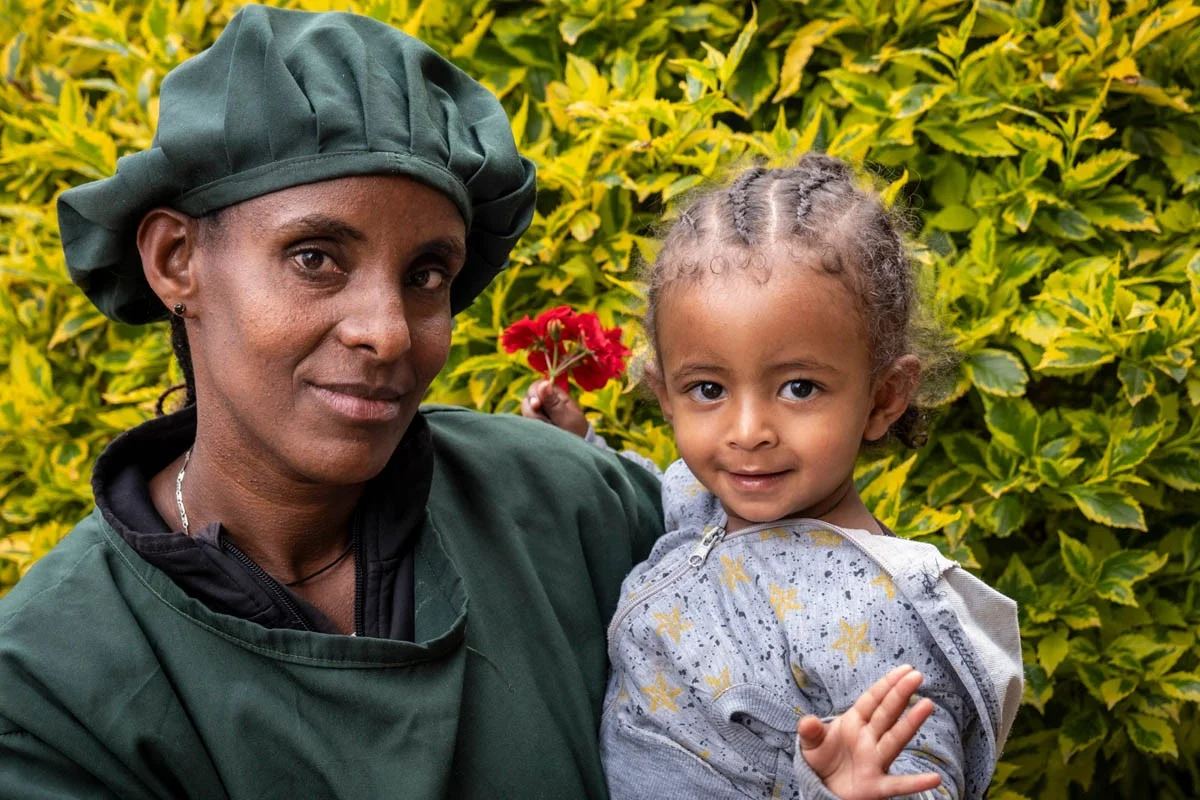
That was about six years ago. A friend introduced me to my future husband. We got married. Soon after, our first daughter, Yanith, was born. And now we have a second girl, her name is Hermon.
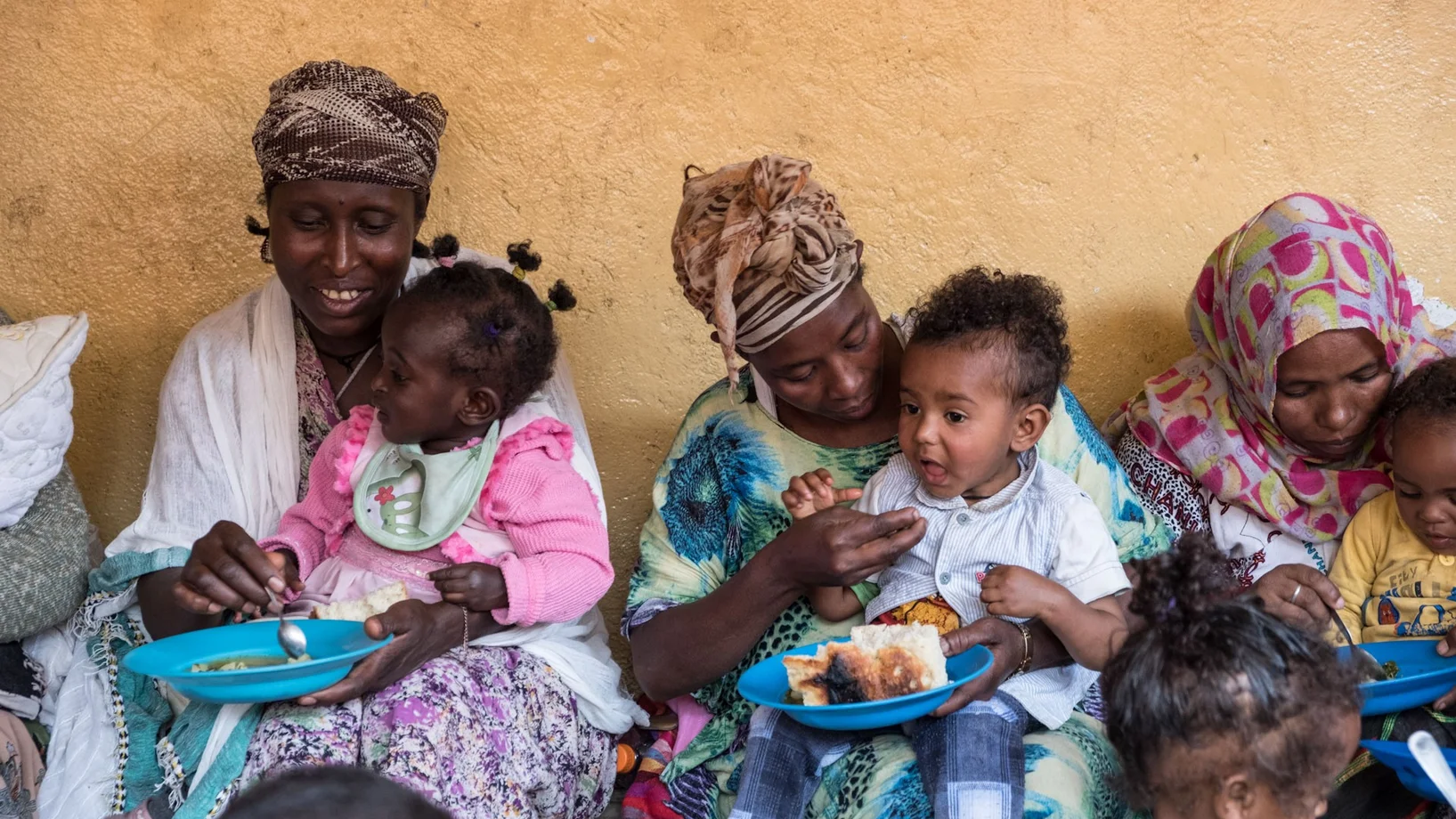
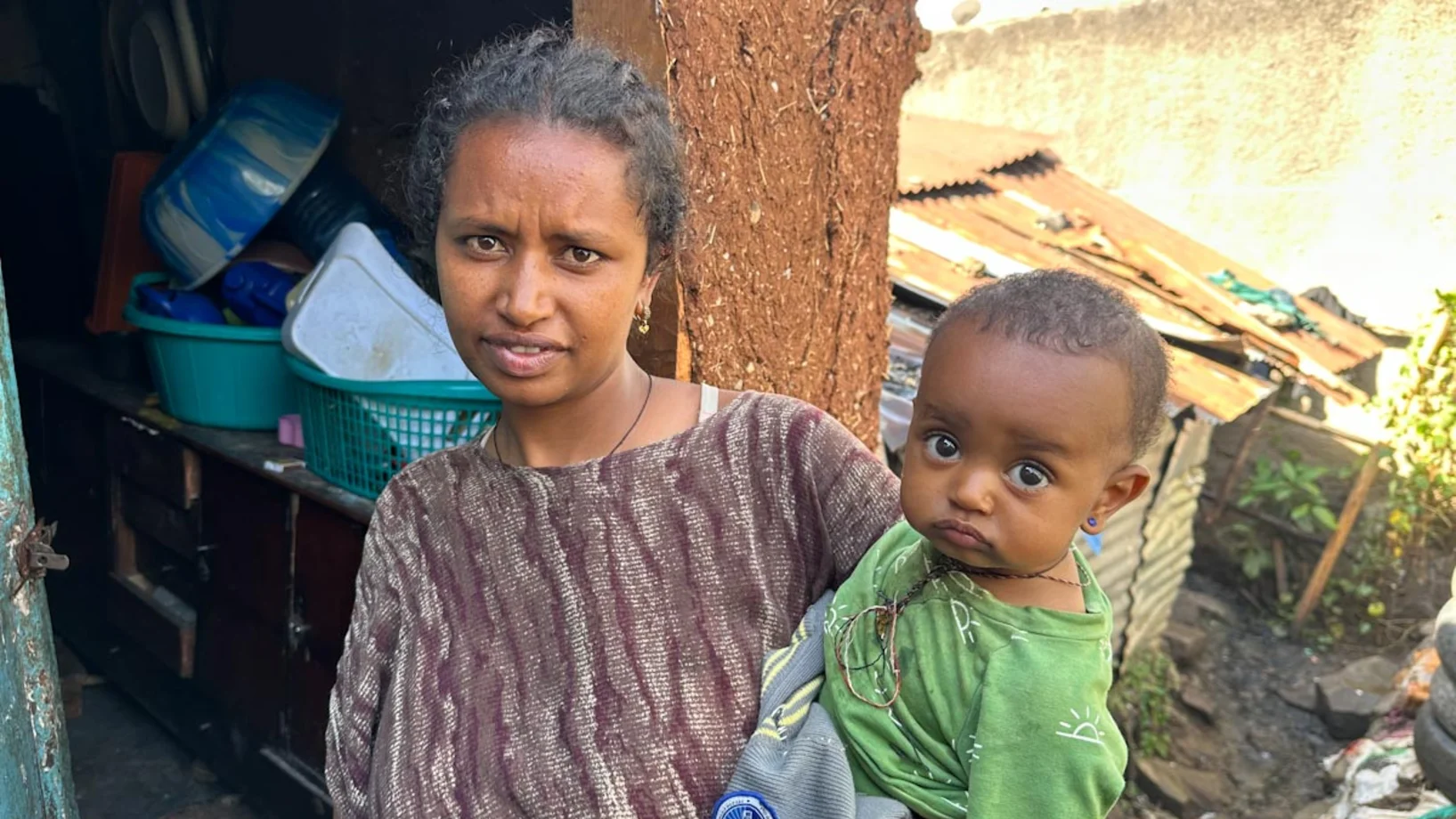
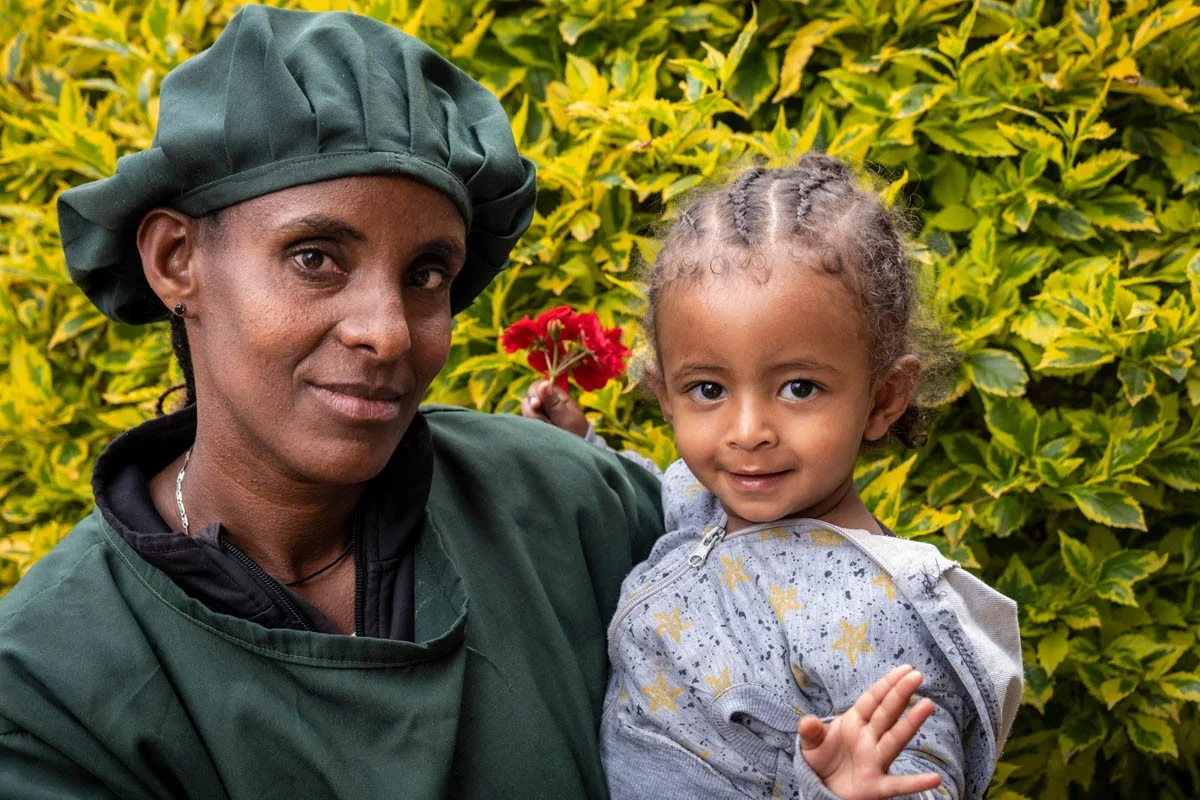
Unfortunately, my husband only finds temporary work as a day laborer. He repairs small houses in the slums. Hermon has always been a very weak child. Four months ago, she weighed only six kilos. We enrolled in the nutrition program run by Menschen für Menschen. She received special food, and I learned how to feed children well even on a tight budget. Now she weighs nine kilos.
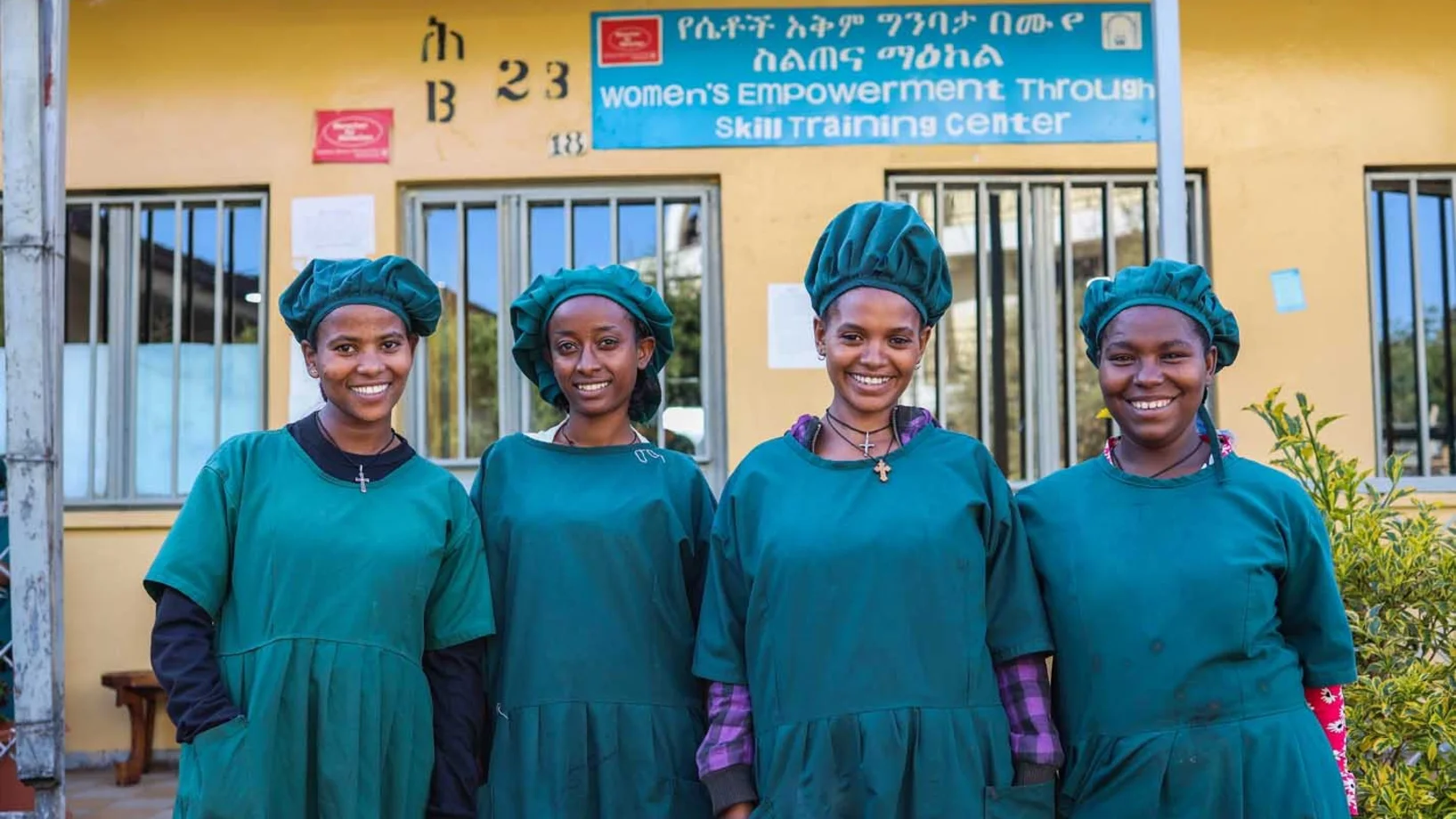
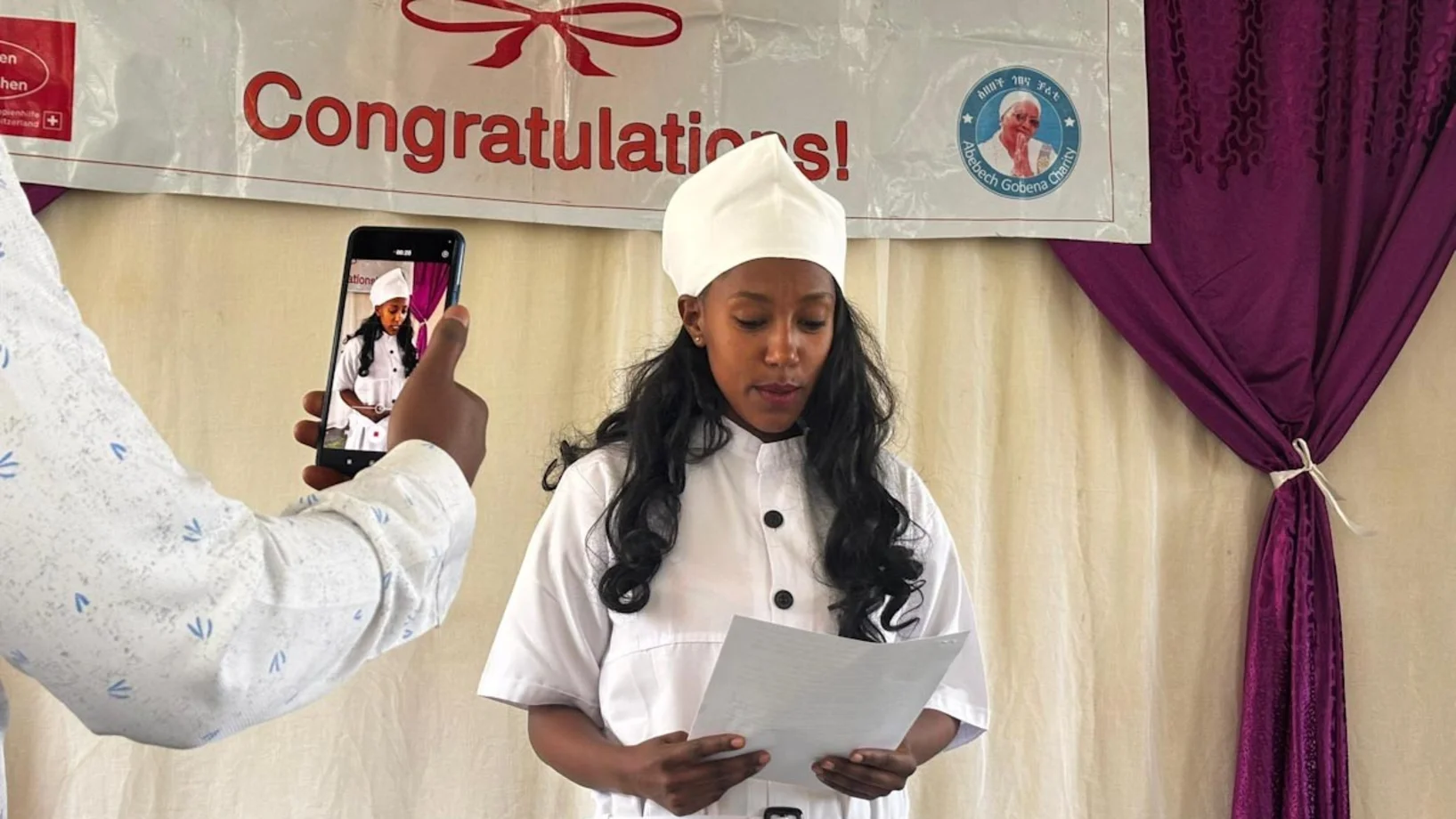
At the same time, I was accepted into the domestic worker training program at Menschen für Menschen. While I'm training, Hermon is in daycare.
I hope to find work after my training – perhaps in a daycare center or a restaurant kitchen. I want to earn my own money, provide for my children, and give them a future. I want my daughters to have a better life.