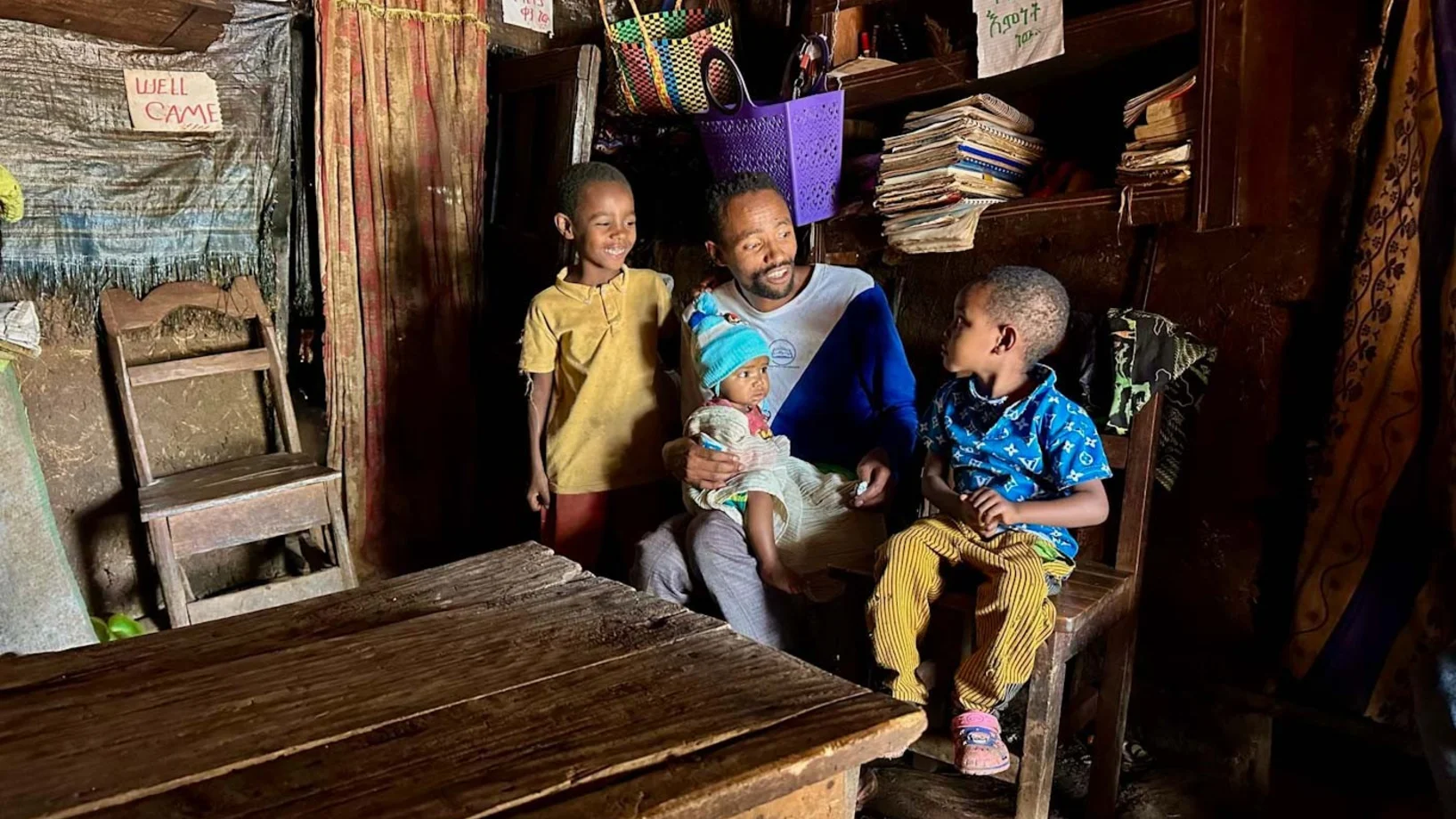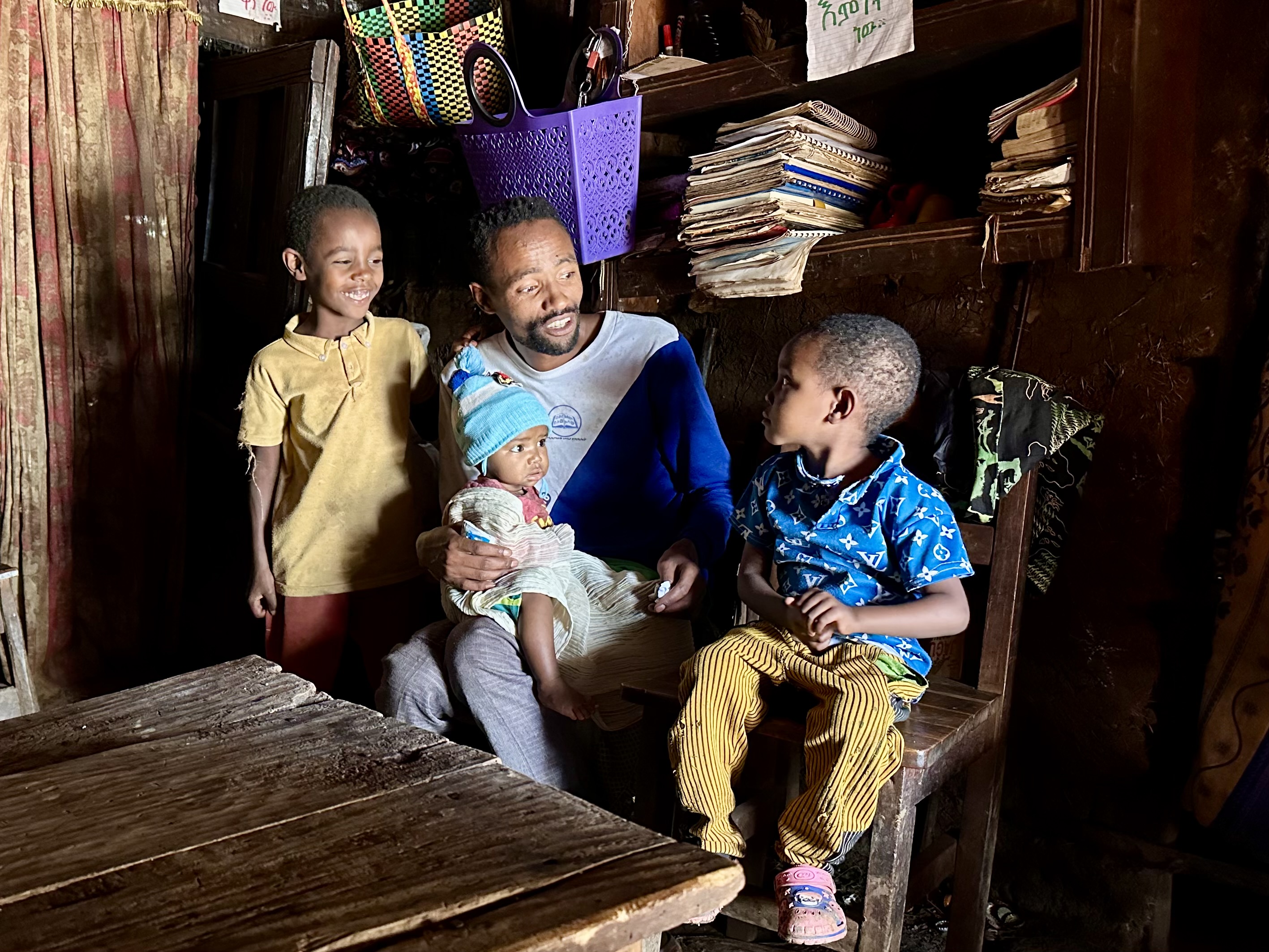
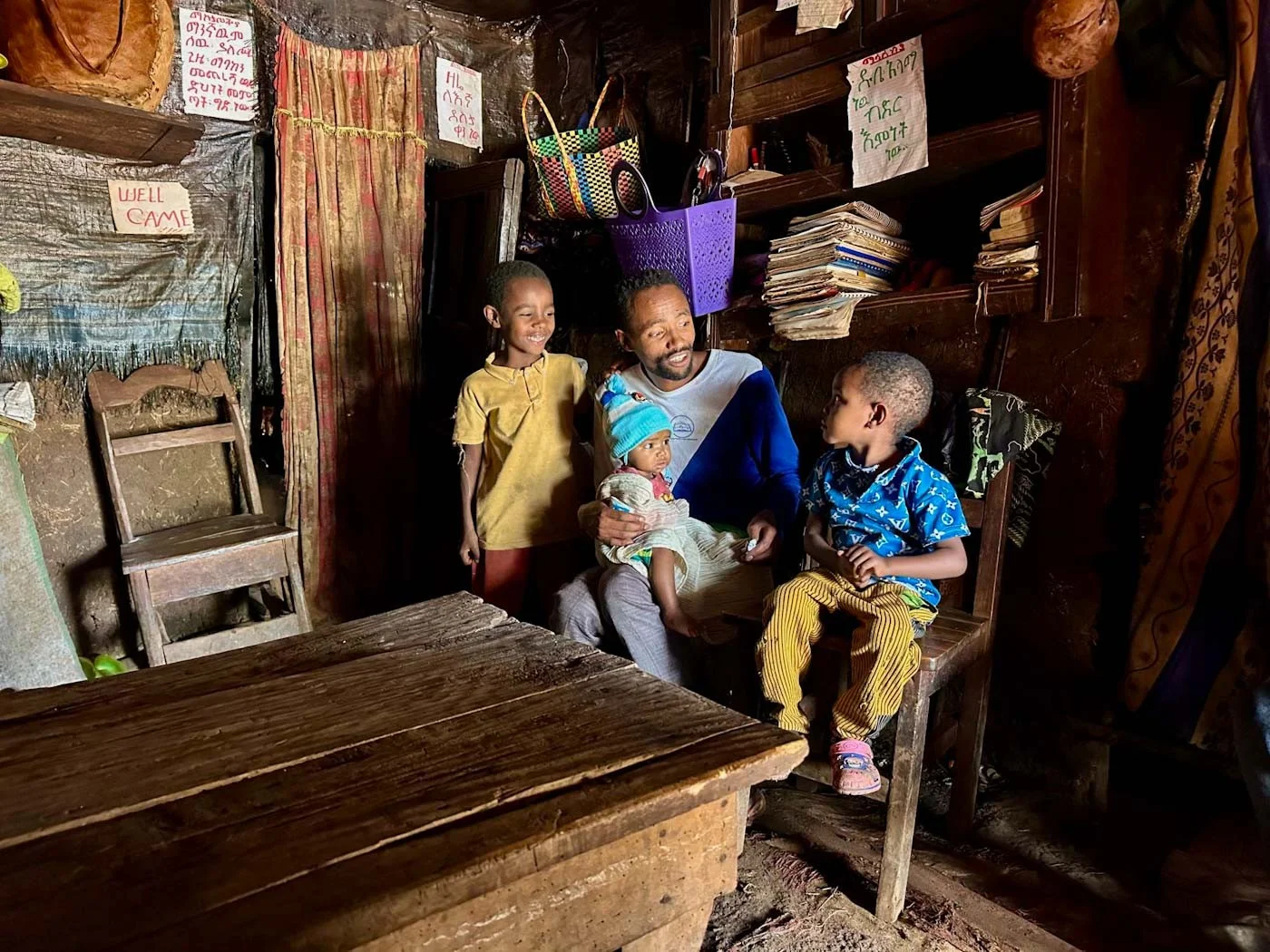
Zurich/Raphe – “People ask me, ‘Have you become a woman?’” says Kipe Tadesse with a smile. The smallholder from southern Ethiopia cooks, does the laundry, and takes care of his children. In the village, this is considered women’s work. When Kipe bakes injera—Ethiopia’s flatbread—in front of his house, passersby look on in amazement. “When they laugh at me, I laugh along with them,” he says. “I know that, in time, they won’t laugh anymore.”
Behind Kipe’s behavior lies a new approach to the fight against poverty. Menschen für Menschen trains so-called “role model families” in the Raphe district. Couples learn to share household chores and responsibilities more equitably and to make important decisions together. This gives women more time to pursue further education and earn their own income. About 90 families have participated in the training sessions led by local experts. Thirty couples are now leading the way as role models. The goal is for neighbors to see that their lives are changing and to follow their example.
When Women Lack Time
Raphe is a particularly poor district in southern Ethiopia. Nine out of ten families do not have enough to eat throughout the year. Most make a living from small fields. Families are growing, but the land is not. Traditional farming methods often yield only meager harvests.
But there is another reason for the hardship: the deeply rooted division of roles. Women are almost exclusively responsible for the children and the household. According to a survey by Menschen für Menschen, the father helps with these tasks in only three out of ten families. On average, women spend more than ten hours a day on unpaid housework and caregiving. They are also at a disadvantage when it comes to important decisions: in 51 percent of the families surveyed, the father has the final say, while in only 16 percent do the parents make decisions together.
The consequences are also felt economically. Those who spend their days fetching water, gathering firewood, cooking, and doing laundry have little time to pursue further education or earn their own income.
No More Pitting One Against the Other
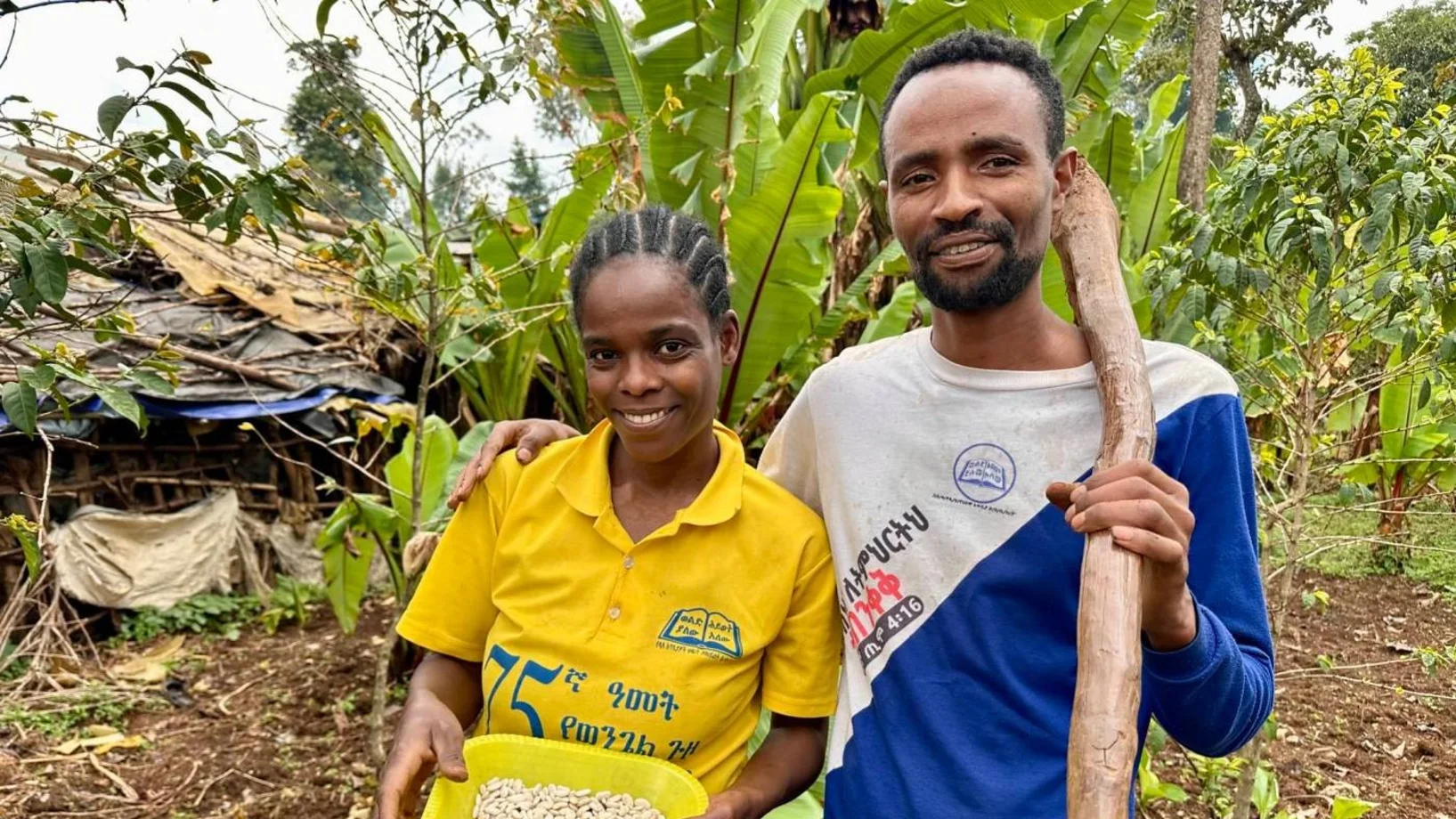
For Kipe and his wife Tigist, too, the division of labor used to be clearly defined. “When a child cried, I’d tell Tigist, ‘You take care of it!’” Kipe recounts. His wife recalls: “When he gave me orders, I’d get angry. We were constantly arguing; it was a battle.” Today, a sort of schedule hangs on the wall in their small mud-brick house. On it, the two of them outline how they divide up the daily tasks. Kipe takes care of the children, cooks, and does the dishes. Tigist, for her part, helps out in the fields.
“We men never thought about what we were burdening our wives with,” says Kipe. “I regret that now. Now I understand that we can only move forward together.” The new division of labor also opens up economic opportunities for Tigist. “Tigist used to be overburdened all the time,” says Kipe. “Today she can work as a cook at the elementary school because I take care of the children.”
But it’s not just their income that has changed. During our conversation, three-year-old Simon comes home from playing. Without a word, he leans against his father. Kipe kisses him on the forehead. “I’m much closer to my children today,” he says. “There’s more peace and love between us,” Tigist sums up. “We hardly ever argue anymore.”
First Laughed At, Then Imitated
Menschen für Menschen aims to help a total of 3,600 particularly poor families in Raphe permanently overcome hunger and poverty. The “role model families” are part of a comprehensive program. Agricultural experts help small farmers increase their yields and grow crops for the market. Savings and credit groups facilitate investments and new sources of income. The program also includes family planning and access to contraceptives.
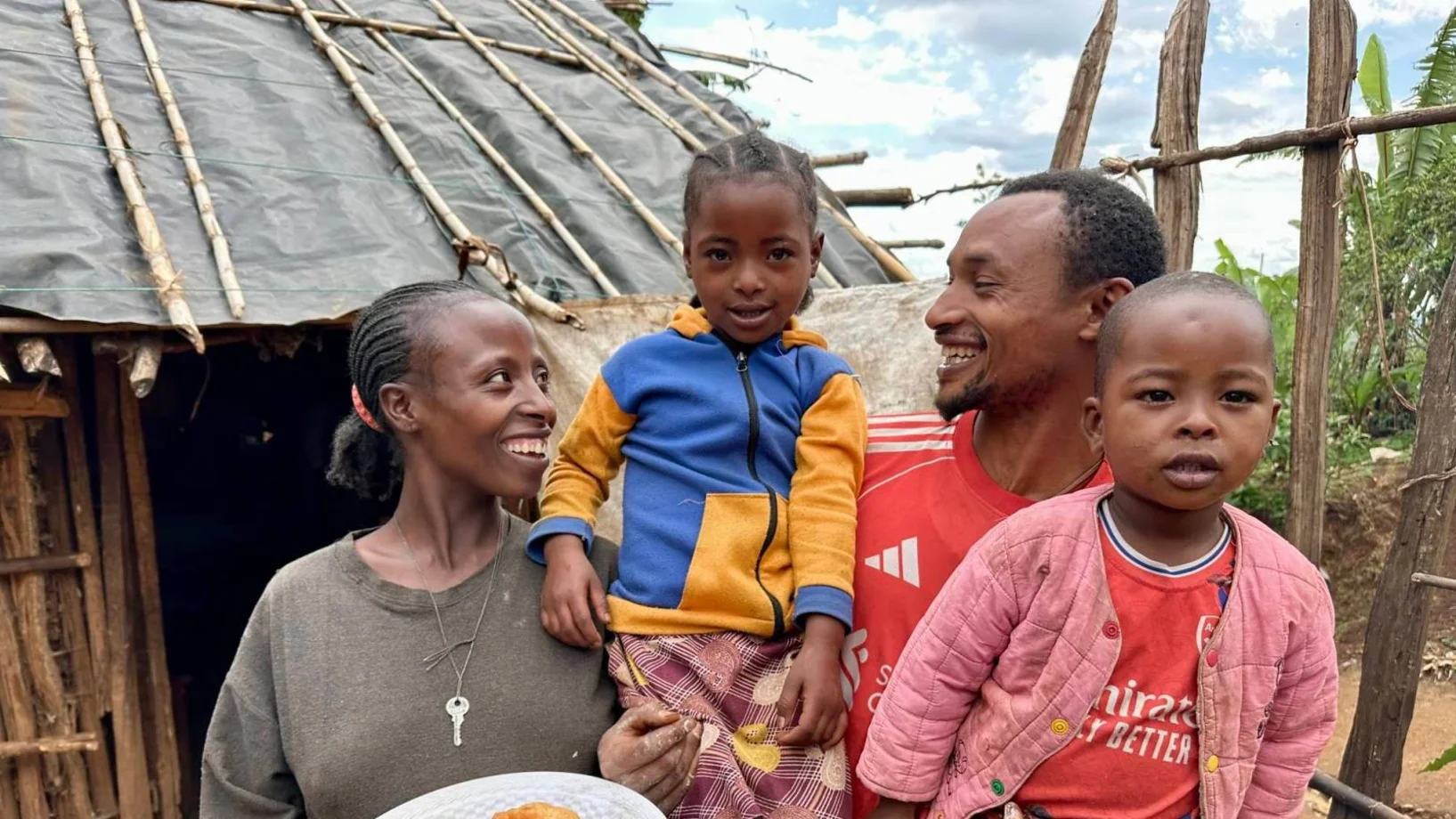
The idea behind the “model families”: Other couples see the changes taking place in their lives and follow their example. Kipe’s friend and neighbor, Melkamu Ayele, proves that this approach can work. “I was one of those who shook my head at him and laughed,” says the 30-year-old. But during visits, he observed how Kipe and Tigist treated each other. “After a while, I became envious.”
One day, Melkamu came home and saw how much his wife Nebret had to do. “I started sweeping after I closed the front door.” Soon after, he went to Kipe and asked him to explain how the two of them shared their responsibilities. Today, Melkamu and Nebret also share the household chores. Nebret uses the time she’s gained to earn her own money by trading beans.
About the Menschen für Menschen Foundation
Menschen für Menschen is committed to fighting poverty and hunger. The foundation was established by actor Karlheinz Böhm (1928–2014). In the spirit of its founder, the Swiss aid organization creates opportunities for the poorest families in Ethiopia. The goal of this work is to enable them to live with dignity in their homeland. The individual projects focus on women’s empowerment, vocational training, microloans, child welfare, family planning, and agricultural development. These components are tailored to local needs and implemented in collaboration with carefully selected local partners.
Download the press release as a PDF (in German) and the accompanying image in HD quality here: