Zurich/Hambela Wamena, March 11, 2026 – Hunger is a daily reality on farms. Only one percent of families eat three meals a day. Seven out of ten households suffer from food shortages for about half the year. This is the situation in the Hambela Wamena district of southern Ethiopia. Menschen für Menschen is helping families to sustainably improve their situation.
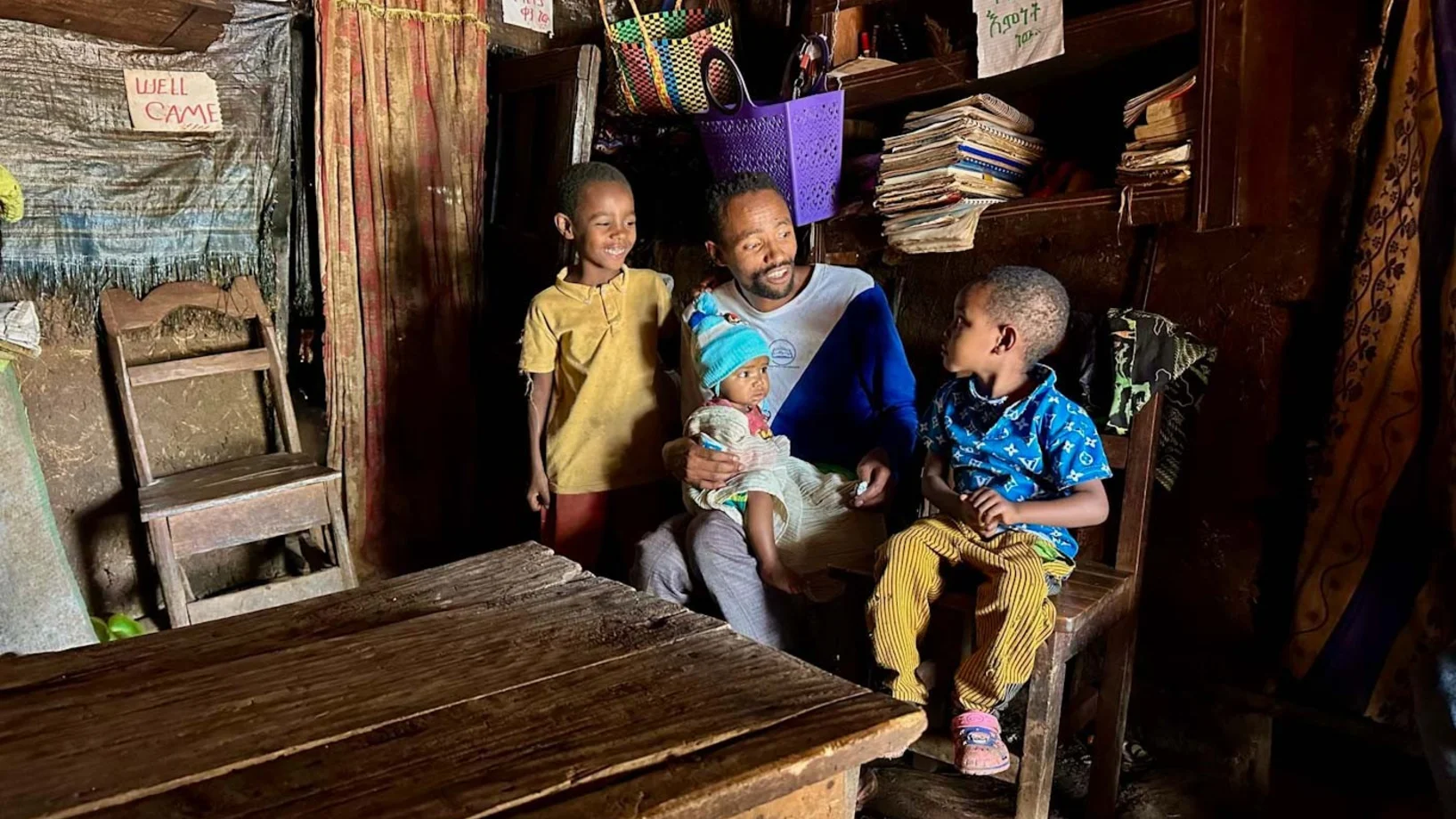
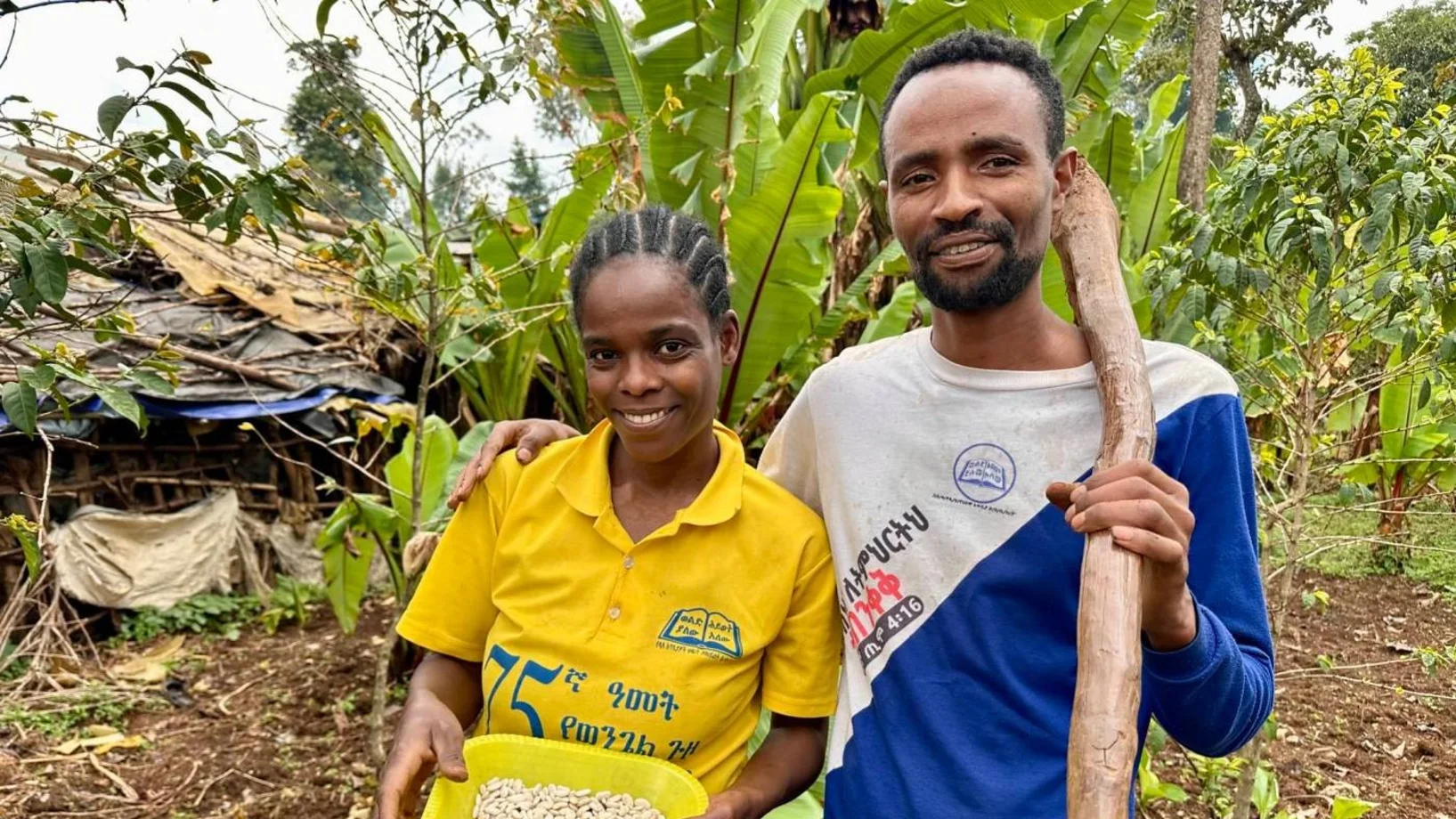
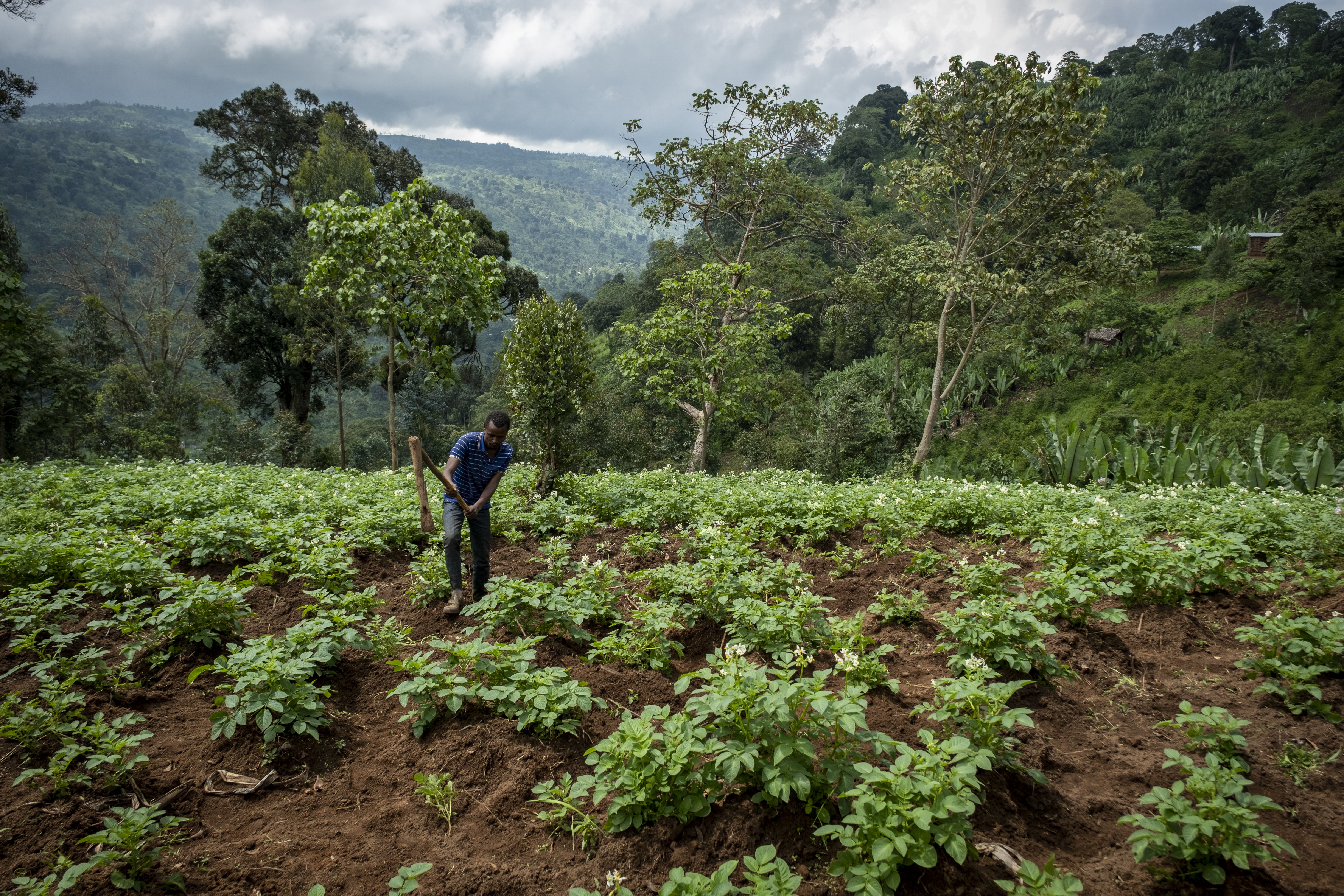
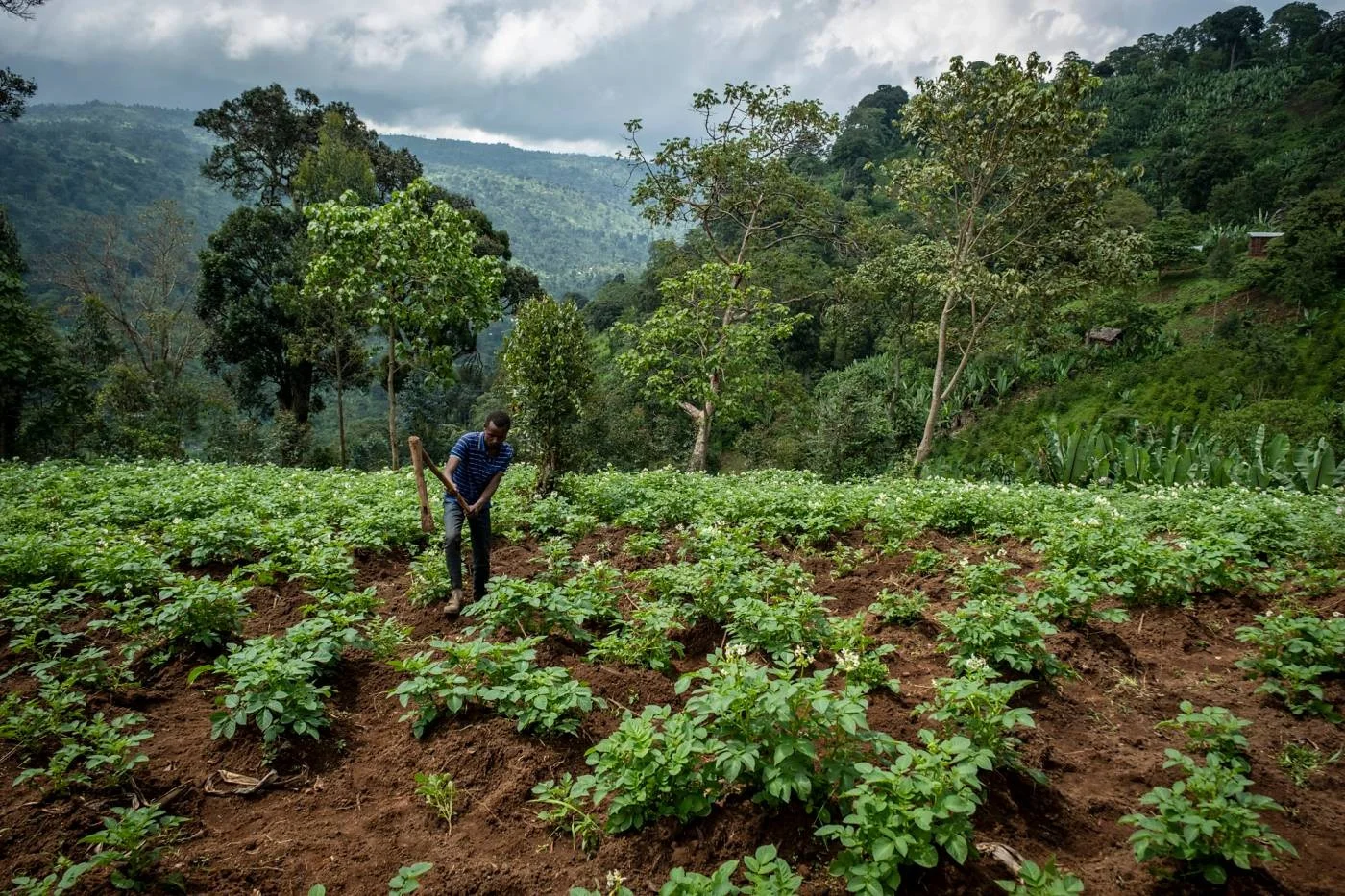
Nigatu Shibiru and his wife Dukani Hotesa live with their three young sons in the village of Sike Bokosa. The family owns only a tiny piece of land, no bigger than a quarter of a football field. They never had enough. Then Nigatu contracted tuberculosis. "I was afraid he would die," says Dukani. The treatment was so expensive that they had to sell their most important possessions: two packhorses, an ox, and a dairy cow.
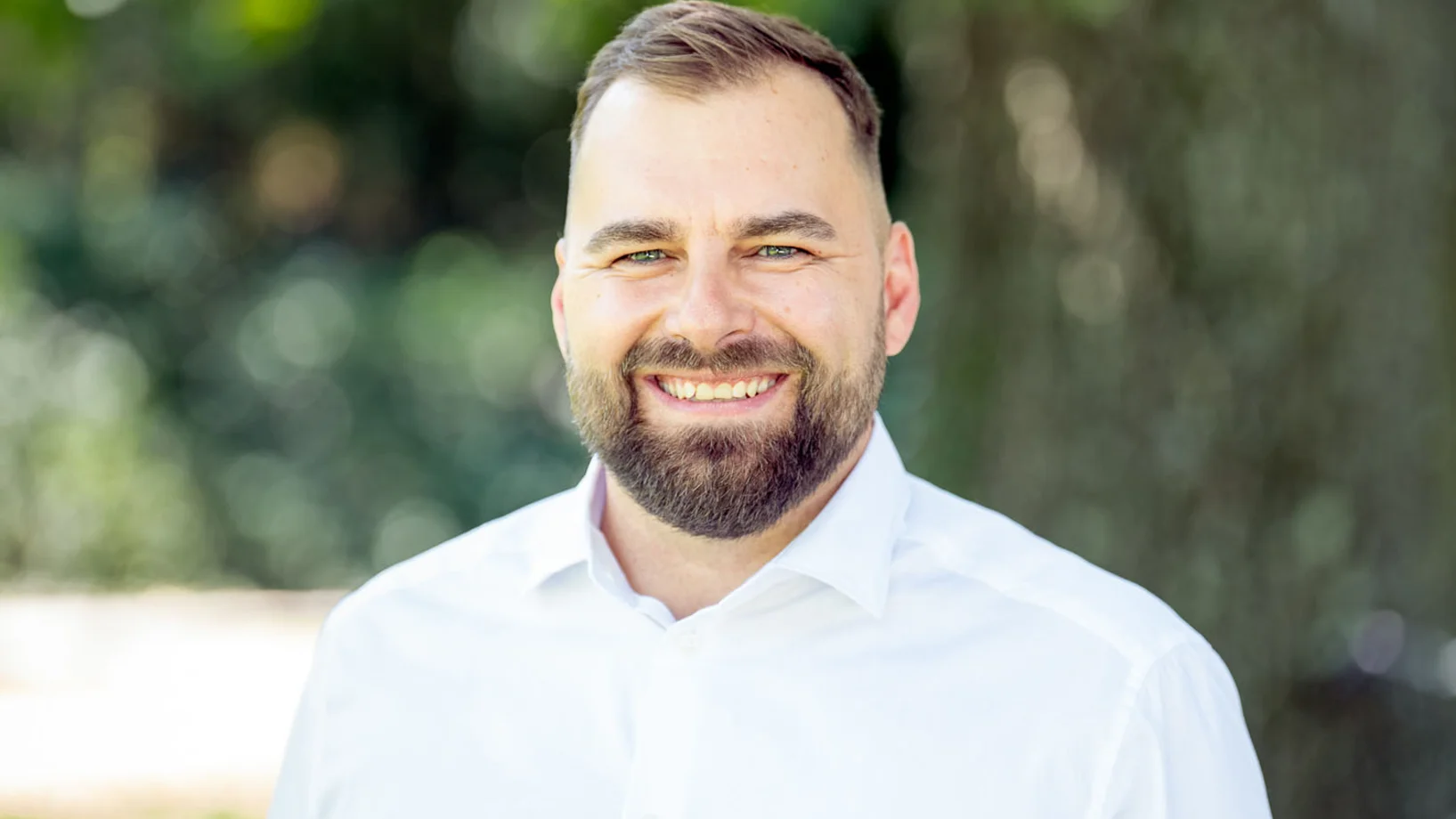
“Small farmers already struggle in their daily lives. But when illness strikes, it’s literally a matter of survival,” says Michael Kesselring, co-director of Menschen für Menschen. “We help them, tailoring our support to their individual circumstances.”
Small country, big harvest
Those with limited land, like Nigatu Shibiru, need crops that produce a high yield in a small area. His family received seed potatoes, fertilizer, and advice. The first harvest already made a difference. Nigatu Shibiru dug up around 1,000 kilograms of potatoes. Some remained for the family's food, some for seed. The smallholder farmer sold the rest. With the proceeds, he bought two sheep. The sale of the lambs will allow the family to continue building their farm and perhaps soon buy another ox, the farmer hopes. "But the most important thing is that we can now feed our children," says his wife, Dukani.
Hambela Wamena is a rural district in the Oromia region of southern Ethiopia. Approximately 214,000 people live in its roughly 871 square kilometers – with hardly any infrastructure, almost no industry, and only weak trade. Agriculture is the main source of livelihood. Most families cultivate less than one hectare of land, often with very low yields. "In a baseline survey conducted by Menschen für Menschen, 96 percent of households reported not having enough to eat year-round," emphasizes Michael Kesselring. "A key problem is the lack of access to credit: farming families cannot invest in better seeds, fertilizer, or livestock." Overpopulation further exacerbates the situation because the fields become smaller with each successive generation.
Close support
The Ethiopian experts in the Menschen für Menschen project visit the families regularly. They show them locally adapted cultivation methods and help them increase and diversify their harvests, for example with protein-rich pulses. They also receive high-yield seeds and fertilizer through cooperatives based on fair microloans. At the same time, the Swiss foundation supports the development of livestock herds as an important source of start-up capital.
In total, Menschen für Menschen supports 3,600 day laborer and smallholder farming families, comprising around 25,000 people, in sustainably improving their nutrition and income. The goal is for these families to be able to build a stable and dignified livelihood in their home villages.
Capital on four legs
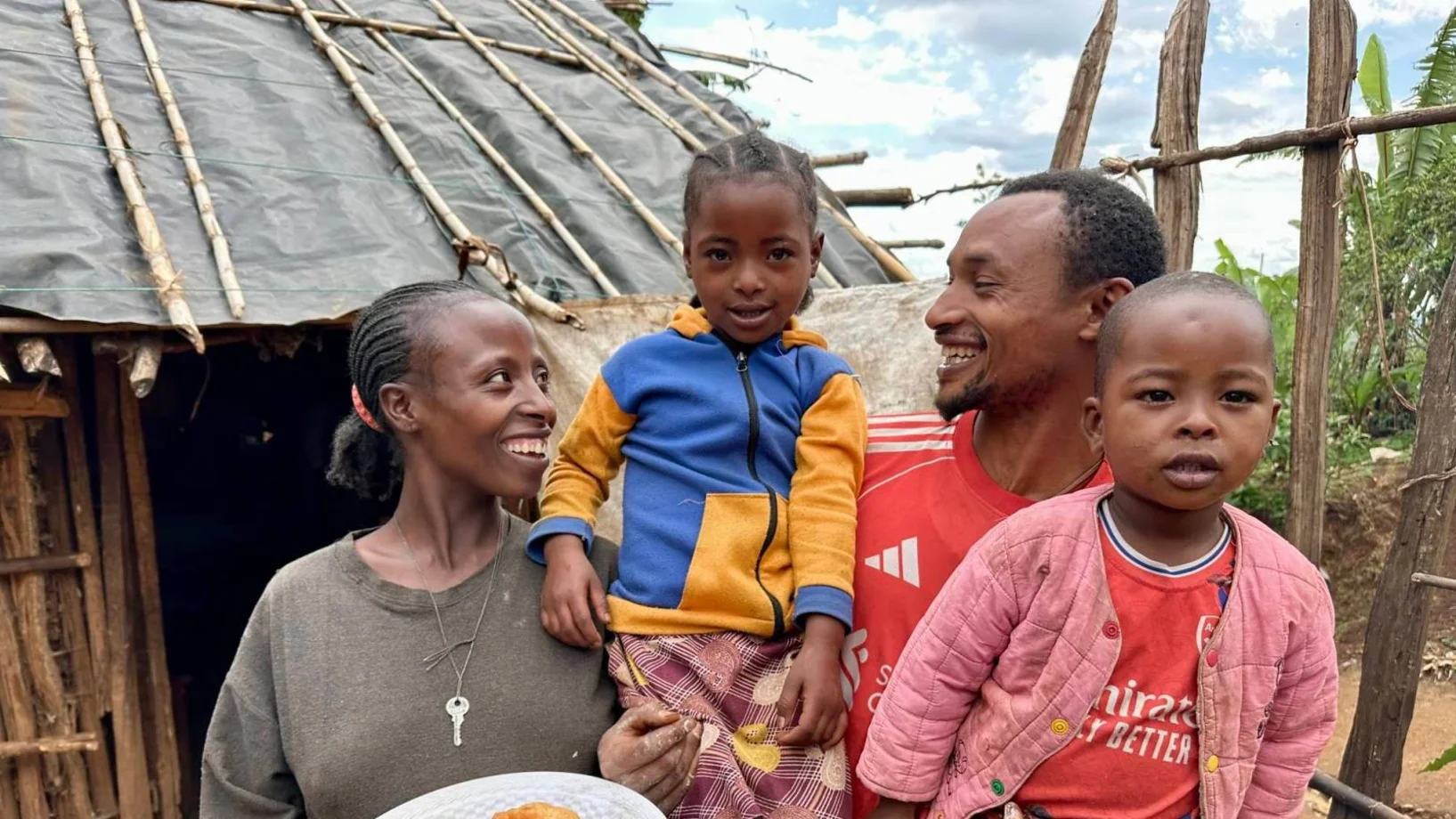
Esatu Dugo and Gadise Hotesa also received four robust ewes. One lamb has already been born, and the others are pregnant. The couple lives with their three daughters in the village of Dimtu Hambela. Esatu is a day laborer. He plasters mud walls, cuts grass in coffee gardens, or picks coffee cherries. He earns the equivalent of about one Swiss franc a day. But he often only finds work once a week. As a result, the family regularly skips meals. "There's no lunch today," says Esatu. The family is now placing even more hope in their livestock. "I work hard. I want to lease land," says Esatu. The sheep are the key to this: lambs can be sold after four to five months, older animals fetch high prices, and even more so on holidays. "For many day laborers, livestock is one of the few ways to generate capital and build a livelihood," explains Michael Kesselring. "We are making this possible for 350 families."
cycle of growth
With targeted, manageable support, much can be achieved, emphasizes Kesselring. "If knowledge, seeds, or a few animals are added, families can begin to work their way out of poverty on their own." 88 francs finance barley seeds and fertilizer for one family. 112 francs enable three to four sheep to start an animal farming operation that can support a family. 142 francs cover seed potatoes, fertilizer, and training for one family. Sustainability is crucial: "The support is based on fair microloans. The repayments flow back to farming cooperatives and are then used as new loans to other families. In this way, a cycle of growth develops in the village, without further input from Switzerland."
About the Menschen für Menschen Foundation
Menschen für Menschen is committed to fighting poverty and hunger. The foundation was established by the actor Karlheinz Böhm (1928–2014). In the spirit of its founder, the Swiss aid organization creates opportunities for the poorest families in Ethiopia. The aim of its work is to enable them to live with dignity in their homeland. The focus of individual projects is on women's empowerment, vocational training, microloans, child support, family planning, and agricultural development. These components are combined according to local needs and implemented with carefully selected local partners.
Download the press release as a PDF (in German) and the accompanying image in HD quality here: