Zurich / Raphe, December 9, 2025 – The discrimination against women is hindering development in rural Africa. In Ethiopia, Menschen für Menschen is training model families for gender equality. They are economically successful and become role models in their villages.
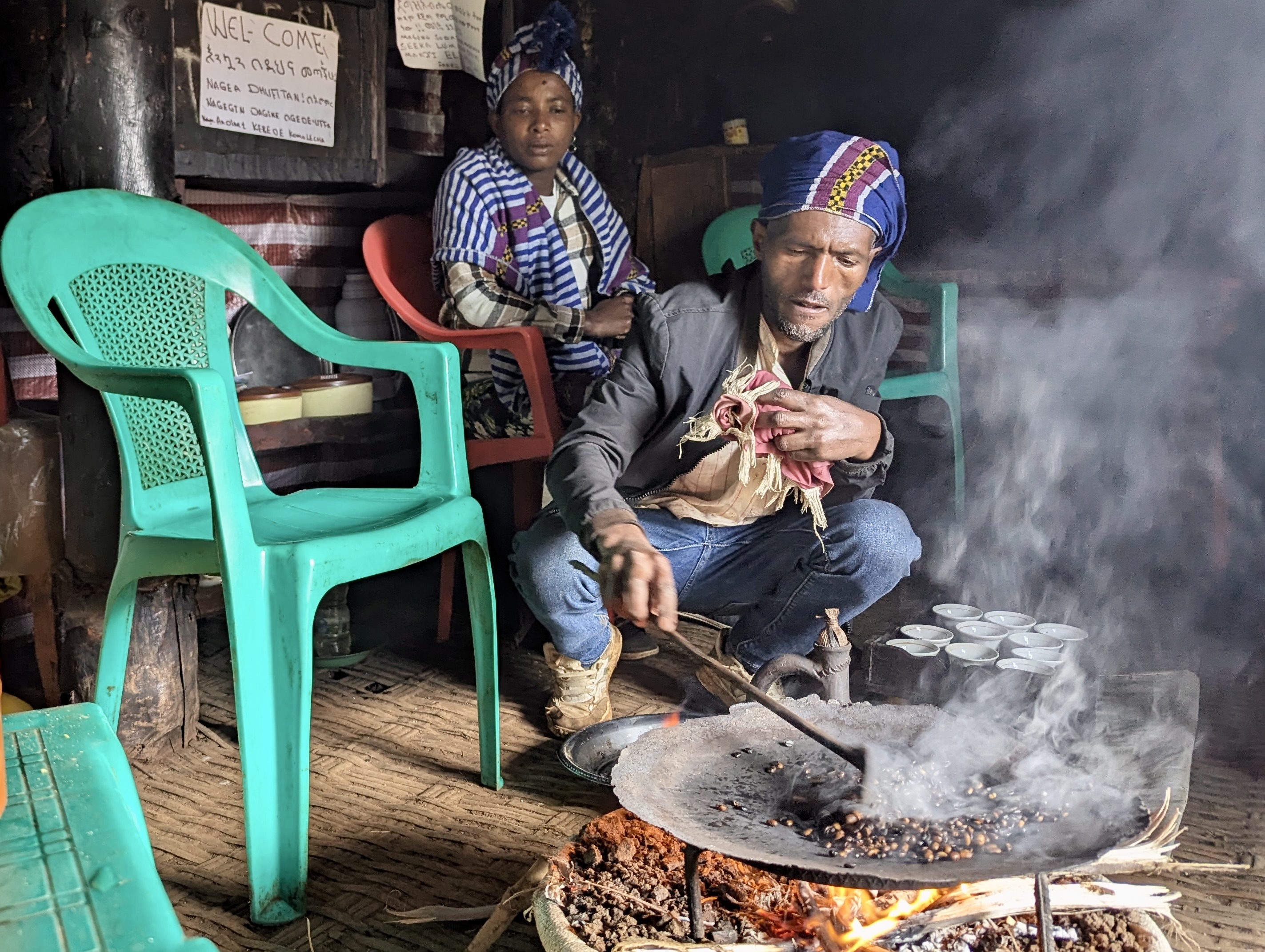
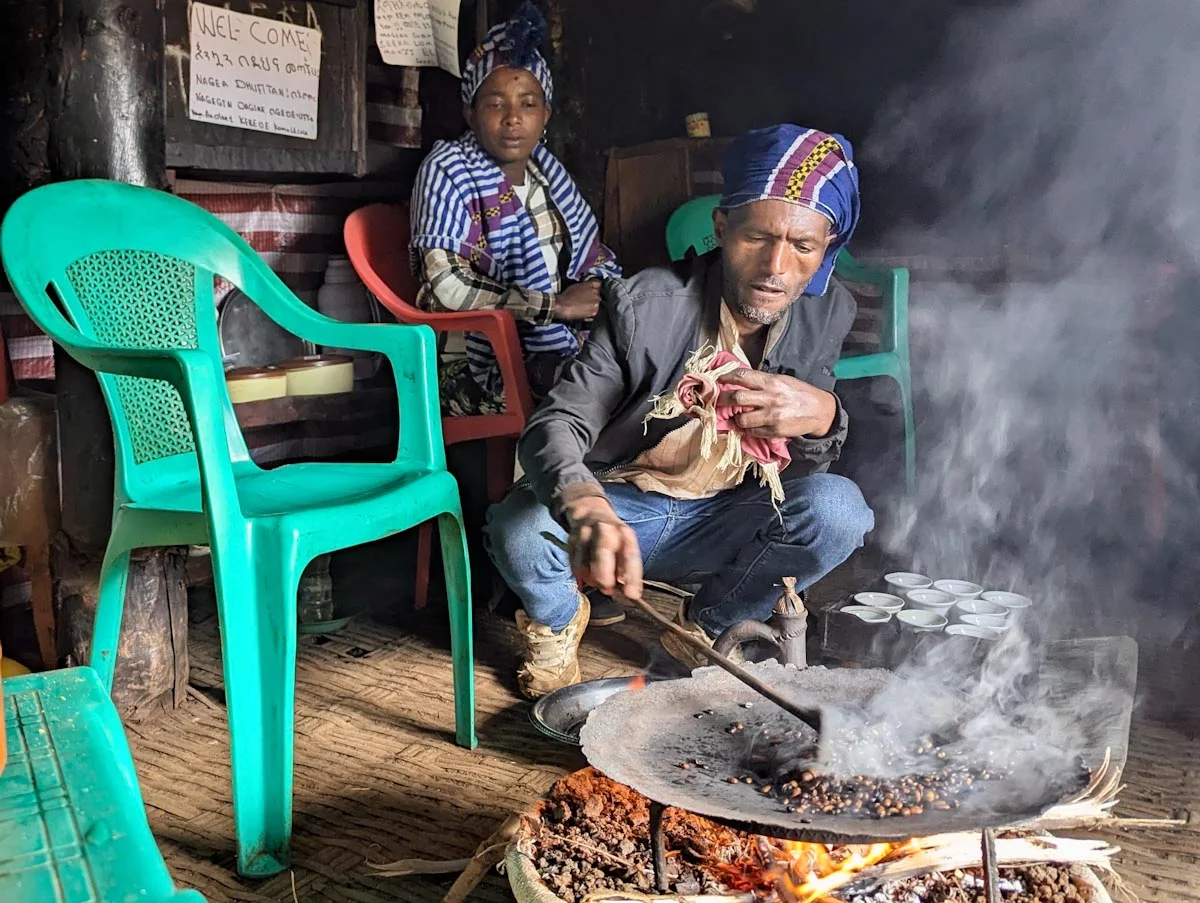
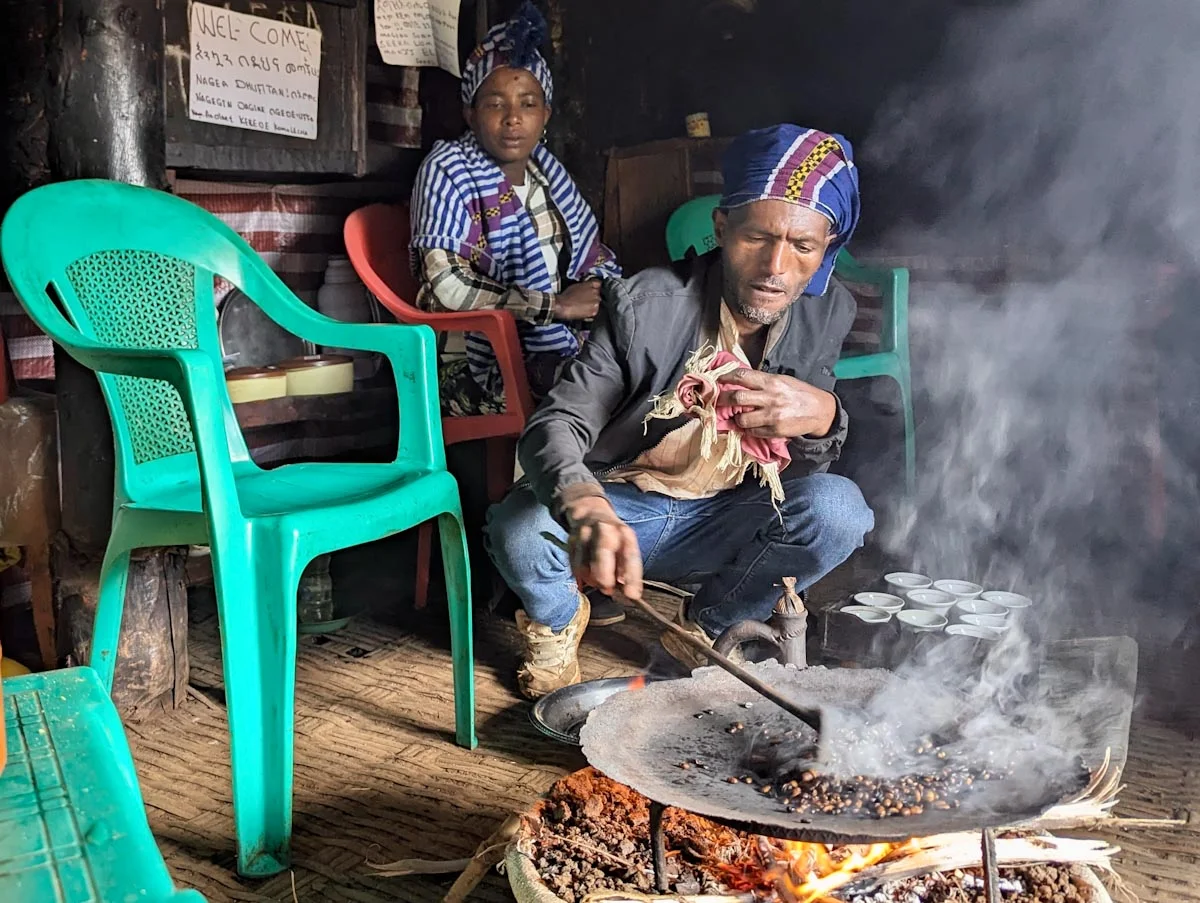
The smoke from the open fire stings his eyes. Adenet Kabenet squints, enduring what he previously only expected his wife to endure, and stirs the coffee in the pan with a wooden stick. It's an unusual sight in the village of Cherbenta – a man roasting coffee.
When the farmer started doing this three months ago, half the village laughed. "A man doing women's work – shocking!" they said. Even his own brother stopped greeting him.
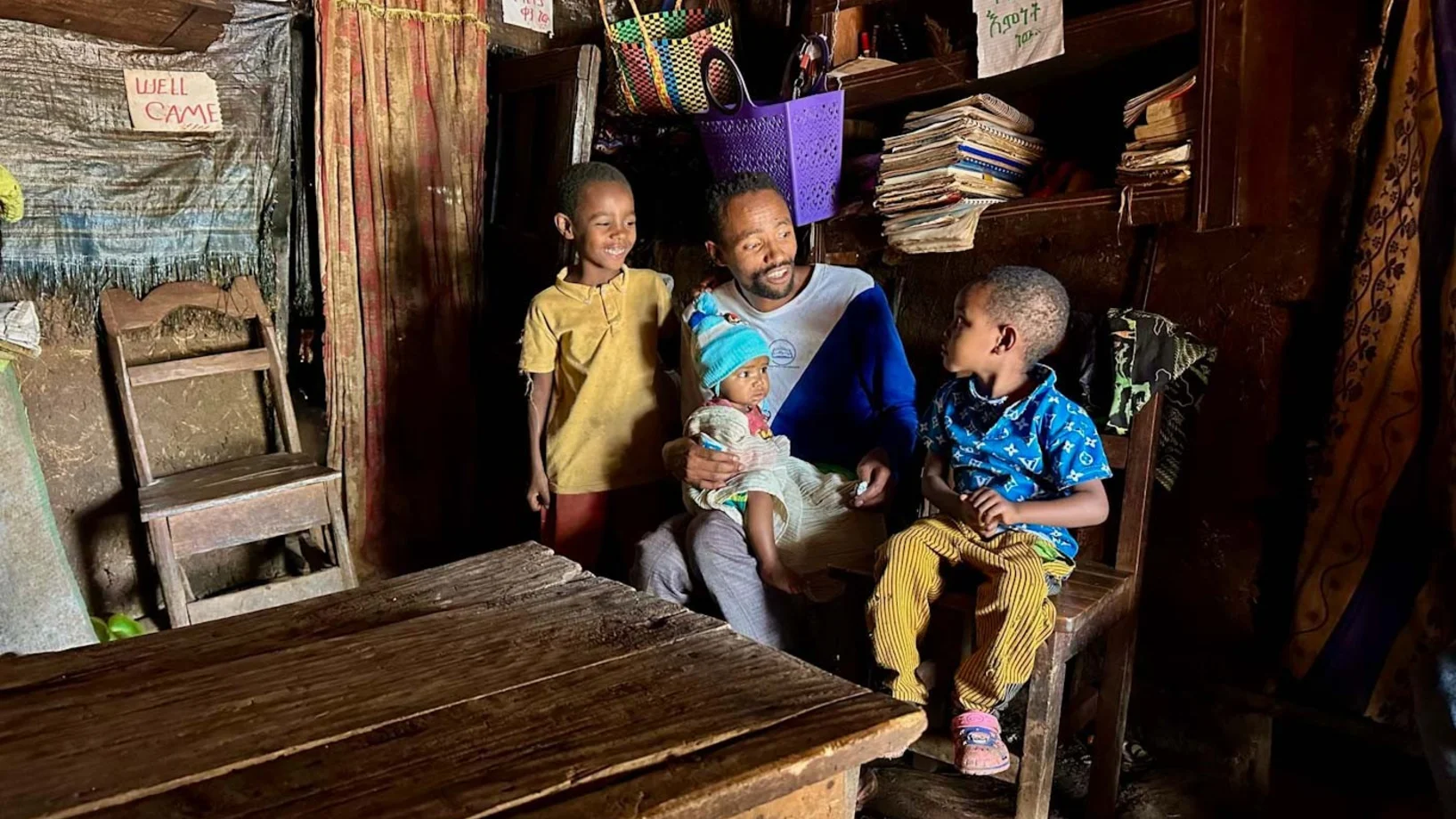
Adenet Kabenet is part of a new project by Menschen für Menschen in Raphe, a district in southern Ethiopia. His family is one of thirty "Gender Model Families" – households that demonstrate how equality can work in everyday life. They attend training courses, question gender roles, and experiment with how to fairly share burdens and decisions.
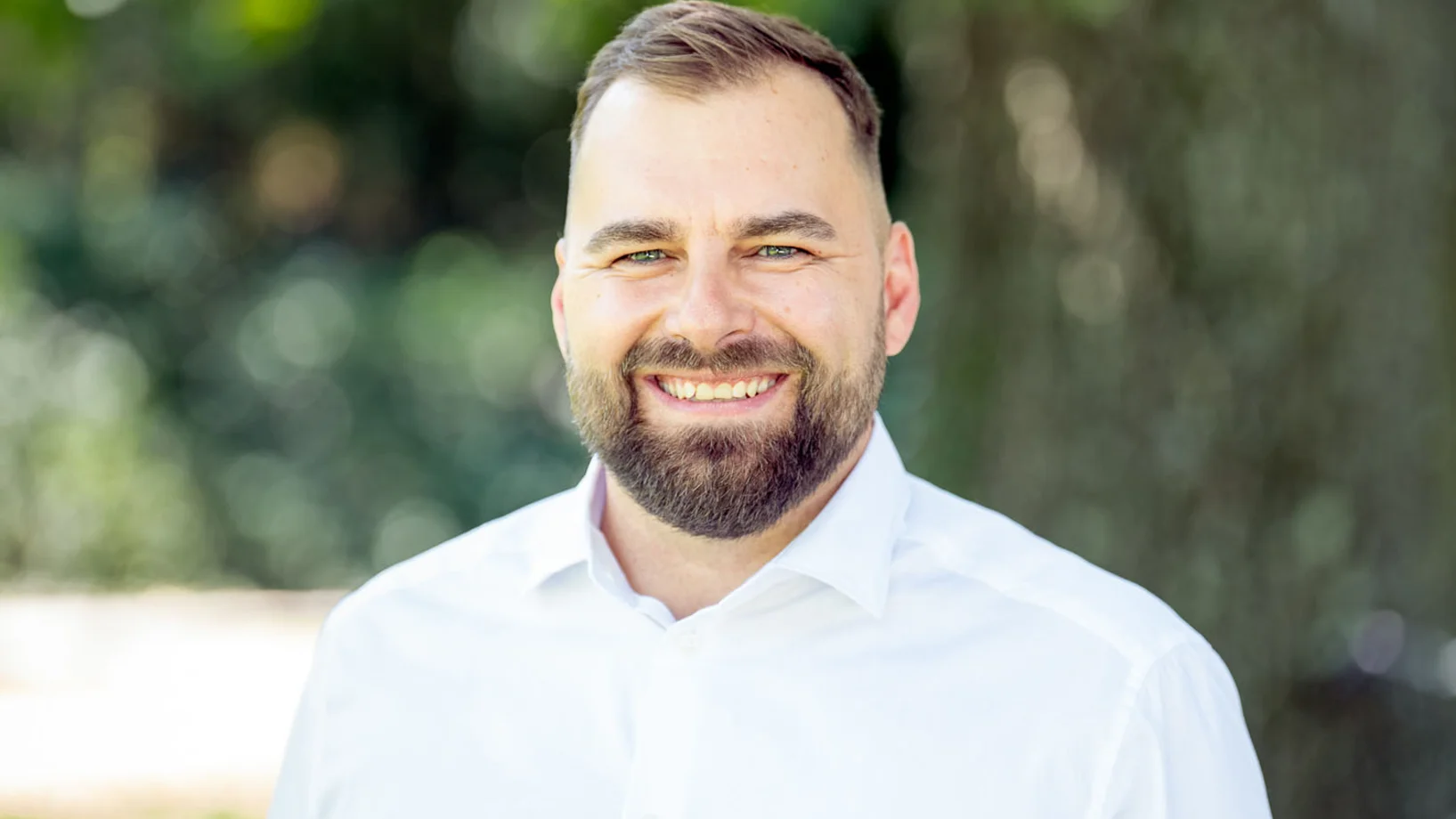
They are encouraged and supported by Zemariam Bekele, 28, the project's women's and equality officer. "Too many children, too much burden," says the expert. "The women here carry so much – physically and emotionally. We help families recognize this and find better ways together."
Harmful traditions
In Raphe, only 10 to 15 percent of women use modern family planning. Many girls are married between the ages of 13 and 15. Women typically perform more than ten hours of housework every day, while most men hardly help at all. And only 15 percent of women are even familiar with the concept of equality, according to a baseline study conducted by Menschen für Menschen at the beginning of the three-year project. By comparison, while the situation in Switzerland is different, equality in the private sphere is still not achieved there either. According to the Federal Statistical Office, Swiss women perform an average of around 32.5 hours of unpaid housework and care work per week across all households, while men perform only 22 hours.
For the women's representative in the MfM project in Ethiopia, equality is much more than a question of traditional role models; it's one that determines the economic future. "When work at home is shared, more time remains for economically productive activities," says Zemariam Bekele. "When women have a say, the whole family benefits."
More income, more love
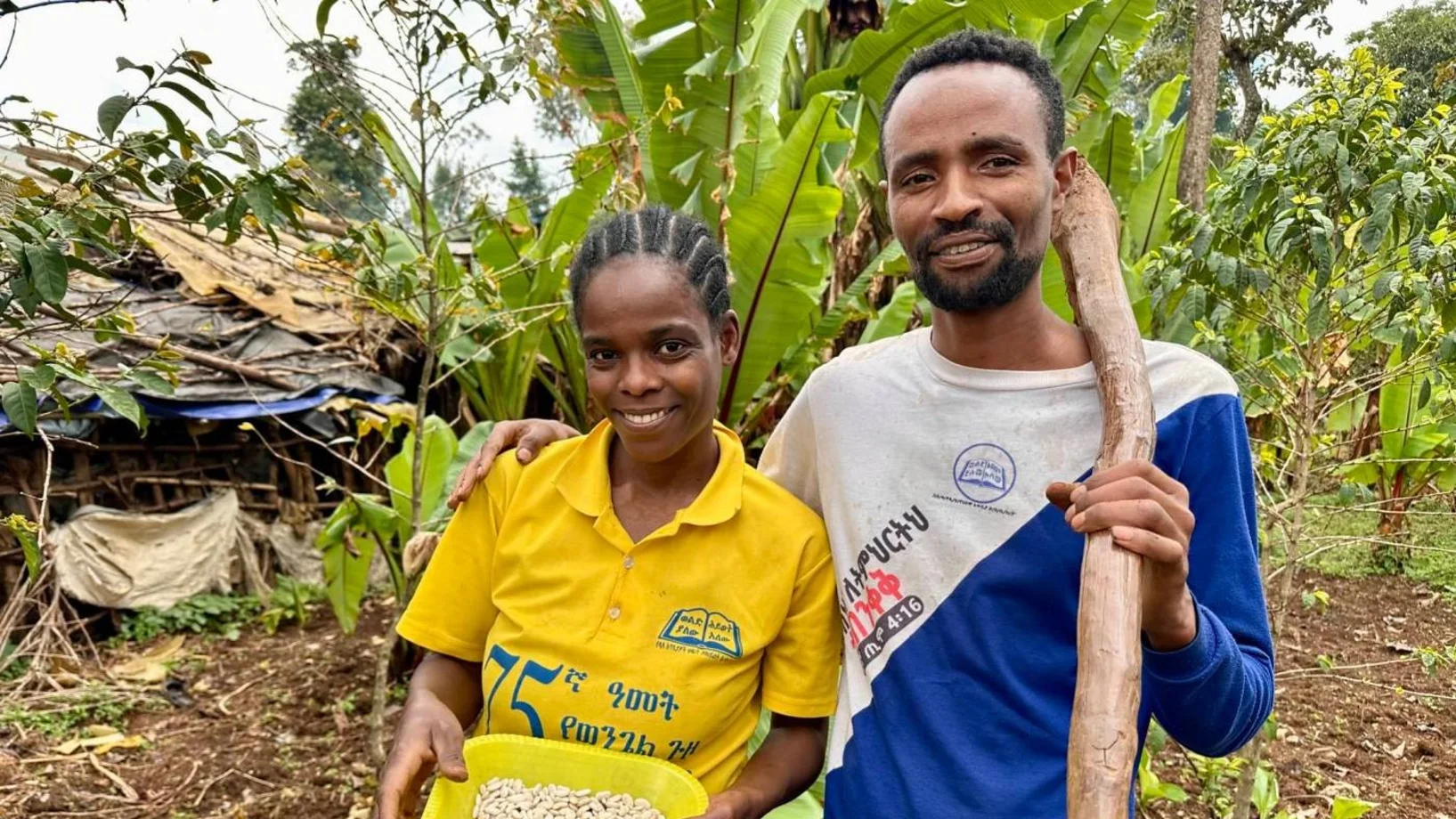
The example of Adenet Kabenet and his wife Bereket illustrates this. Since attending the training courses of Menschen für Menschen, they have been processing ensete together. The giant plant is used to make kotcho, a bread-like staple food in southern Ethiopia. Scraping the pseudostems and the massive tuber is hard, sweaty work, traditionally women's work in southern Ethiopia. What used to take Bereket a week, the couple now accomplishes together in two days. This leaves more time to prepare a local soft drink and sell it at the market. Their income is increasing, and their relationship is changing, says the husband: "We treat each other with more affection."
In the baseline study, around 50 percent of women stated that important decisions were made exclusively by their husbands – including decisions about the number of children in the family. Large families with limited resources are a major driver of poverty. Now, the Swiss aid organization is organizing women into self-help groups where they save together, take out microloans, and create small income streams: those who earn their own money have significantly more influence within their families and can participate in decision-making.
The “Gender Model Families” represent equal family values and serve as role models in the villages. “We specifically select families who are open and enjoy a certain level of respect,” explains Zemariam Bekele. Smallholder farmer Adenet says that the meetings with the Ethiopian experts from Menschen für Menschen have raised his awareness: “For the first time, I truly understood how much my wife contributes every day.” The experts on the ground hope that mutual respect and consideration will lead to open and honest discussions between the couples about the ideal family size.
Unwanted pregnancies
Rahel Kebede, 22, says she hasn't yet discussed family planning with her friends and neighbors. She has come to the health post in the village of Dereto to receive an injection that protects against pregnancy for three months. Rahel Kebede, a mother of two, says: "I want some distance between my children. It's better for the family."
Despite this knowledge, many children in Raphe have been born unintentionally – because the health post lacked contraceptives. "We used to have to turn away twelve or thirteen women every week," reports Konjet Demissie, the state health worker in the village.
Stock of contraceptives
With the project by Menschen für Menschen this has changed for the first time: The aid organization ensures that pills and three-month injections are reliably available in the health stations, and the positive effects of equal marriages are spreading.
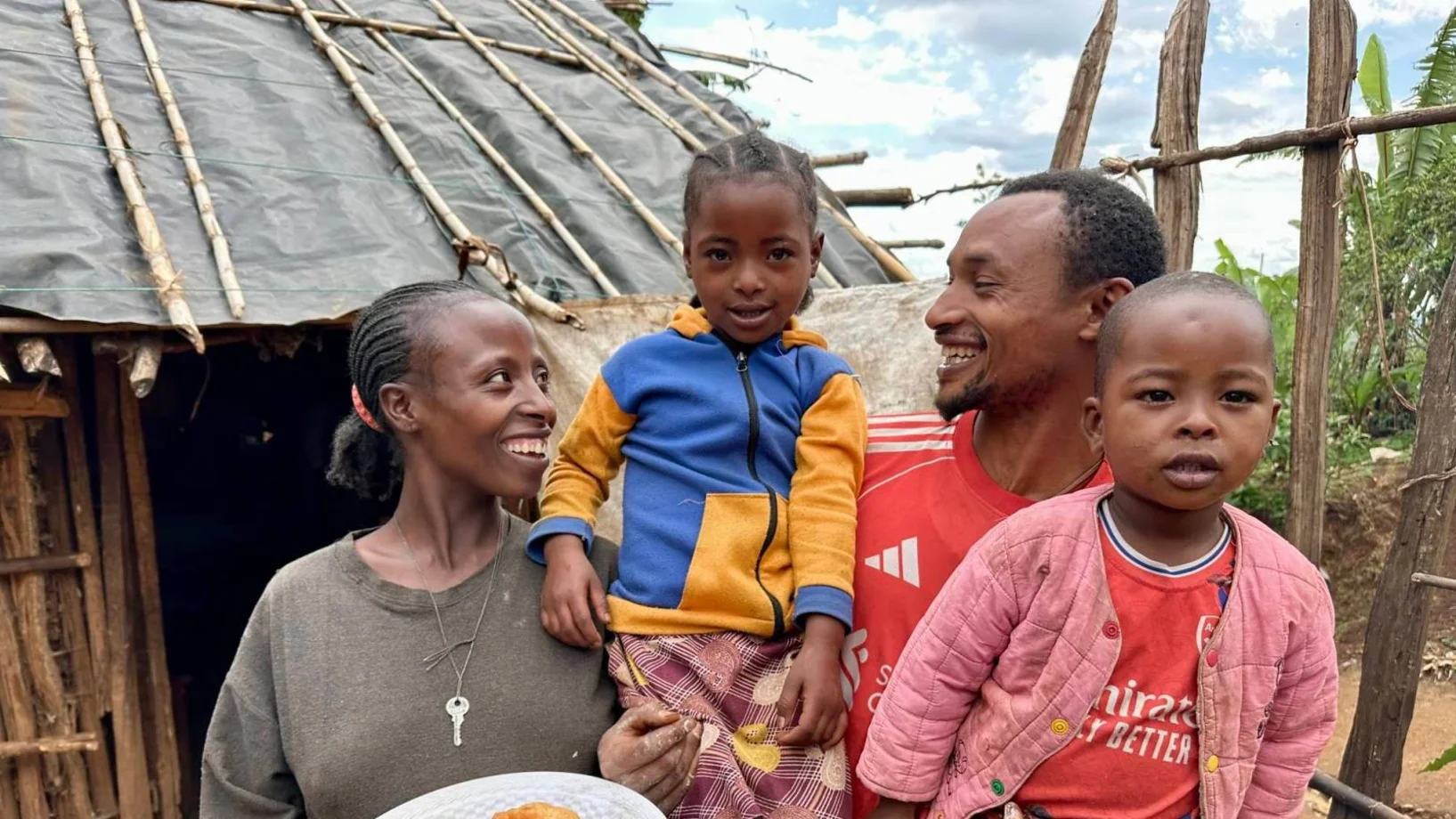
The project targets a total of 3,559 families in Raphe, with approximately 21,000 members. Through training and agricultural assistance, it improves the district's economic foundation. Model families like Bereket and Adenet Kabenet's demonstrate the potential for change first and convince even the older generation. Adenet's mother was initially skeptical. Now she says, "The fact that I get to experience how the world is changing – and how well a woman is treated – makes me happy."
About the Menschen für Menschen Foundation
Menschen für Menschen is committed to fighting poverty and hunger. The foundation was established by the actor Karlheinz Böhm (1928–2014). In the spirit of its founder, the Swiss aid organization creates opportunities for the poorest families in Ethiopia. The aim of its work is to enable them to live with dignity in their homeland. The focus of individual projects is on women's empowerment, vocational training, microloans, child support, family planning, and agricultural development. These components are combined according to local needs and implemented with carefully selected local partners.
Download the image in HD quality and the press release as a PDF (in German) here: