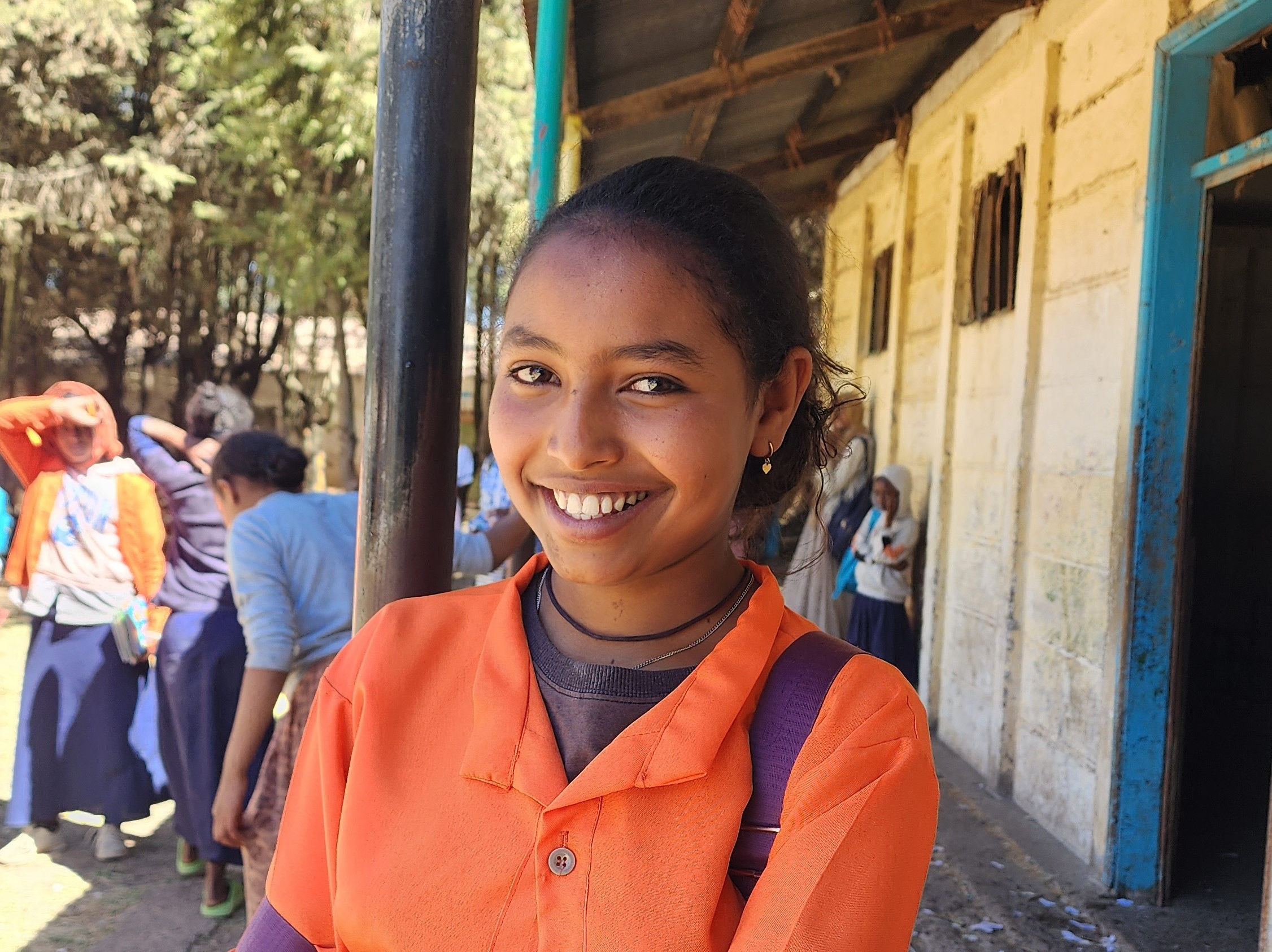
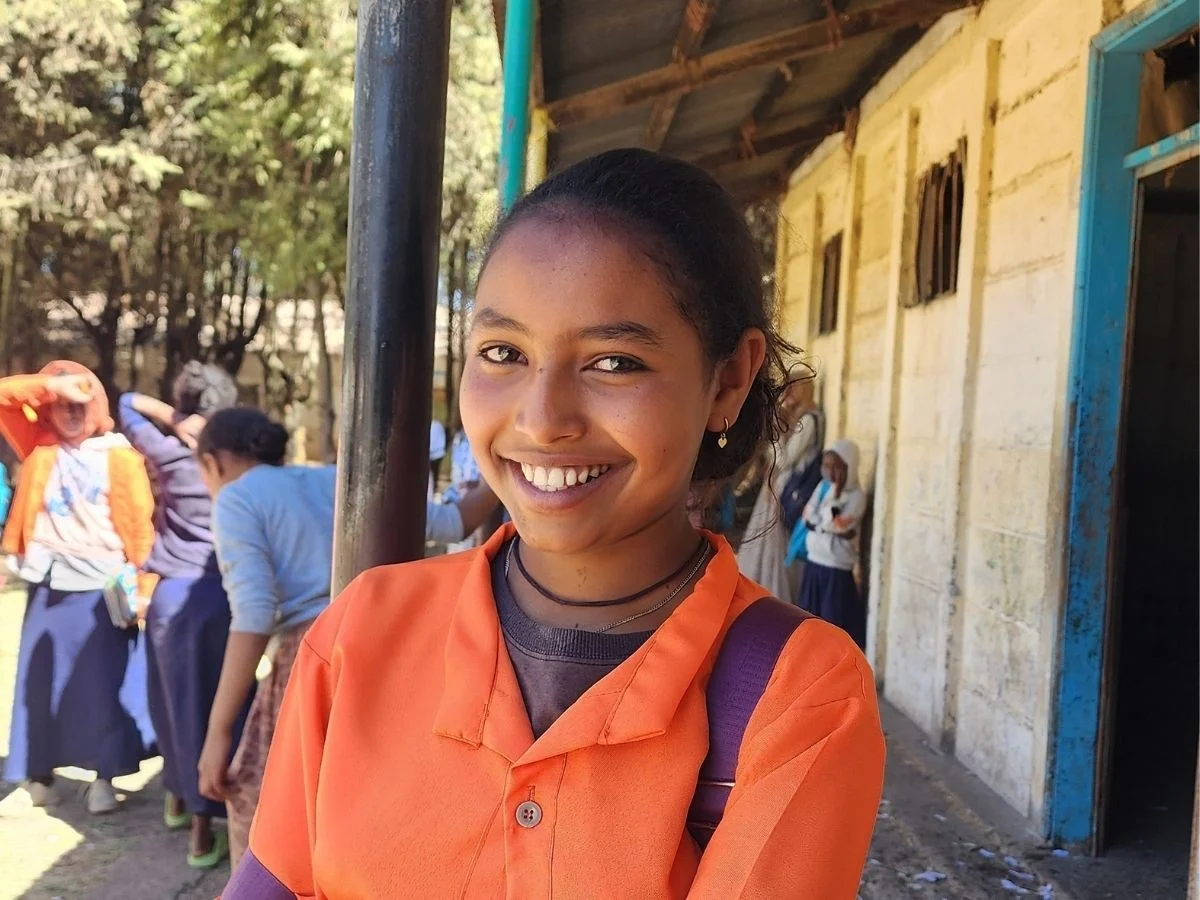
Zurich/Debre Berhan, February 5, 2026 – School uniforms are meant to blur differences. In Ethiopia, this is precisely what many displaced students want: to finally no longer stand out, to finally no longer be outsiders.
School uniforms are mandatory in Ethiopia. They serve an important social function: they protect children from particularly poor families from having to go to school in their tattered everyday clothes.
In Debre Berhan, a city two hours north of the capital Addis Ababa by car, local tailors produce a simple school uniform made of synthetic fiber for just 835 Birr, the equivalent of about four Swiss francs.
But even this sum is unaffordable for many internally displaced families in the city. Therefore, the city council decreed that the children could attend school in their everyday clothes.
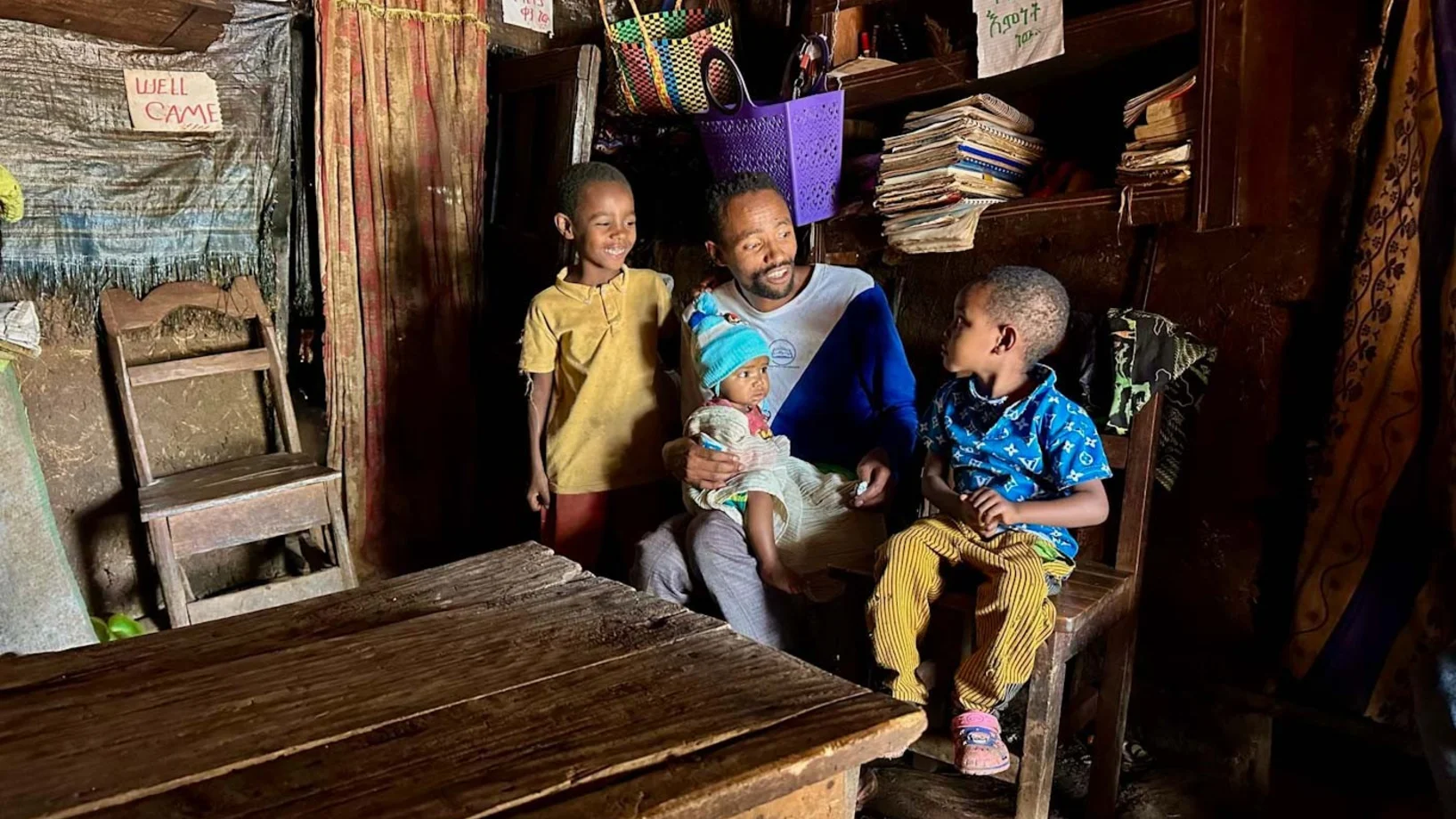
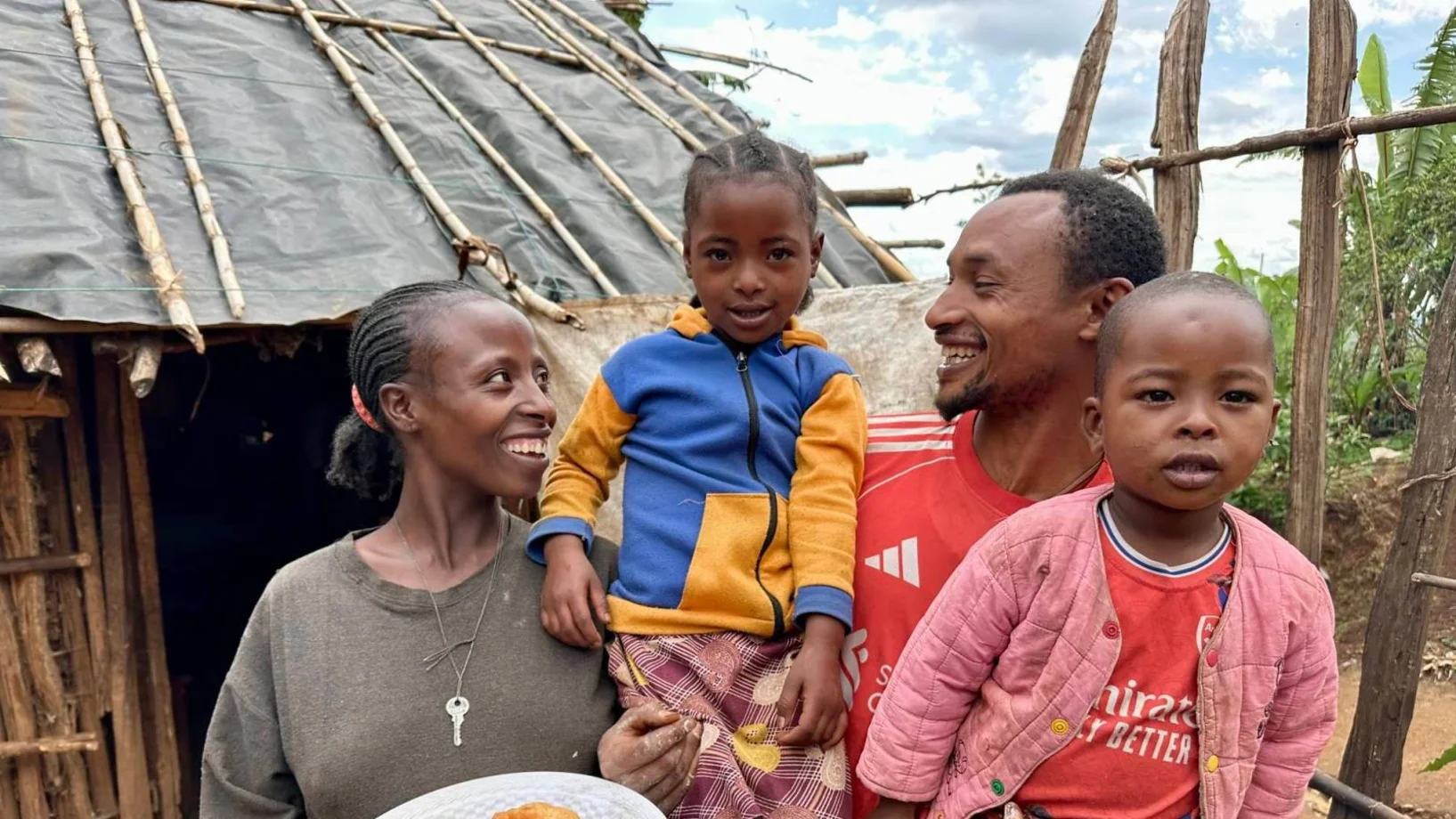
But this measure, intended as a relief, came at a price for the children. "Many of us were ashamed of our old clothes," says 15-year-old Dawit. Children from displaced families often own only the clothes they are wearing. The textiles are frequently faded, worn thin, and torn. "We were immediately recognized as displaced by everyone," says Dawit. "This made us outsiders, and we were often subjected to hostility."
School is an anchor
“During a monitoring visit to Debre Berhan, we learned about the suffering of the refugee children,” reports Claudio Capaul, co-director of the Swiss aid organization Menschen für Menschen. “So we provided funds. Because school is an anchor for the children, allowing them to arrive and integrate into their new surroundings.”
Local tailors came to the Tebase Medahnialem primary school, took the children's measurements, and noted their sizes and names. "Supporting the local economy was a welcome side effect," says Claudio Capaul. The tailors from Debre Berhan have their workshops on street corners under plastic tarpaulins or in the cramped living room of a mud house. Fabric was cut, hems were sewn, and buttons were attached. The foot-operated sewing machines ran for days on end. Now, 1,721 children have received their uniforms at a celebratory handover ceremony. "Finally, I feel equal to the others," says Erhemia, a 14-year-old girl. "I'm more motivated to learn. I think now: I can make something of myself."
Conflicts in the multi-ethnic state
Debre Berhan is home to numerous internally displaced persons (IDPs) who have fled violence and insecurity in their home regions. Three official camps are registered in the city, currently housing 25,608 people. An additional 11,822 people are sheltering in private homes. This means that approximately ten percent of the city's residents are IDPs. Many of these families come from different areas of the Oromia region, where protracted conflicts have forced them to flee.
Ethiopia is a multi-ethnic state with over 80 ethnic groups, where local and regional tensions repeatedly lead to violent clashes. For several years, especially since the war in the northern region of Tigray, around two million people have been internally displaced. In addition, around one million people are seeking refuge from conflicts in neighboring countries.
Dream job: Accountant
One of the displaced people is 13-year-old Meseret. Her family fled from the Wollega area in the Oromia region. There, they had leased land and lived off farming and livestock. When the security situation deteriorated and violent attacks occurred, the family lost their home and their livelihood. Today, Meseret lives with her father in Debre Berhan. Her mother migrated to Saudi Arabia, where she works as a domestic worker to send a few dollars back to the family. As a result, Meseret now does the housework in addition to going to school. "I felt inferior without a uniform," says Meseret. "But now I no longer feel like everyone sees me only as the displaced girl."
She wants to study hard now. She wants to become an accountant or a banker. Bringing numbers into a system, order, structure, security. For many, that sounds unspectacular. For Meseret, it's a dream job.
About the Menschen für Menschen Foundation
Menschen für Menschen is committed to fighting poverty and hunger. The foundation was established by the actor Karlheinz Böhm (1928–2014). In the spirit of its founder, the Swiss aid organization creates opportunities for the poorest families in Ethiopia. The aim of its work is to enable them to live with dignity in their homeland. The focus of individual projects is on women's empowerment, vocational training, microloans, child support, family planning, and agricultural development. These components are combined according to local needs and implemented with carefully selected local partners.
Download the press release (in German) as a PDF and the accompanying image in HD quality here: